Key takeaways
- Define what participants should be able to do.
- Help participants arrive ready to work.
- Make independent work easy to start.
- Connect the session with the next useful step.
Start with the next decision
Turn one learning outcome into a timed session with activities and follow-up. For trainers and small business owners running a practical group workshop, the useful starting point is a concrete task with an owner and a finished result. A document helps only when it makes the next action easier to understand. Start with one real case and keep the amount of paperwork proportionate to the work.
Use a small practice case
Fictional trainer Alex is running a 60-minute product-description workshop for six shop owners. Participants practice with an invented tote bag listing. Before using real records, walk through a fictional case like this. It makes missing inputs easier to notice without exposing private customer or business details. The sample quantities, dates and amounts illustrate the process; they are not recommendations for your own operation.
Outcome and audience brief
Define what participants should be able to do. Choose an outcome that fits the available time. Describe the task in observable terms.
For example: By the end, each participant drafts a product description containing contents, size, price context and one clear next action. An engaging session is not automatically evidence that the skill was learned.
Participant preparation message
Help participants arrive ready to work. Tell participants what they will produce. Invite access or participation questions privately.
For example: Please bring one product description or use our fictional tote example. The session lasts 60 minutes and includes paired feedback. Do not promise an accommodation that has not been arranged.
Activity instruction card
Make independent work easy to start. Explain the output before the steps. Ask one participant to restate the task before starting.
For example: In 20 minutes, draft four sentences for the sample tote: contents, size, intended use and order step. Place your draft on the worksheet. Avoid introducing extra rules after participants have already started.
Follow-up and facilitator review
Connect the session with the next useful step. Send only the materials and follow-up participants agreed to receive. Revise one repeated point of confusion before reusing the session.
For example: Send the fictional sample and review checklist. Next run: place all product facts on the same activity page. A follow-up message should not become an unrequested marketing sequence.
Test the exception before sharing the record
Try the same task with one missing input: an unanswered question, a changed quantity, an absent owner or an unconfirmed date. Keep the affected decision visibly open, assign a person to confirm the fact and set a next update. A blank response should never silently turn into an approval. Write N/A with a reason when a field does not apply, and preserve the evidence needed to understand your decision later.
Keep one current working copy
After using the record, note the step that caused confusion and revise that part. Add a revision date so the next person can identify the current copy. Archive the completed record according to your business needs, and share only the information the recipient needs. Keep examples clearly labeled and check names, dates, amounts, links and permissions before sending a customer-facing message.
A ready-made starting point
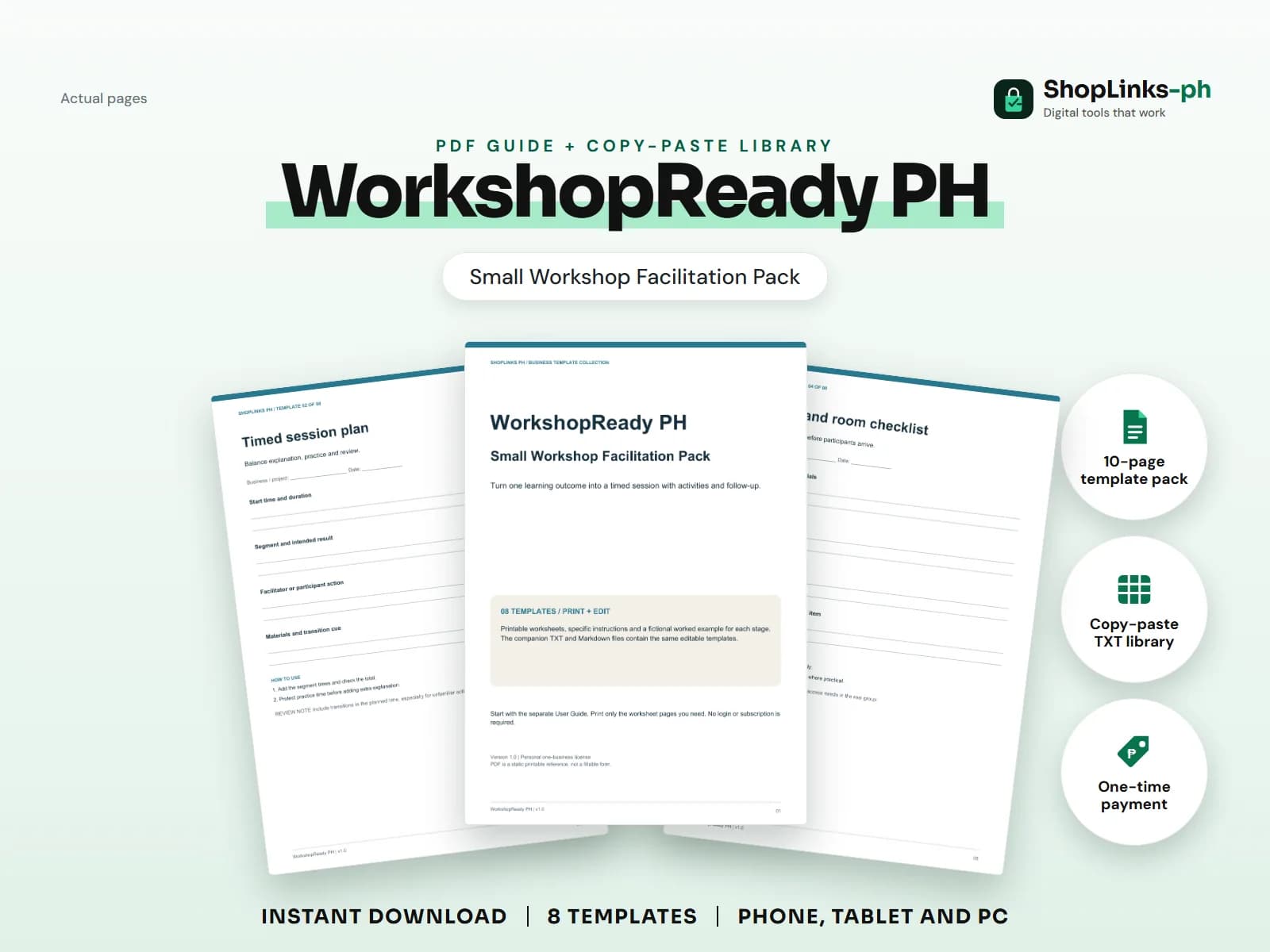
WorkshopReady PH includes eight practical templates, a printable PDF, editable TXT and Markdown versions, fictional worked examples and an illustrated user guide. Facilitation templates only; no accredited course, certificates, venue booking, participant database or teaching qualification. You can print the relevant page or copy the text into your preferred editor, then adapt it to the actual task.