Key takeaways
- Revenue is built from units actually sold.
- Cash is reconciled against sales every visit.
- Driver time at the machine is costed.
- Commission rates are judged on location margin.
A vending route is a collection of small businesses that share a van. A warehouse machine on three shifts and a medical office machine at the end of a twenty minute drive look the same on a schedule and behave nothing alike. Add a commission percentage that varies by site and a bill validator that has started eating notes, and a route can be busy and unprofitable at the same time. VendDesk US costs each visit.
What sold, not what was loaded
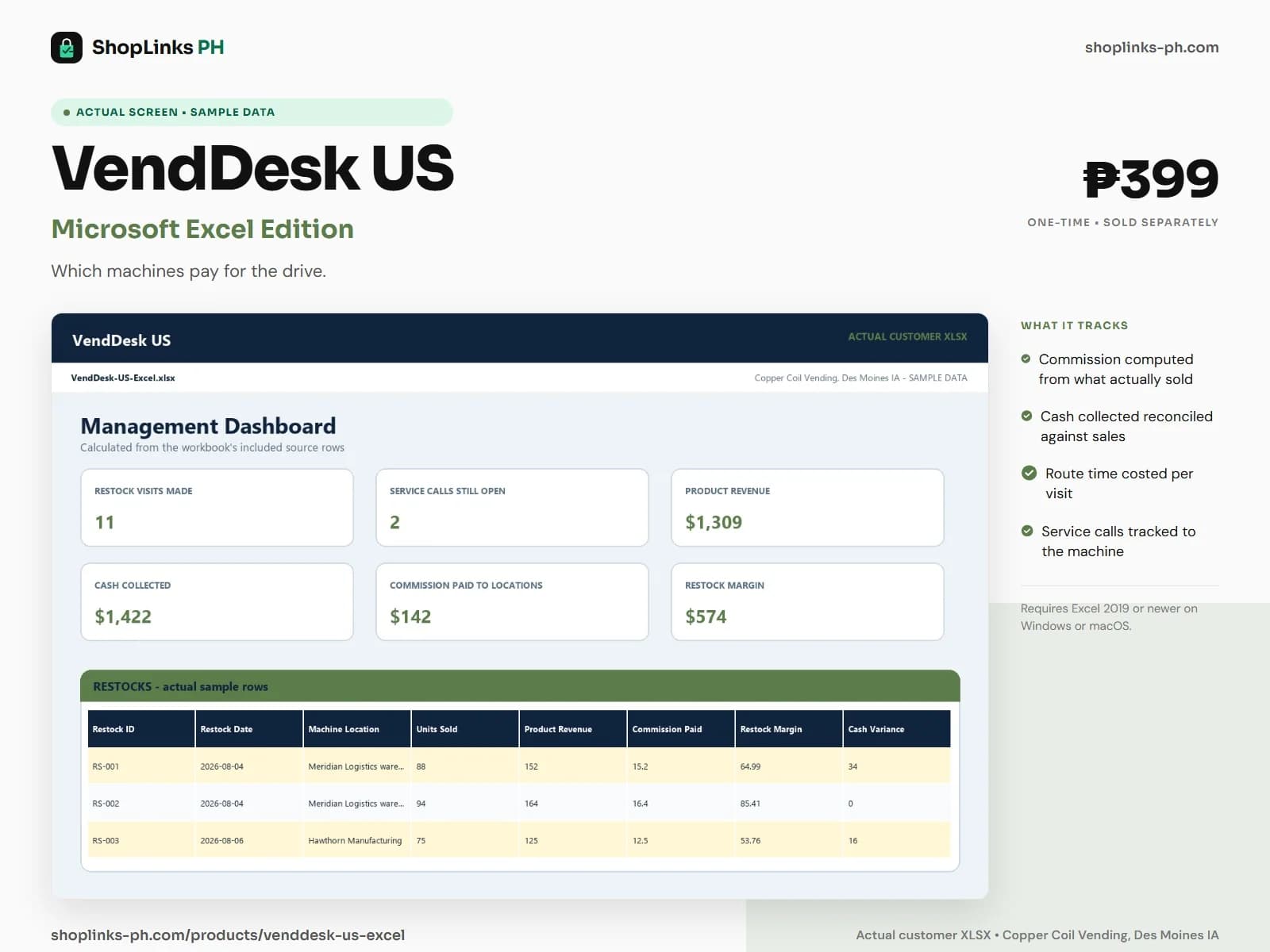
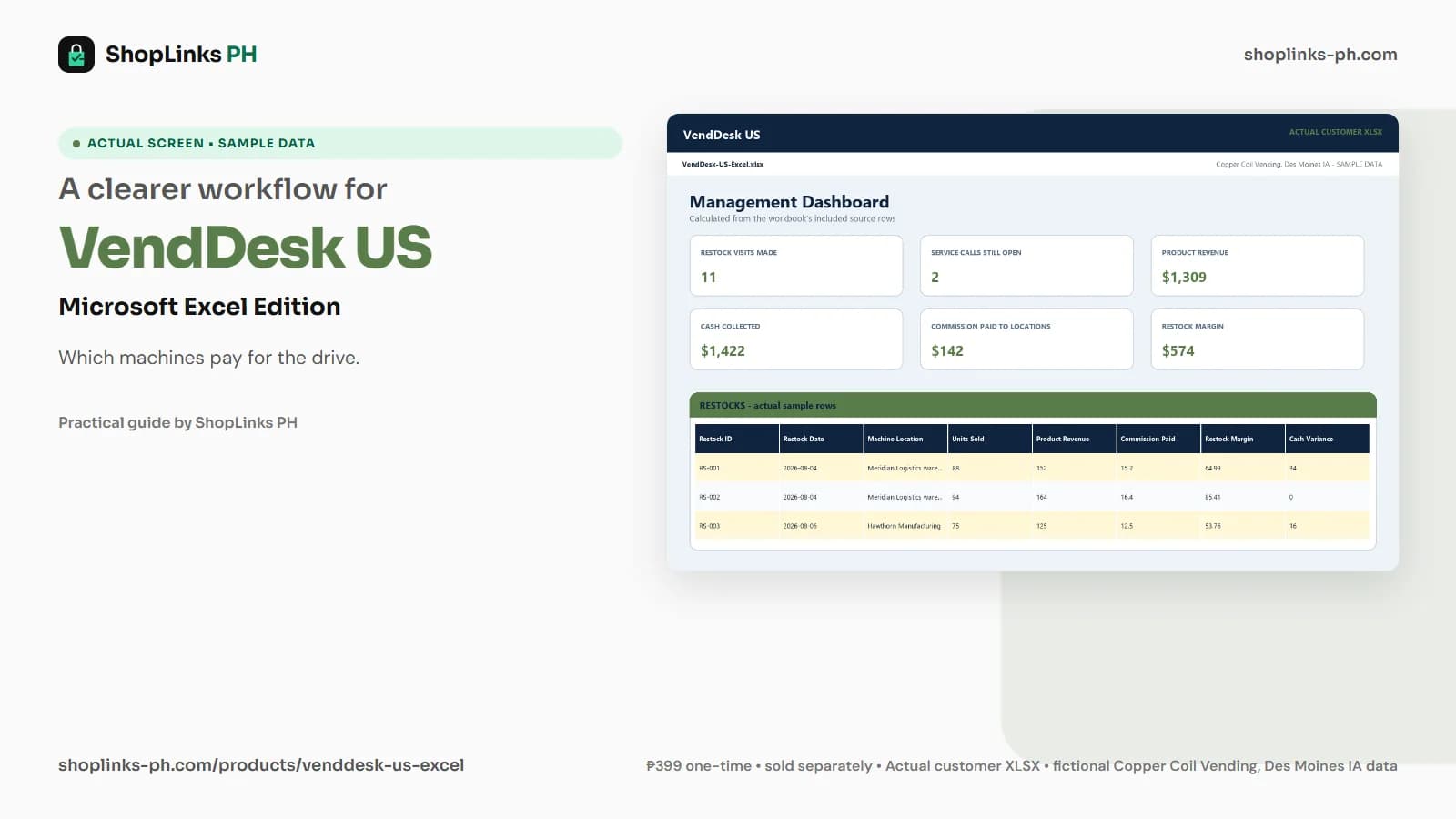
Each restock records the units sold per product since the last visit, valued at that product's own price and cost.
That is the figure commission is calculated on and the one that shows which products are genuinely moving rather than merely occupying a slot.
Cash against sales
Cash collected is recorded alongside what the machine sold, and the variance between them is computed.
A persistent negative variance on one machine is a failing bill validator or a shortage, and either way it is a fact rather than a suspicion.
The drive is a cost
Service minutes at the machine are costed at the driver's hourly rate, which is what makes a low-volume site at the end of a long drive visible.
A machine taking sixty dollars a visit with a twelve percent commission and half an hour of driver time is a decision, not a detail.
Location margin decides renewals
Location performance totals revenue, commission and margin per site and labels it Healthy, Thin or Loss.
Commission rates are negotiated once and rarely revisited; this is the view that says which ones should be.
Review exceptions every week
Resolve duplicate IDs, missing links, overdue balances, negative amounts, and open operational items in CHECKS before using the dashboard for decisions.
VendDesk US Microsoft Excel Edition is designed for Microsoft Excel 2019 or newer on Windows or macOS.
No telemetry or cashless reader integration, no DEX or machine data import, no route planning or GPS, no product ordering or supplier integration, and no sales tax reporting.