Key takeaways
- Session value comes from the price actually paid.
- Only attended sessions draw down a package.
- Sessions remaining is a real liability figure.
- Trainer pay and revenue share one record.
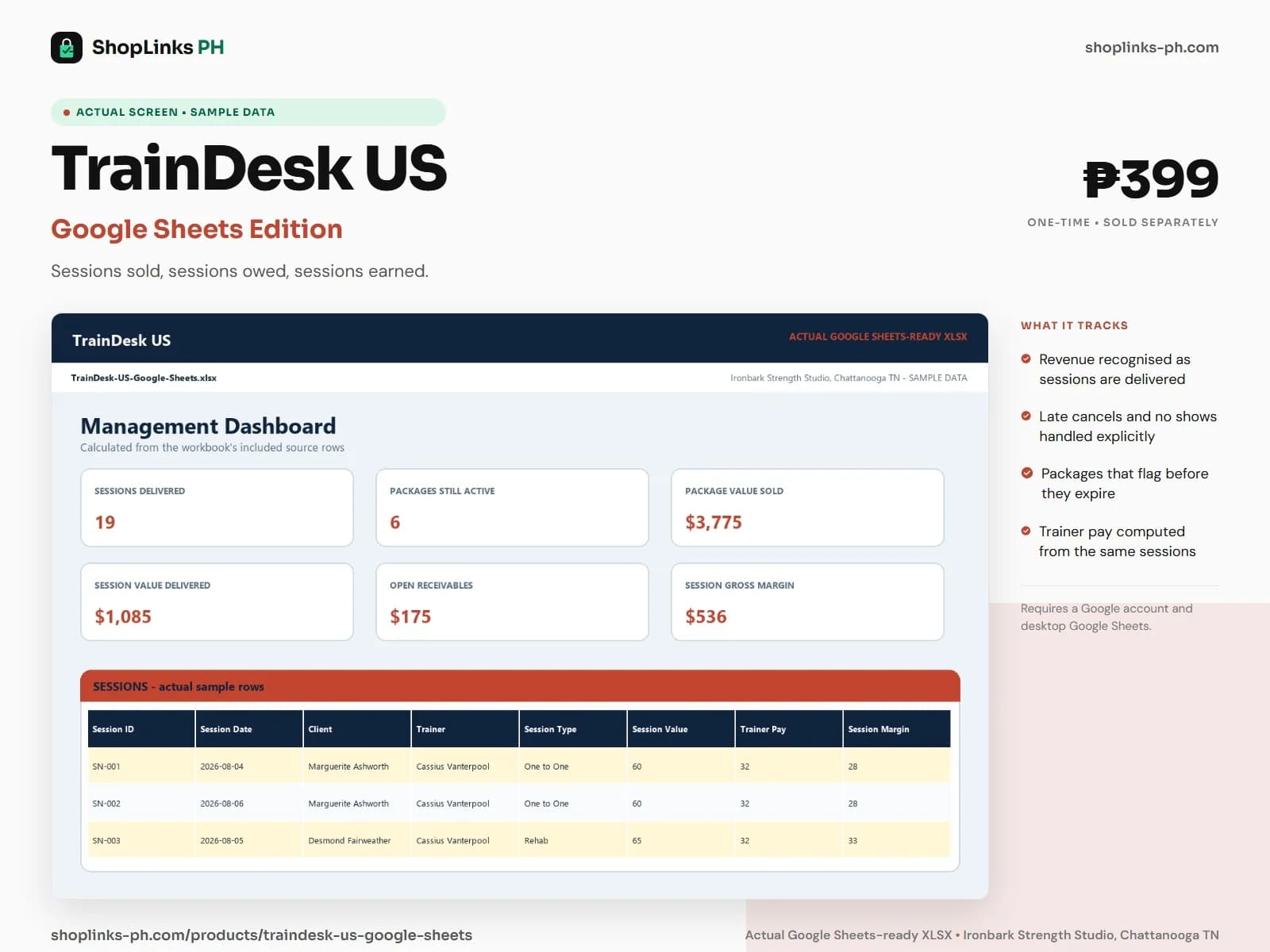
A training studio takes money in large lumps and delivers it in small ones. A twenty session package paid in July is cash in the account and a liability on the floor, and the two look identical in a bank balance. Studios that treat the deposit as revenue are perpetually surprised by a quiet month, because the quiet month is when they are working off sessions that were paid for months ago. TrainDesk US separates what was sold from what has been delivered.
A session is worth what the package divided by
Each package sale records the price actually paid and the sessions purchased, which fixes the value of every session in it.
A discounted twenty pack and a full-price five pack then produce genuinely comparable per-session figures, which is what pricing decisions need.
Only attendance draws down the package
A session marked Attended consumes one from the package. A late cancel or a no show is recorded but does not.
Whether to charge for a late cancel is a policy decision, and keeping it explicit means the policy is applied rather than remembered.
Sessions you still owe
Sessions remaining and a plain Active, Used up or Expired label follow from what has been delivered against what was bought.
This is the figure a studio owner most needs and most rarely has: how much coaching has been paid for and not yet given.
Trainer pay from the same record
A per-session trainer earns a flat rate for each delivered session; a commission trainer earns a share of the session value.
Because pay and revenue come from one record, the margin per session is visible immediately and a disputed session is settled once.
Review exceptions every week
Resolve duplicate IDs, missing links, overdue balances, negative amounts, and open operational items in CHECKS before using the dashboard for decisions.
TrainDesk US Google Sheets Edition is designed for use with a Google account and current desktop Google Sheets.
No client booking app or scheduling portal, no medical clearance, rehabilitation protocol or exercise prescription, no nutrition planning, no card terminal integration, and no payroll or contractor tax filing.