Key takeaways
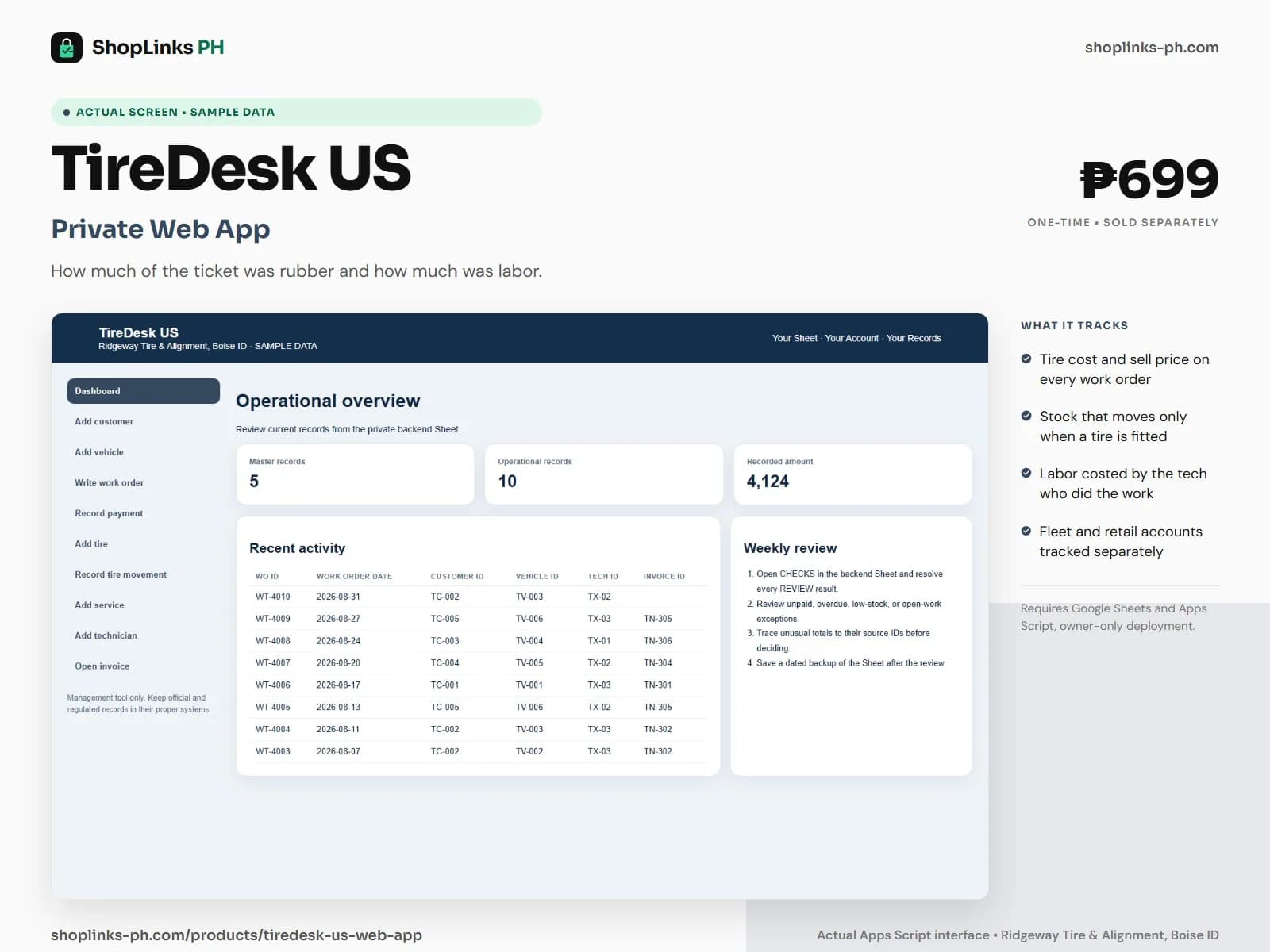
- Tire margin and labor margin stay separate.
- Stock moves only when a tire is fitted.
- Labor cost follows the technician booked.
- Fleet and retail share one margin arithmetic.
A tire shop sells two very different things on the same ticket. Rubber moves at a thin percentage against a cost that changes every quarter, and labor moves at a fat percentage against a cost that barely changes at all. Combine them into one total and the shop loses sight of which one is actually paying the rent, which is how a busy tire business ends up discounting the wrong half.
Two margins on one ticket
Tires fitted to a work order carry both their cost and their sell price. Service labor carries a price and the minutes it takes.
Keeping them apart shows what most shop owners suspect but cannot prove: that alignments and mount-and-balance work carry the business while tire margin is thin and shrinking.
Stock that moves on fitting
Only movements marked as fitted count toward cost, so a wholesale delivery or a tire returned to stock never inflates a customer's job.
On hand then follows the opening count plus stock in less stock out, which makes the reorder level reflect what actually leaves the rack.
Labor costed by who did it
An alignment specialist and an apprentice doing rotations carry different hourly costs, and the work order derives its labor cost from whoever was booked.
That is what keeps a high-value alignment ticket comparable against a high-volume mount-and-balance day.
Fleet and retail are different businesses
Retail work is invoiced on collection; fleet work accumulates onto a monthly invoice across several vehicles.
Tracking both in the same register with the same margin arithmetic is what lets an owner see whether the fleet discount is still affordable.
Review exceptions every week
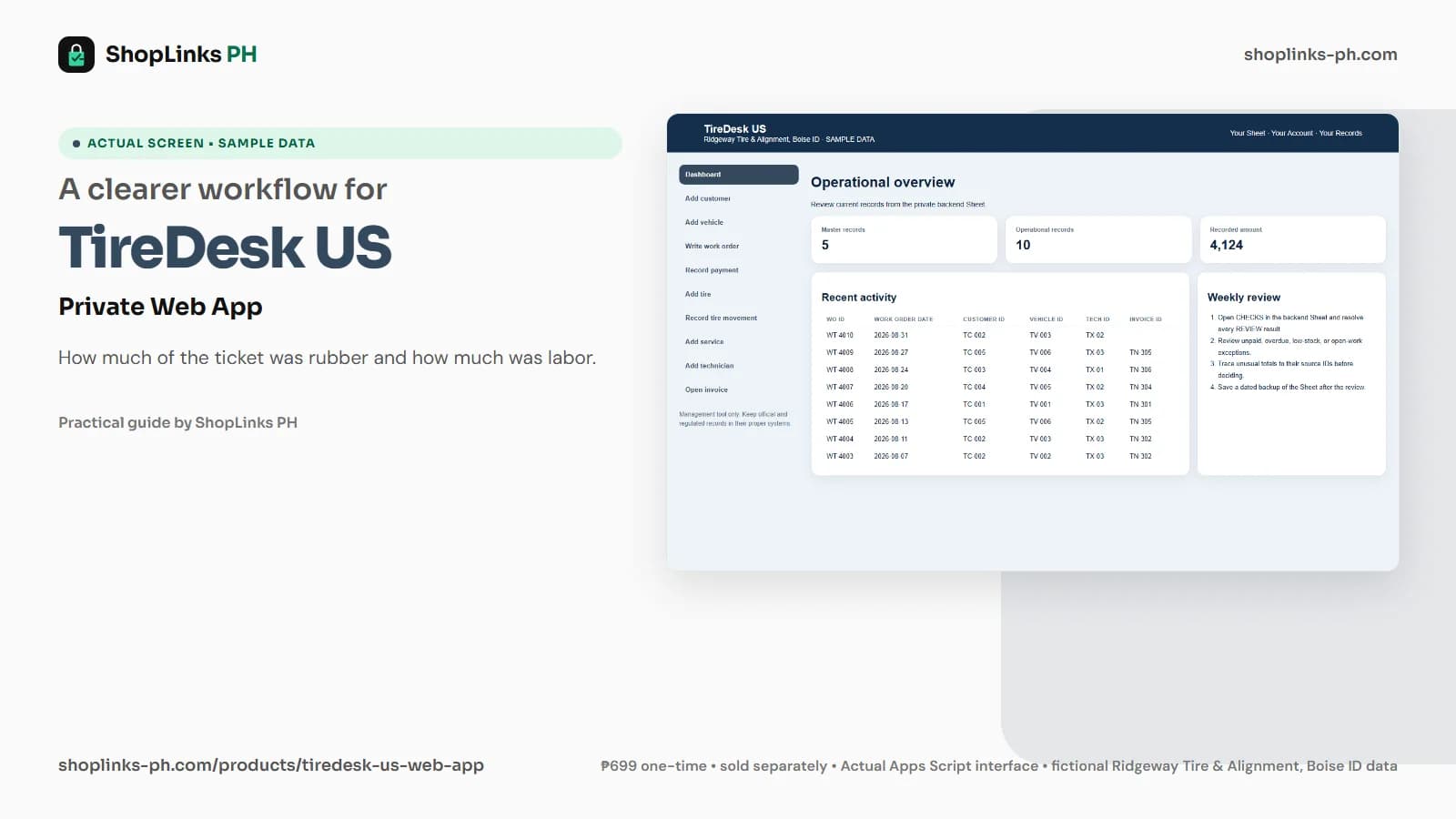
Resolve duplicate IDs, missing links, overdue balances, negative amounts, and open operational items in CHECKS before using the dashboard for decisions.
TireDesk US Private Google Sheets Web App is designed for use with a Google account, Google Sheets, and Apps Script, using owner-only deployment by default.
No tire manufacturer warranty or road hazard claim filing, no DOT tire registration submission, no state safety inspection records, no online tire quoting or e-commerce, and no supplier ordering integration.