Key takeaways
- Days on floor freezes when an item sells or is pulled.
- The markdown schedule prices the whole floor at once.
- Splits and store margin derive from the item record.
- Sell-through and days to sell are measured per category.
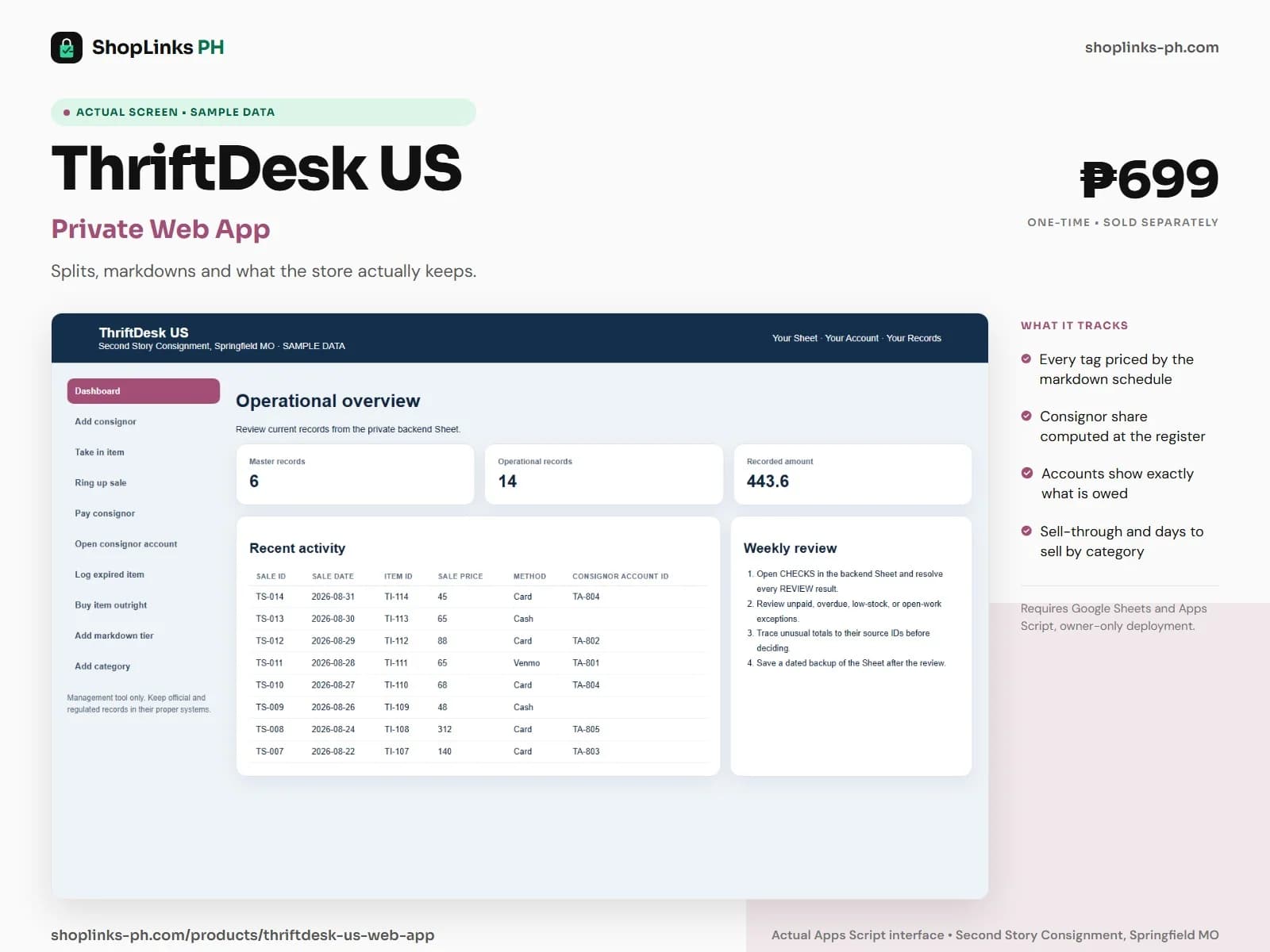
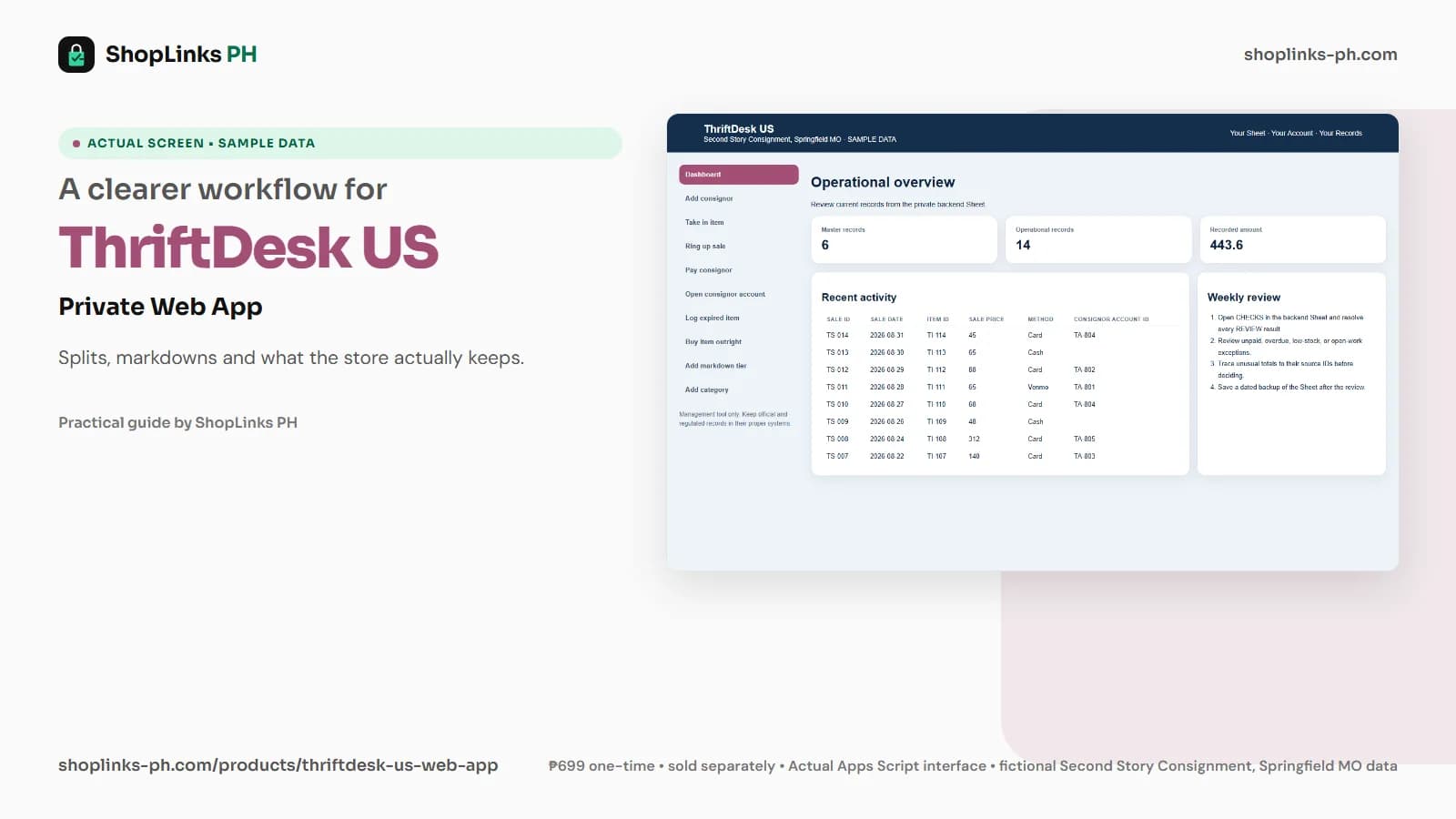
Second Story Consignment takes in about thirty items a month from five regular consignors and pays each a different share. By the last week of August the owner can see the till but not the answers: which racks are stale, what each consignor is owed, and whether the furniture that sat eighty days earned its floor space. ThriftDesk US derives the price, the split and the margin from the intake record itself.
Intake sets everything in motion
Each item records its consignor, category, description, listed price and whether it was consigned or bought outright. Days on floor counts from the intake date and freezes on the day the item sells or is pulled.
That single number drives the markdown schedule, the current price on the tag and the expiry decision, so no item sits at full price for ninety days because nobody walked the rack.
The markdown schedule prices the tag
The schedule is set once: each tier covers a range of days on floor and applies a discount. An item's discount is looked up from its age, and the current price is the listed price less that discount.
Changing the schedule reprices the whole floor at once, which is the point. A store that discounts by feel can never compare what a category earns against how long it takes.
The split happens at the register
A sale names only the item and the price. The consignor, the split percent, the consignor share and the store share all derive, and an item the store bought outright splits nothing because there is no consignor to pay.
Item cost is the price paid to buy that item outright, and store margin is the store share less that cost, so bought stock and consigned stock can finally be compared on the same line.
Accounts and sell-through
Each consignor account totals the sales tagged to it for the month, subtracts payouts and reads Owed, Partly Paid or Settled, so writing checks is a matter of reading a column rather than adding tickets.
The category summary shows items taken, items sold, sell-through percent, gross sales, consignor share, store margin and average days to sell, and labels a category with nothing sold yet In progress.
Review exceptions every week
Resolve duplicate IDs, missing links, overdue balances, negative amounts, and open operational items in CHECKS before using the dashboard for decisions.
ThriftDesk US Private Google Sheets Web App is designed for use with a Google account, Google Sheets, and Apps Script, using owner-only deployment by default.
No point of sale terminal or card processing, no online marketplace listings or shipping labels, no consignor tax forms or contractor filing, no barcode or price tag printing, and no automatic markdown emails or customer notifications.