Key takeaways
- Every unit carries its true cost after reconditioning.
- Buyer and bank balances are tracked per sale.
- Missing papers surface before release.
- Profit and days in stock are computed per unit.
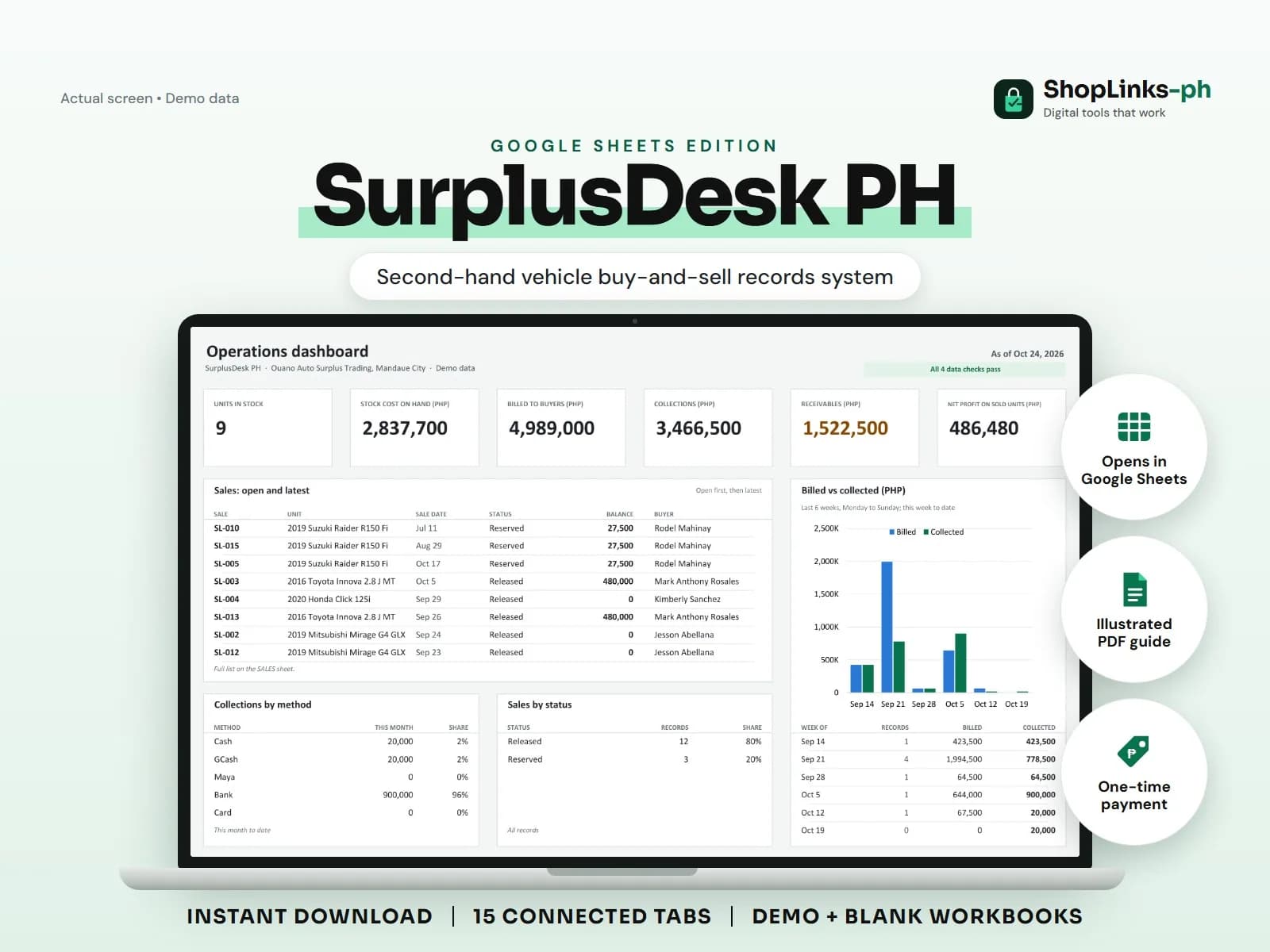
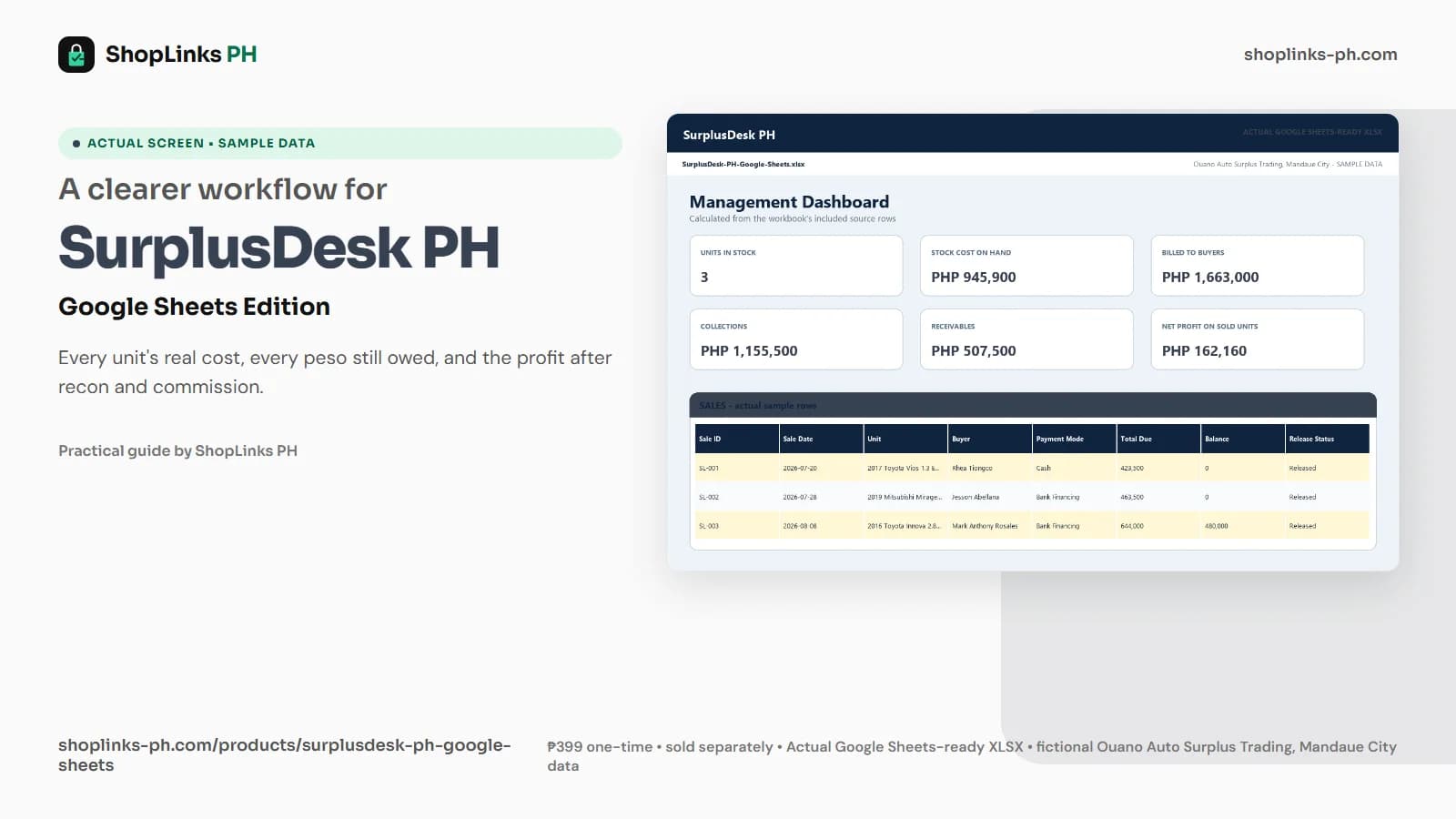
Buy-and-sell profit is decided by small numbers recorded in different places: tires, repaint, the agent's commission, a bank release that comes weeks after the unit leaves the lot. SurplusDesk PH keeps every one of those numbers tied to the unit it belongs to, from purchase to the final payment.
One unit, one cost record
Every unit gets an identifier with its plate, year, mileage, source and buy price. Reconditioning costs are tagged to it as they happen.
Total cost is the buy price plus every recon cost, so you know your floor before the first buyer calls.
Sales paid in pieces
Cash buyers reserve and then pay the balance. Financed buyers pay a down payment while the bank releases the loan later. In-house installments come in weekly or monthly.
Each payment is recorded against the sale with its kind, so the balance shows exactly what is still expected and from whom.
Papers before release
Registration papers, the seller's deed of sale, clearances and the transfer of ownership are logged per unit as required or optional, on hand or released.
Anything required and not on hand reads Missing. Check that list before accepting a reservation.
Profit per unit, including the people
Unit profit takes the sale price, adds the bank's financing commission, and subtracts total cost and the agent's commission.
Margin percent and a label follow: Healthy, Thin, Low or Loss. Unsold units show their days in stock and turn Aging stock after sixty days.
Review exceptions every week
Resolve duplicate IDs, missing links, overdue balances, negative amounts, and open operational items in CHECKS before using the dashboard for decisions.
SurplusDesk PH Google Sheets Edition is designed for use with a Google account and current desktop Google Sheets.
No LTO transfer filing, no HPG clearance processing, no bank loan application or approval, no vehicle valuation or price guide, and no posting of listings to any marketplace.