Key takeaways
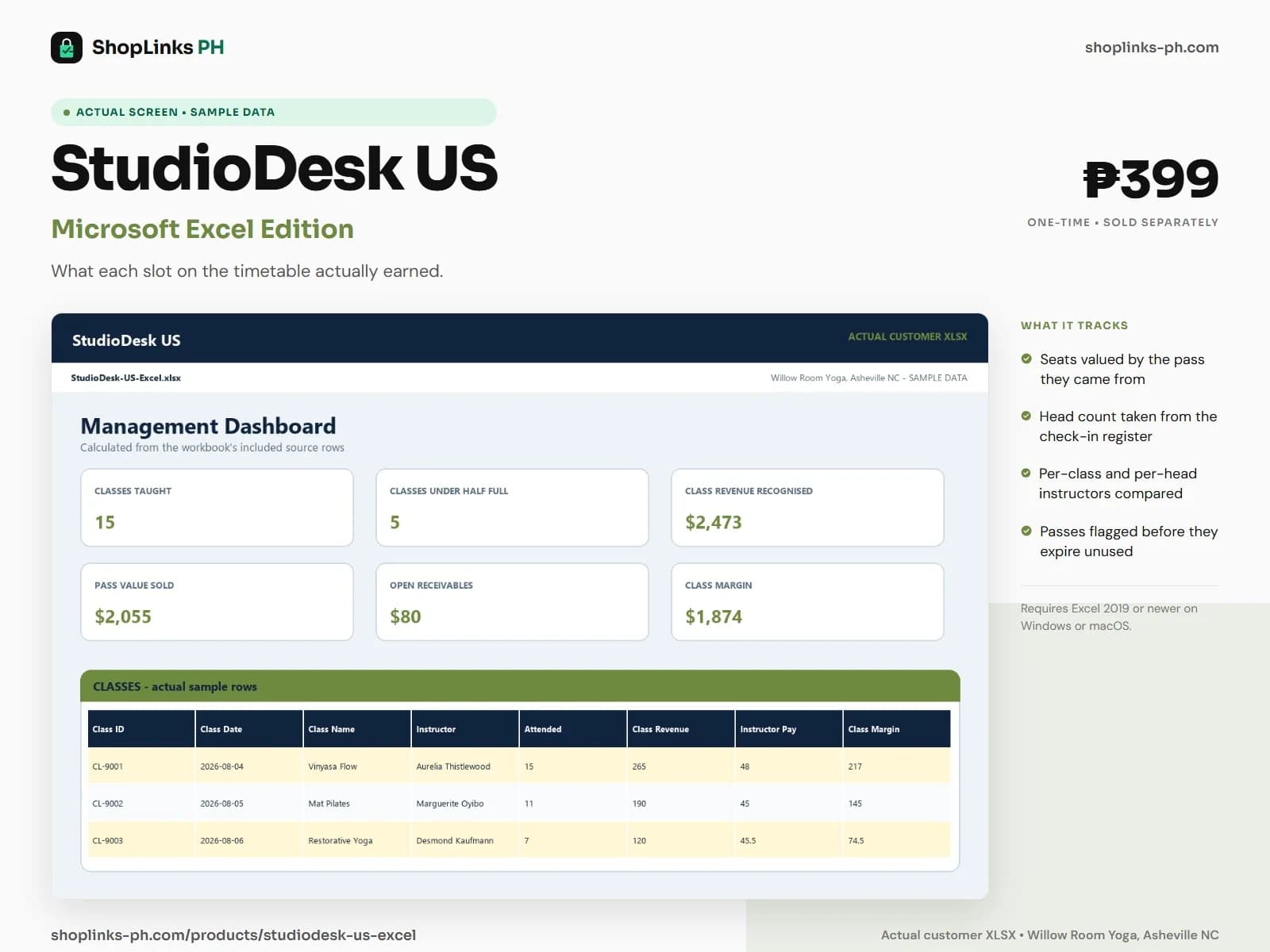
- Seat value comes from the pass that paid for it.
- Head count is derived from check-ins.
- Flat and per-head instructor pay compare directly.
- Passes are flagged before they expire.
A studio timetable is written once and then defended forever. The Friday evening yin class had two people last week and three the week before, and it stays on the schedule because it always has been. Meanwhile the instructor is paid the same flat rate whether two people or sixteen turn up. StudioDesk US puts a revenue figure and a cost figure on every slot so the timetable can be argued about with numbers.
A seat is worth what the pass paid
Each pass records the classes included and the price actually paid, which fixes the credit value of a single class.
A member on a discounted twenty pack contributes less per seat than a drop-in, and class revenue counts each attendee at the right value.
Head count comes from the register
Attendance is counted from the check-ins rather than typed on the class, so the number used for utilisation is the same one that produced the revenue.
This removes the most common inconsistency in studio records, where a class is remembered as busier than the till suggests.
Two ways to pay an instructor
A flat class rate costs the same whether two people or twenty attend; a per-head rate scales with the class.
Comparing the two across a month usually shows that flat rates suit full classes and per-head rates protect the studio on quiet slots.
Passes that expire unused
Classes remaining and a plain Active, Used up or Expired label follow from check-ins against the pass.
A pass expiring with credits left is revenue the studio keeps and a member who feels cheated, which is worth a phone call before rather than after.
Review exceptions every week
Resolve duplicate IDs, missing links, overdue balances, negative amounts, and open operational items in CHECKS before using the dashboard for decisions.
StudioDesk US Microsoft Excel Edition is designed for Microsoft Excel 2019 or newer on Windows or macOS.
No class booking app or member-facing schedule, no waiver or liability form storage, no card terminal or recurring billing integration, no unlimited membership credit modelling, and no automatic class reminders.