Key takeaways
- Payments settle specific charges, so ageing is real.
- Delinquency stages come from recorded dates.
- Occupancy and balance read per unit.
- Maintenance cost is tracked per door.
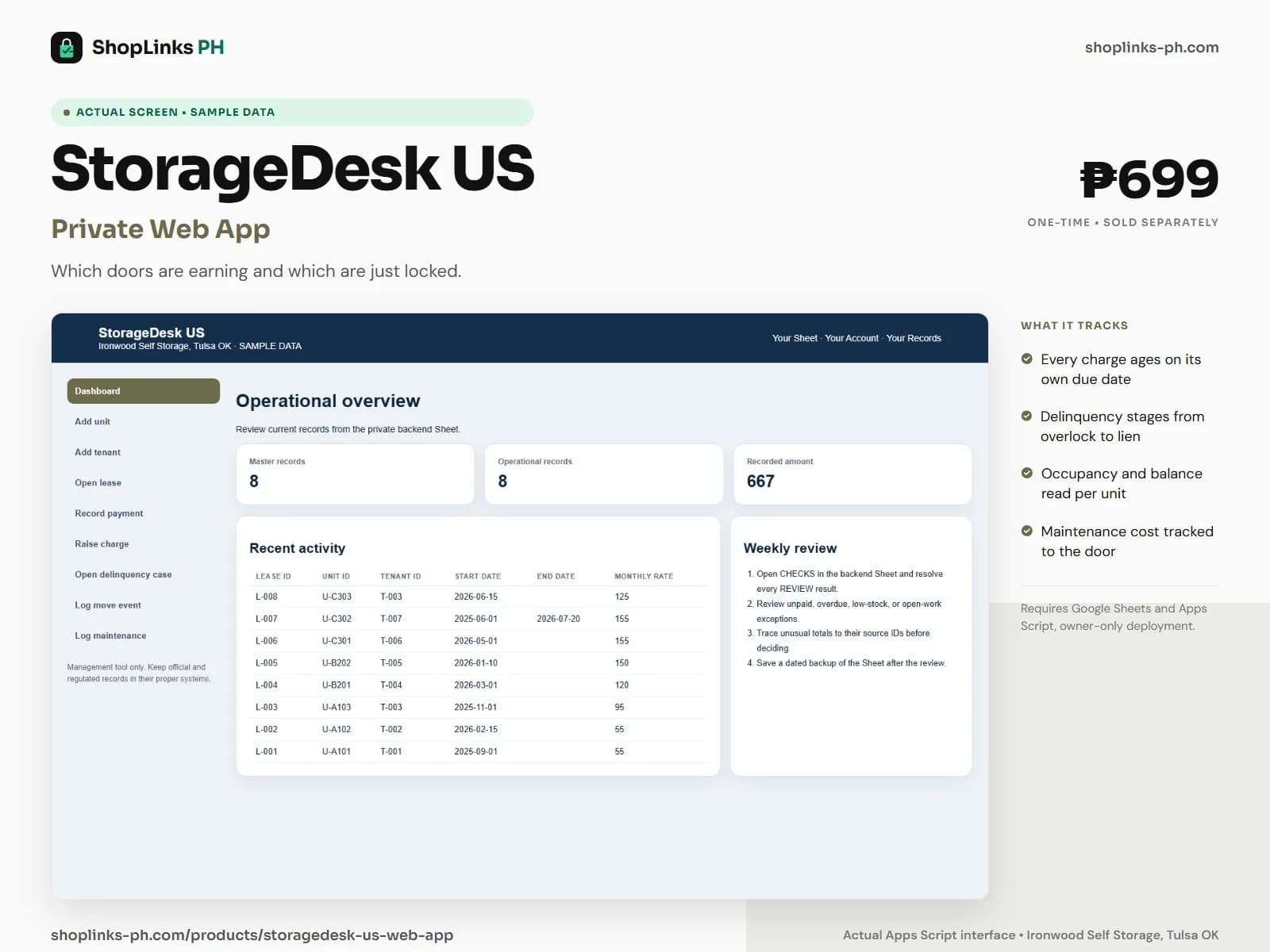
Self storage is a simple business with one complicated part. Renting a unit is easy; recovering one is a sequence of dated steps with legal consequences if any of them are skipped or mistimed. Meanwhile a vacant unit earns nothing and looks identical to an occupied one from the office. StorageDesk US keeps both the ageing and the occupancy in front of you.
Charges age on their own dates
Rent, late fees, lock sales and insurance are each raised as a charge with a due date, and payments settle specific charges.
That is what lets a balance be genuinely aged rather than reduced to a single number nobody can break down.
Delinquency is a sequence
A case records the overlock date, the lien notice date and any auction date, and the stage derives from whichever has happened.
The value is in seeing where every case actually sits, because the steps have statutory timing and skipping one restarts the process.
Occupancy per door
Each charge inherits its unit from the lease, so collections read per unit rather than only per tenant.
A unit reads Vacant, Past due or Current, which is the list a manager should be walking with.
Maintenance against the unit
Repairs are recorded against the unit with their cost and completion date.
A door that consumes three repairs a year is a capital decision hiding inside an operating cost.
Review exceptions every week
Resolve duplicate IDs, missing links, overdue balances, negative amounts, and open operational items in CHECKS before using the dashboard for decisions.
StorageDesk US Private Google Sheets Web App is designed for use with a Google account, Google Sheets, and Apps Script, using owner-only deployment by default.
No gate access control or keypad integration, no tenant portal or online rental, no automatic payment processing or autopay execution, no lien notice generation or auction listing, and no insurance underwriting.