Key takeaways
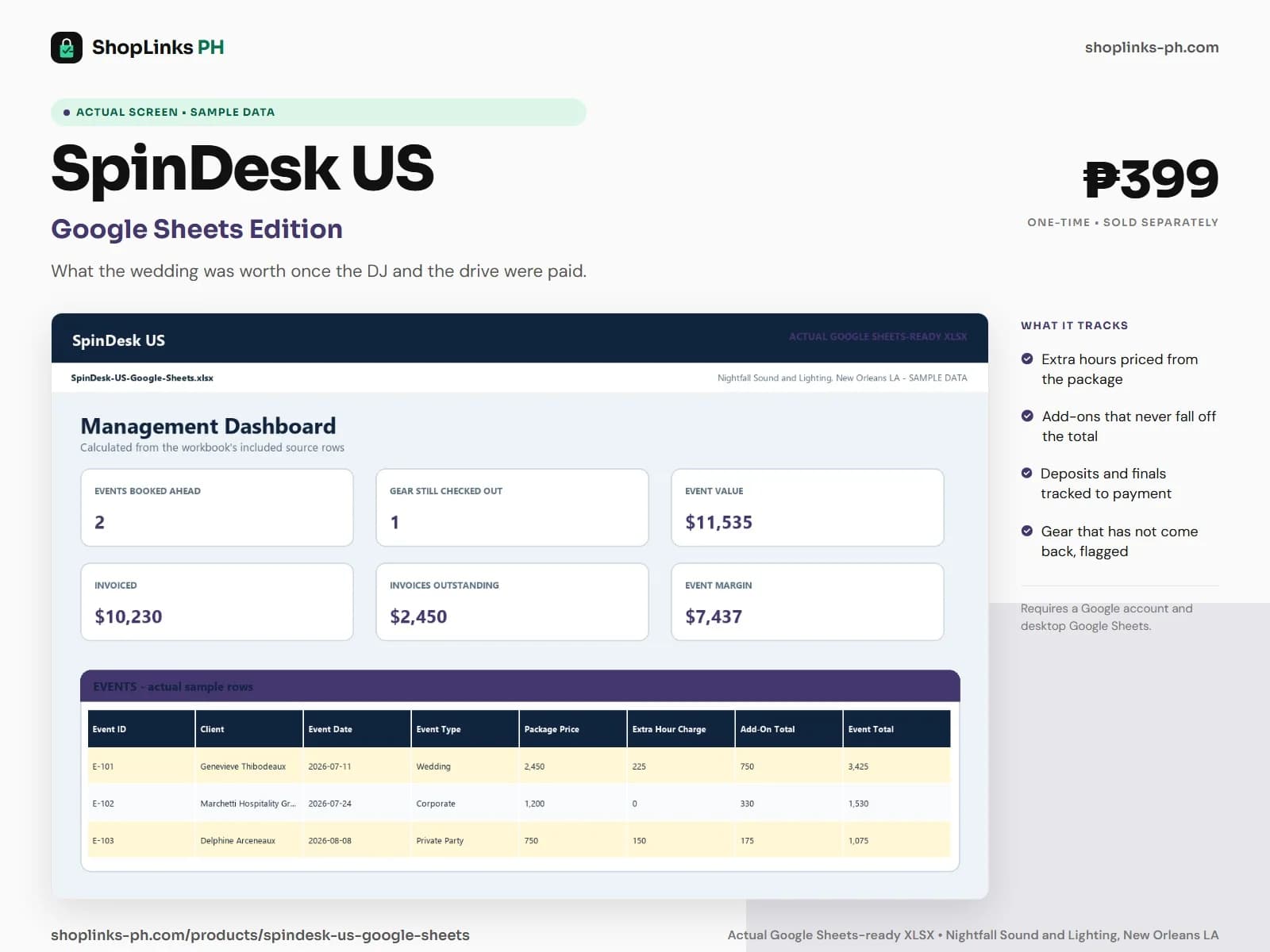
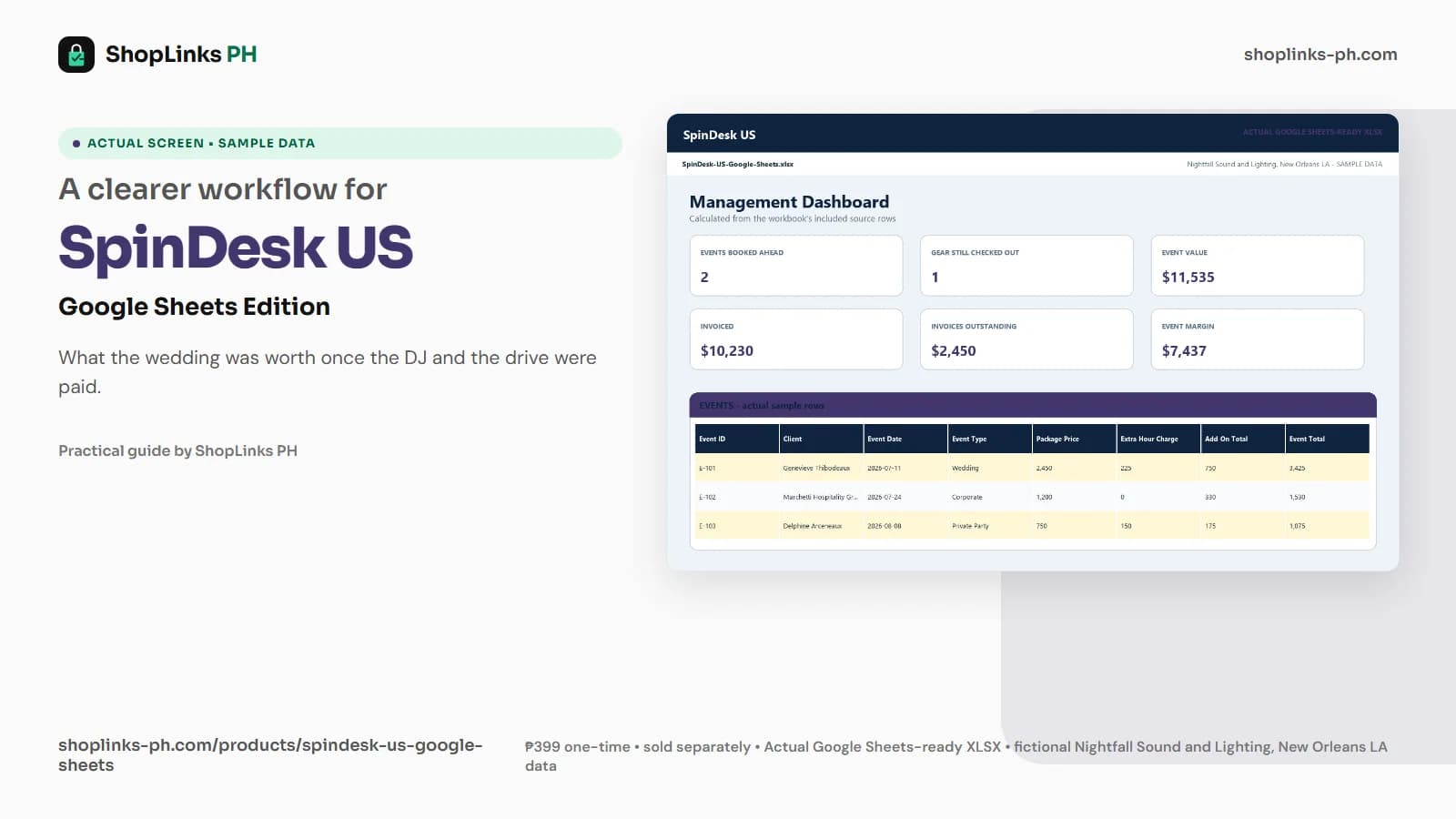
- Extra hours are priced from the package.
- Add-ons roll up onto the event total.
- Deposits, finals and gear are tracked to completion.
- Margin is read per event after DJ pay and mileage.
A DJ booking looks simple from the calendar: a date, a venue, a package price. By the night itself it has usually grown an extra hour, uplighting, a second microphone and a forty-mile drive, and the DJ working it is paid for all of that. SpinDesk US keeps the booking and its real cost in the same place.
Packages that price the extras
Each package records the hours it includes and its extra hour price, and each event records the hours actually booked.
The extra hour charge follows automatically, which is the line most often agreed at the venue and then forgotten on the invoice.
Add-ons attached to the event
Uplighting, sparks, ceremony sound and photo booths are recorded against the event they were sold with.
The event total is package, extra hours, add-ons and travel fee together, so the invoice is built from the full figure.
Deposits, finals and gear
Deposit and final invoices each track their own balance and days late, so a final due before the wedding is visible in time.
Gear is checked out to an event and back in, and anything not returned or returned damaged is flagged.
Margin per event
Event margin subtracts the DJ's pay, their overtime at their own rate, their mileage and any other cost.
Long drives with no travel fee show up quickly, usually on the smaller bookings where the margin could least afford it.
Review exceptions every week
Resolve duplicate IDs, missing links, overdue balances, negative amounts, and open operational items in CHECKS before using the dashboard for decisions.
SpinDesk US Google Sheets Edition is designed for use with a Google account and current desktop Google Sheets.
No online booking calendar or client portal, no contract or e-signature generation, no music request or timeline planning, no payroll or 1099 filing, and no card processing.