Key takeaways
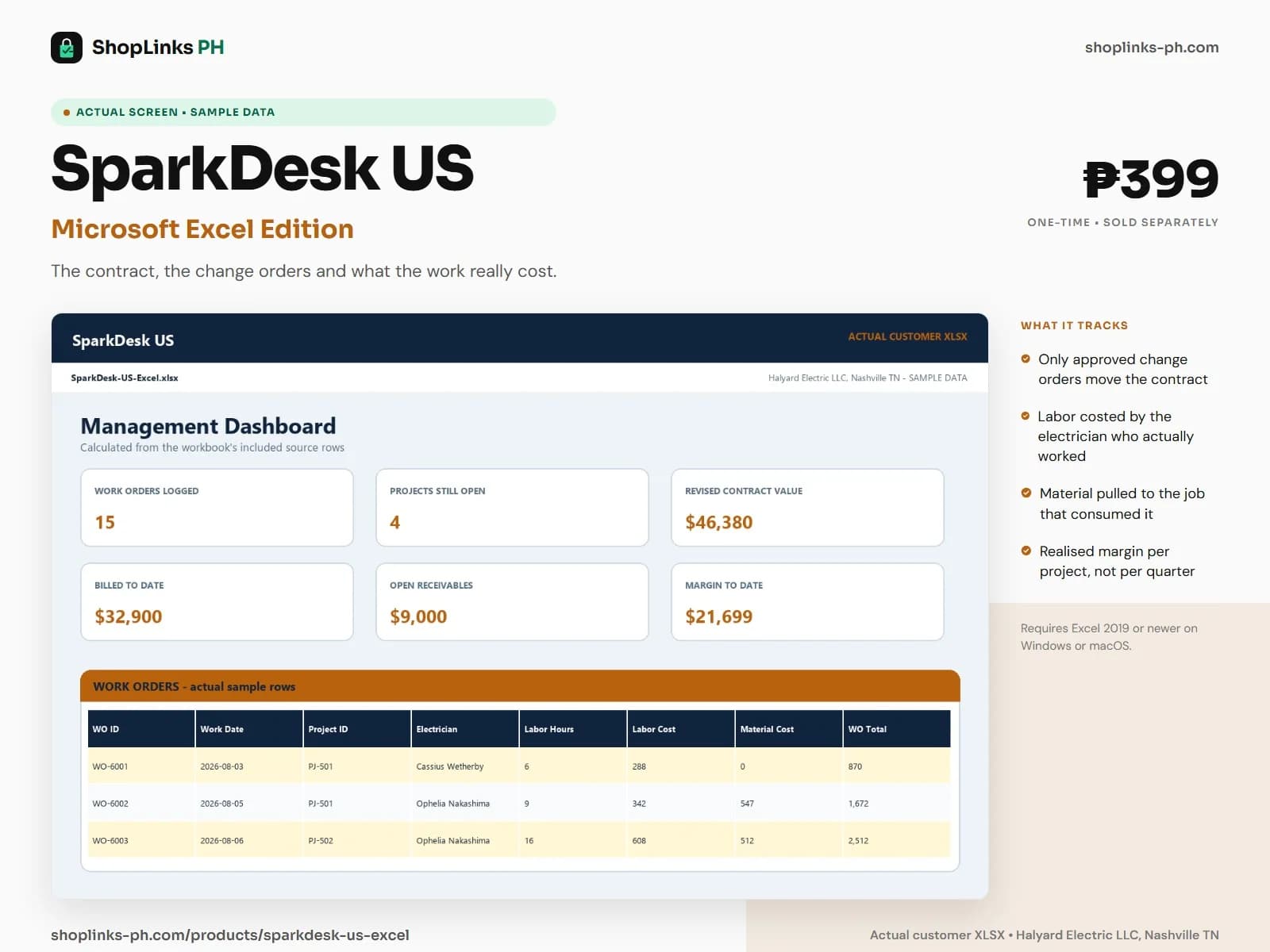
- Only approved change orders move the contract.
- Labor cost follows the electrician who worked.
- Job-use material is separated from restock.
- Billed and collected are tracked separately.
An electrical contractor loses money in two predictable places. The first is the change order that was agreed on site and never written down, so the work happens and the contract never moves. The second is the project where an apprentice-heavy crew looked cheap and a master's hours quietly consumed the margin. Neither shows up in a bank balance until several projects later. SparkDesk US makes both visible while the job is still running.
The contract only moves when someone approves it
A change order records what was asked for, what it costs and whether it was approved. Only approved ones add to the contract.
That means the revised contract is a figure you can bill against, and the pending ones stay visible as work that has been discussed but not yet sold.
Labor costed by the person who did it
Every electrician carries an hourly cost and a billable rate. A work order records the hours once and both figures follow.
A rough-in staffed by an apprentice and a service upgrade run by a master therefore cost what they actually cost, rather than an averaged shop rate that flatters one and penalises the other.
Material that belongs to a job
Material is pulled to a work order, and only job-use movements count toward cost, so a truckload restock never inflates the project it happened to arrive during.
The same movements keep the shop inventory current, which is the difference between a reorder level based on usage and one based on guesswork.
Margin per project, billing kept separate
Margin to date compares what has been billed against labor and material cost and labels it Healthy, Thin or Loss, so a job that is only half built is not credited with its whole contract.
Billed to date and collected are tracked as separate figures, because a project that is fully billed and half collected is a different problem from one that is under-billed, and progress billing makes them easy to confuse.
Review exceptions every week
Resolve duplicate IDs, missing links, overdue balances, negative amounts, and open operational items in CHECKS before using the dashboard for decisions.
SparkDesk US Microsoft Excel Edition is designed for Microsoft Excel 2019 or newer on Windows or macOS.
No jurisdiction permit filing or electronic plan review, no AIA or lien waiver document generation, no retainage or certified payroll calculation, no load calculation or code compliance checking, and no estimating takeoff from drawings.