Key takeaways
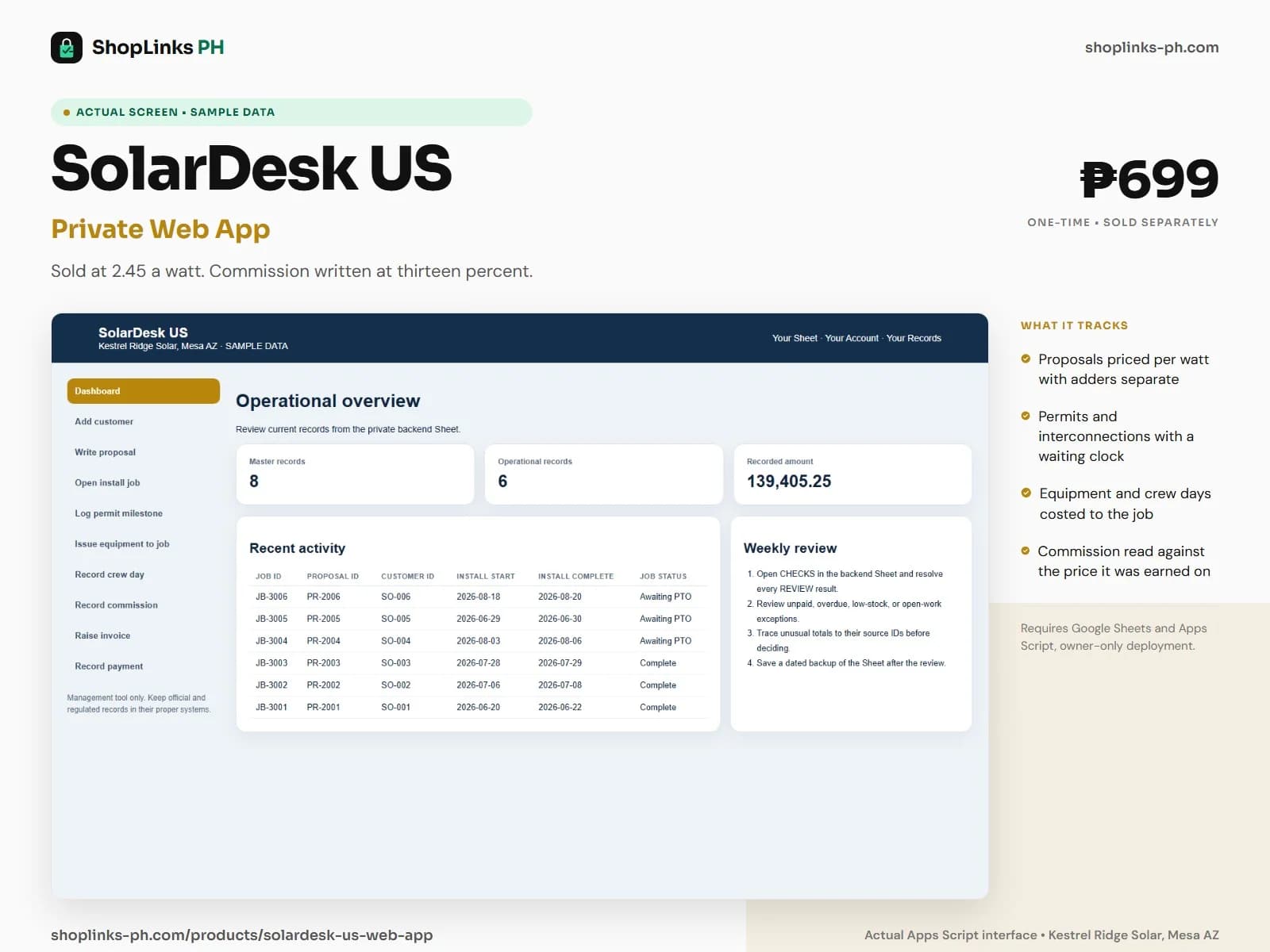
- Proposals price themselves per watt with adders separate.
- Every permit and interconnection carries a waiting clock.
- Equipment, crew days and permit fees land on the job.
- Commission is read against the contract it was earned on.
A residential solar job is sold in an evening and delivered over three months. The price is set per watt, the cost lands as equipment, crew days and a commission cheque, and everything in between is a queue at a city desk or a utility. The jobs that go wrong rarely go wrong on the roof. They go wrong in a discount the commission never came down to meet, or in a permission to operate nobody chased.
Priced per watt, recorded per watt
Each proposal carries system size and price per watt, and the system price derives from them, with adders kept separate.
A job takes its size, rate and contract price from the proposal that sold it, so the number the crew builds to is the number the closer sold.
Every milestone has a clock
Building permits, HOA reviews, interconnection applications and permission to operate each record when they were submitted and when they came back.
Anything unapproved reads Waiting with the days it has been sitting, which is the list worth reading on a Monday.
Cost that belongs to the job
Equipment lines cost themselves from the item's unit cost, and crew days cost themselves from that crew's day rate.
Permit fees land on the job too, so a jurisdiction that charges eight hundred dollars is visible rather than absorbed.
Commission against the price it was earned on
Every commission is tied to the contract it came from, so the rate is read against the price per watt that was actually signed.
A discounted job carrying a full rate is the most common way a solar company sells itself into a loss, and it only shows when both sit on the same row.
Review exceptions every week
Resolve duplicate IDs, missing links, overdue balances, negative amounts, and open operational items in CHECKS before using the dashboard for decisions.
SolarDesk US Private Google Sheets Web App is designed for use with a Google account, Google Sheets, and Apps Script, using owner-only deployment by default.
It does not calculate federal or state tax credits, file incentive or rebate paperwork, or design systems. No shading analysis, production modelling or layout drawing, no permit portal submission, no proposal PDF or e-signature, and no payroll or commission tax handling.