Key takeaways
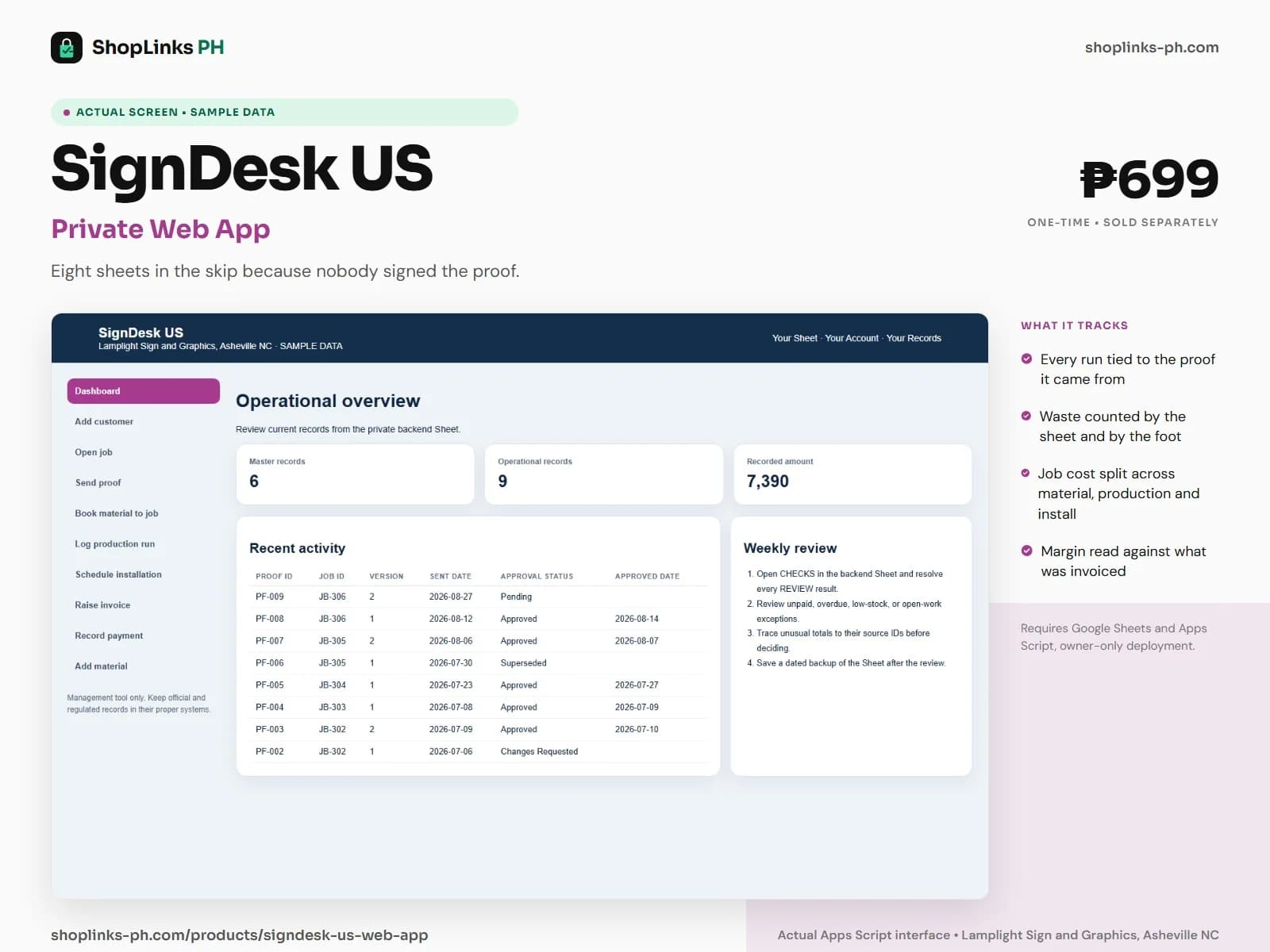
- Every run is tied to the proof it came from.
- Used and wasted material are costed separately.
- Job cost covers material, production and install.
- Margin is read against what was invoiced.
A sign shop loses money in two places that rarely appear on an invoice. The first is the job printed before the proof came back, which gets reprinted at the shop's expense. The second is the material quietly scrapped along the way, bought by the sheet and by the roll and written off in someone's head. SignDesk US records both.
The proof is the gate
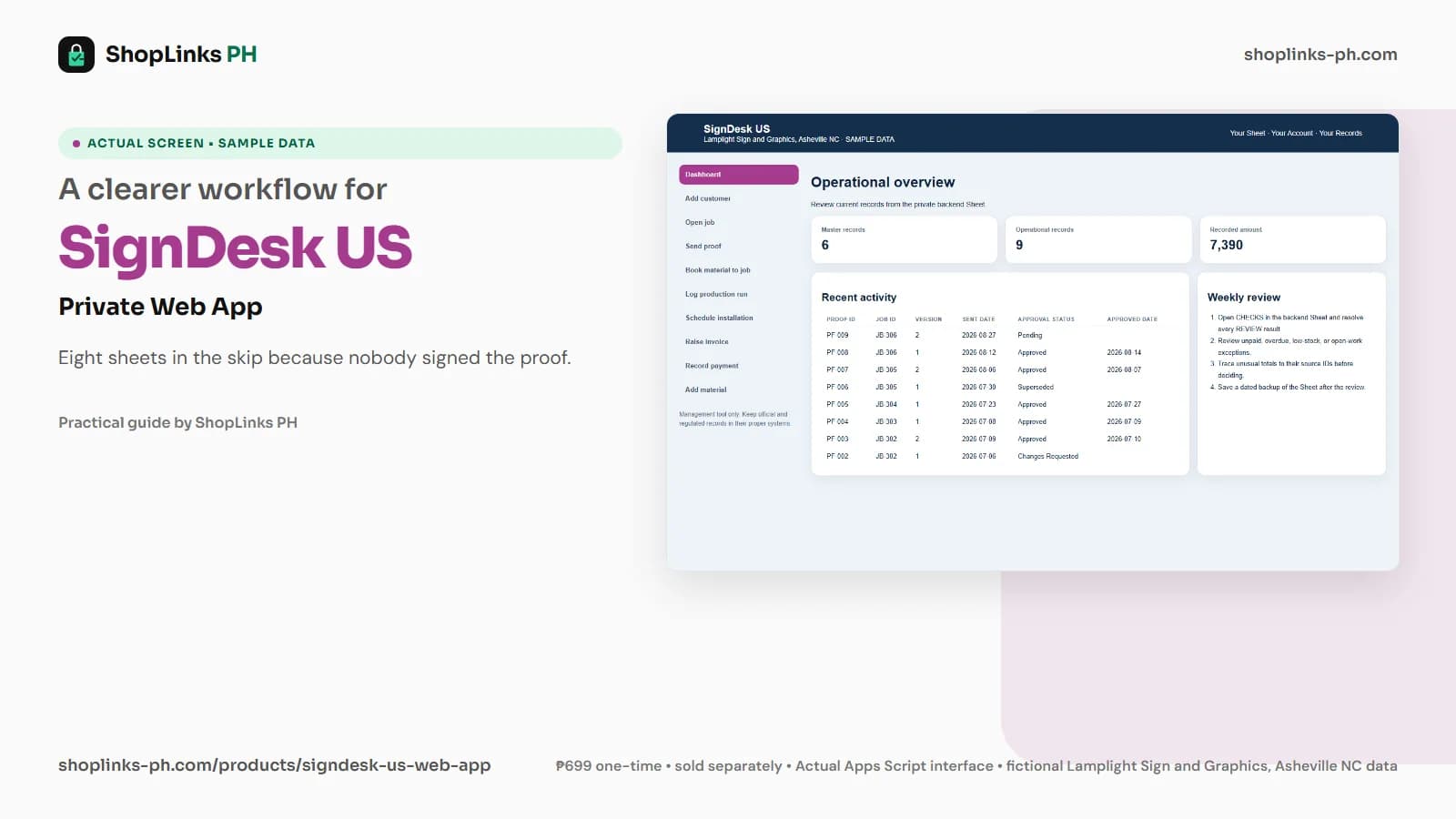
Each proof carries a version, a sent date, an approval state, an approval date and the name of the person who gave it.
Every production run points at the proof it was printed from, so a run against an unapproved version is a fact on the record rather than an argument later.
Waste has a cost per sheet
Material use lines record quantity used and quantity wasted separately, each priced from the material's cost per sheet or per foot.
The waste total is then a real number per job instead of an impression that this one ran long.
Where the job actually went
Job cost adds material, production runs at their station rate, and installation including crew hours and any permit fee.
A job that looked like a comfortable quote often turns out to have spent its margin on the router and the lift.
Margin against what was billed
Margin compares invoiced value with job cost, so a job still in production is not credited with a quote it has not delivered.
The reprint job shows the pattern plainly: same invoice, twice the material, a third of the margin.
Review exceptions every week
Resolve duplicate IDs, missing links, overdue balances, negative amounts, and open operational items in CHECKS before using the dashboard for decisions.
SignDesk US Private Google Sheets Web App is designed for use with a Google account, Google Sheets, and Apps Script, using owner-only deployment by default.
No artwork or design files, no RIP or printer queue control, no online proofing portal or e-signature, no permit filing with the municipality, and no card processing.