Key takeaways
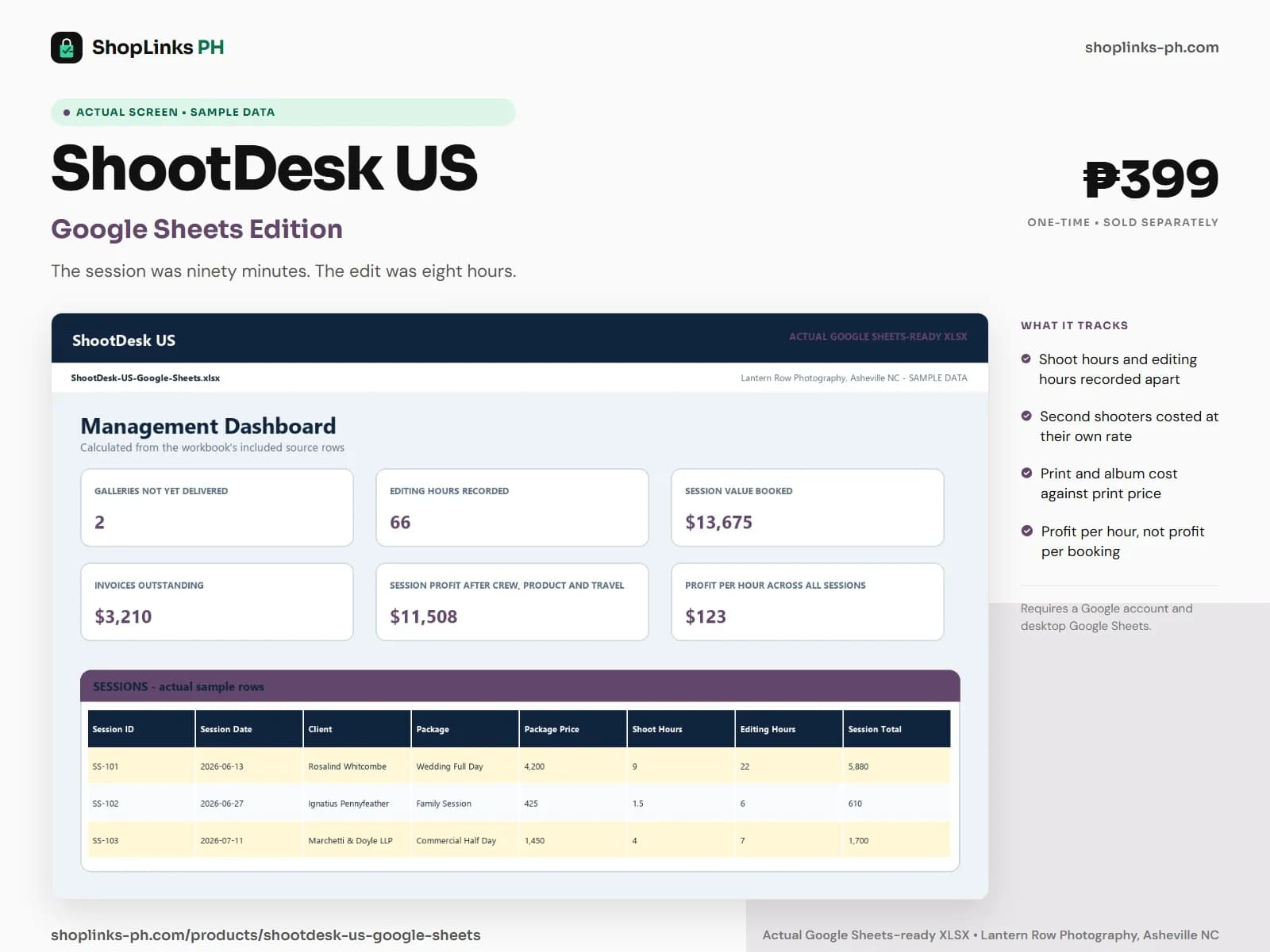
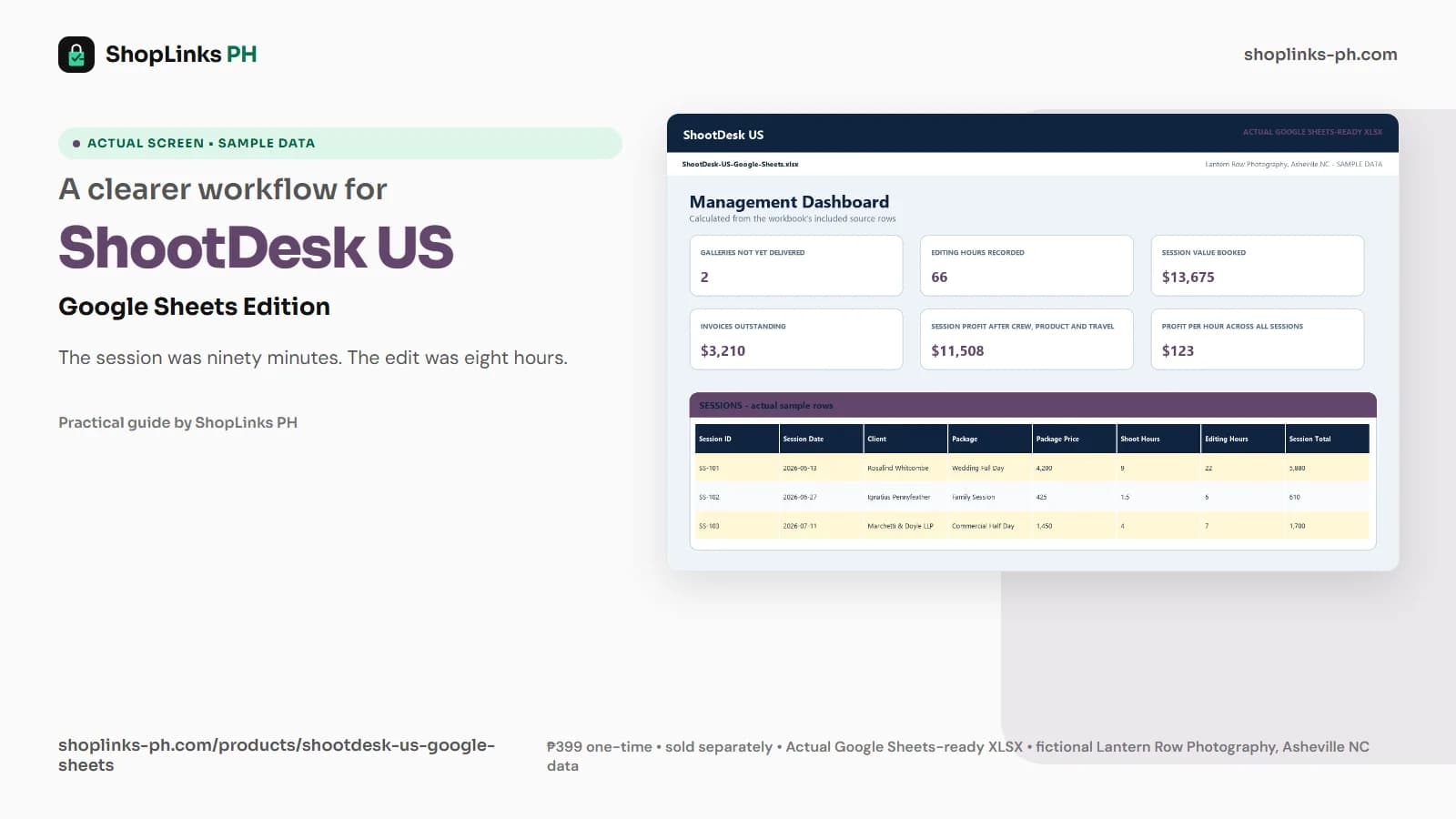
- Shoot hours and editing hours are recorded apart.
- Crew and product orders carry their own cost.
- Galleries are tracked against a promised date.
- Margin is read per hour, not per booking.
A photography session is sold as a package and delivered over three weeks. The shoot is the short part. The culling, the retouching and the second round of requested edits happen afterwards, they are almost never counted, and they are the reason a cheap session can pay less per hour than the photographer would accept from anyone else. ShootDesk US counts them.
Two kinds of hour
A session records shoot hours and editing hours as separate figures, and total hours is the sum of the two.
That single split is what turns a package price into a rate, and it is the number most studios have never once written down.
Crew and product have a cost
Second shooters and editing assistants cost the session their own hourly rate for the hours they worked on it.
Albums, prints and canvases carry both a cost and a price, so the product revenue is not mistaken for product profit.
Galleries against a promised date
Every gallery has a promised date, and one with no delivery date reads Overdue as soon as that date passes.
A gallery still in editing three weeks after the promised date is the most common complaint a studio gets, and it is entirely visible in advance.
Profit per hour
Session profit subtracts crew, product cost and the drive at the standard mileage rate, then divides by the hours actually worked.
Ranked that way, the smallest packages are usually the worst, because the editing time barely shrinks when the price does.
Review exceptions every week
Resolve duplicate IDs, missing links, overdue balances, negative amounts, and open operational items in CHECKS before using the dashboard for decisions.
ShootDesk US Google Sheets Edition is designed for use with a Google account and current desktop Google Sheets.
No online booking or client portal, no gallery hosting, proofing or image delivery, no contract or model release generation, no image files or catalogues of any kind, and no card processing. It records the business around the shoot, not the photographs.