Key takeaways
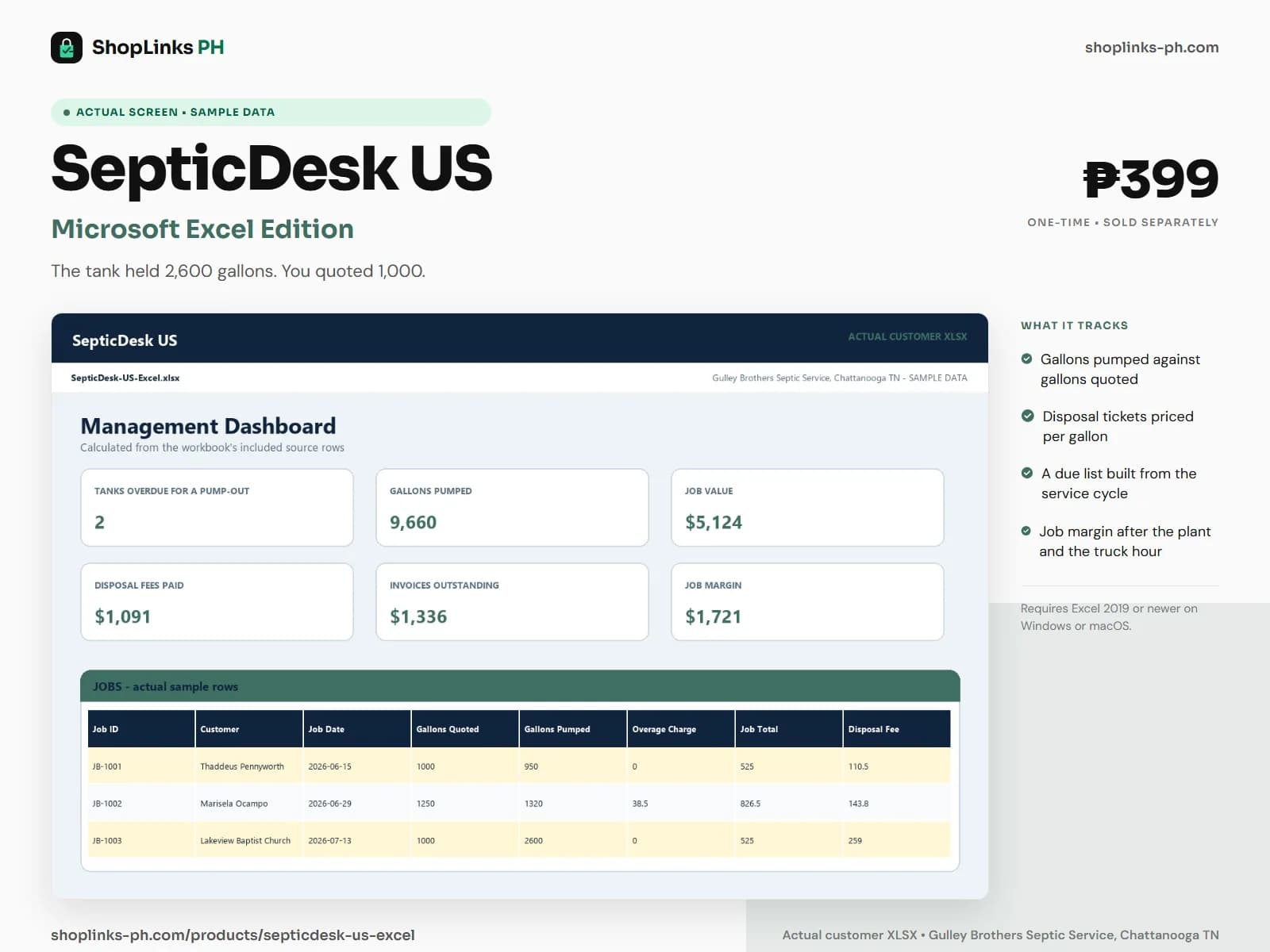
- Gallons pumped is recorded against gallons quoted.
- Disposal tickets price themselves per gallon.
- The due list builds from tank size and cycle.
- Margin is read after the plant and the truck hour.
A septic pump-out is quoted from a phone call and a number on an old index card. The truck arrives, the tank turns out to be larger or fuller than anyone said, and the driver pumps it anyway because that is the job. The cost of that decision appears an hour later at the treatment plant, on a ticket priced by the gallon. SepticDesk US keeps both numbers in the same record.
Gallons quoted against gallons pumped
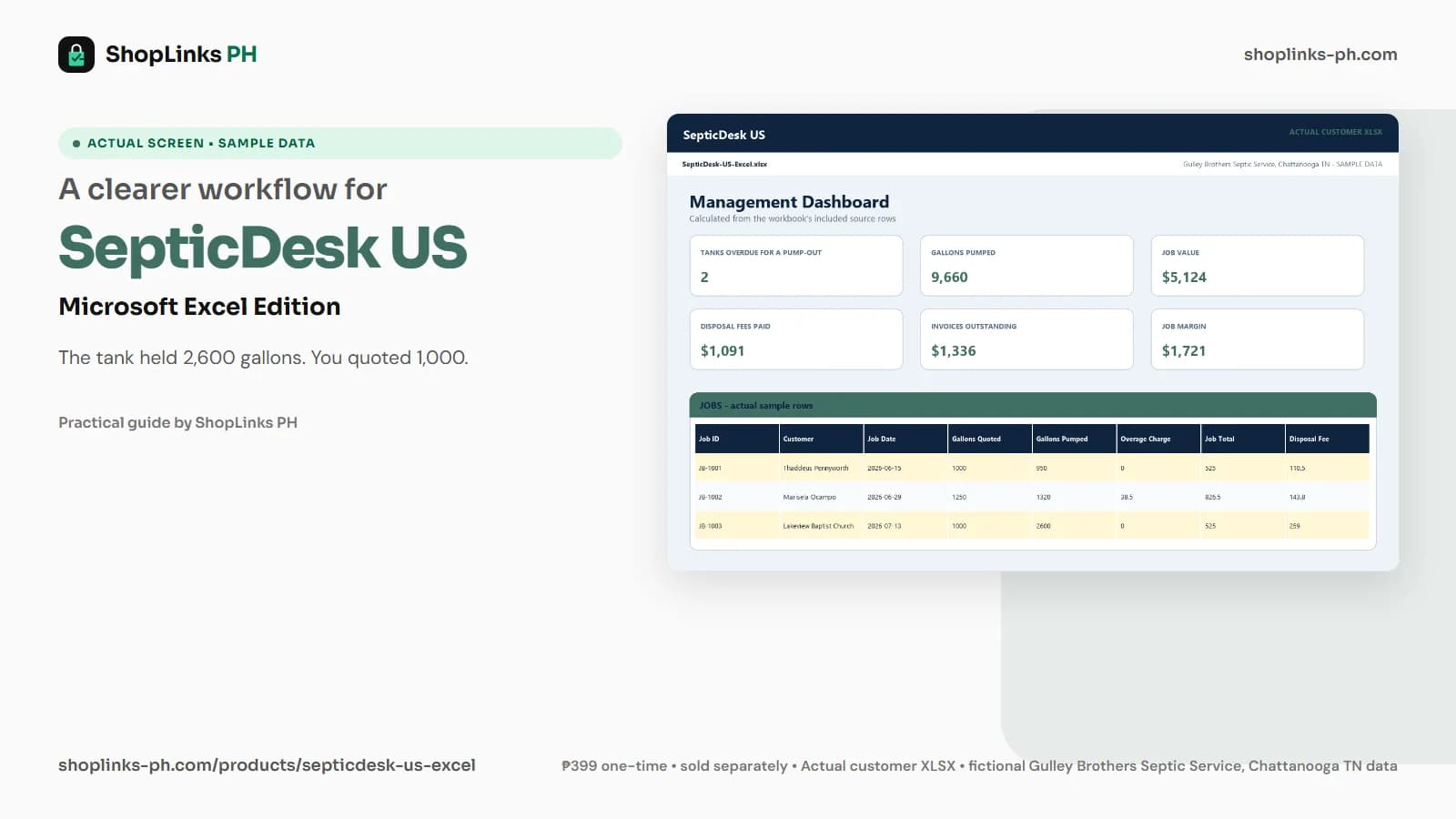
Every job records what was quoted and what actually came out of the tank, and the overage is the difference.
Where an overage rate was agreed, the charge follows automatically. Where it was not, the record shows plainly that the gallons were given away.
The disposal ticket is the real cost
Each ticket records the plant, the gallons taken, that plant's rate per gallon and its gate fee, and prices itself from them.
Two plants with a three cent difference per gallon are worth a detour on a full load, and the tickets are the only place that shows up.
A due list nobody has to remember
Customers carry a tank size, a last pumped date and a cycle in months, and the next due date derives from those three.
The due list then reads Overdue, Due soon or Current without anyone maintaining a separate calendar.
Margin after the plant and the truck
Job margin subtracts the disposal ticket, the truck hour at its own cost and any parts fitted from what the job billed.
A flat price on an oversized tank shows as a loss the same week, rather than as a vague sense that the route is busier than it is profitable.
Review exceptions every week
Resolve duplicate IDs, missing links, overdue balances, negative amounts, and open operational items in CHECKS before using the dashboard for decisions.
SepticDesk US Microsoft Excel Edition is designed for Microsoft Excel 2019 or newer on Windows or macOS.
No route scheduling or dispatch mapping, no state or county permit filing, no electronic manifest submission, no DOT logs or vehicle maintenance records, and no card processing.