Key takeaways
- Every load over the scale is a ticket with gross and tare.
- Grade prices are entered once and flow everywhere.
- Freight turns a paper spread into a real one.
- Pounds on hand come from tickets, not a memory.
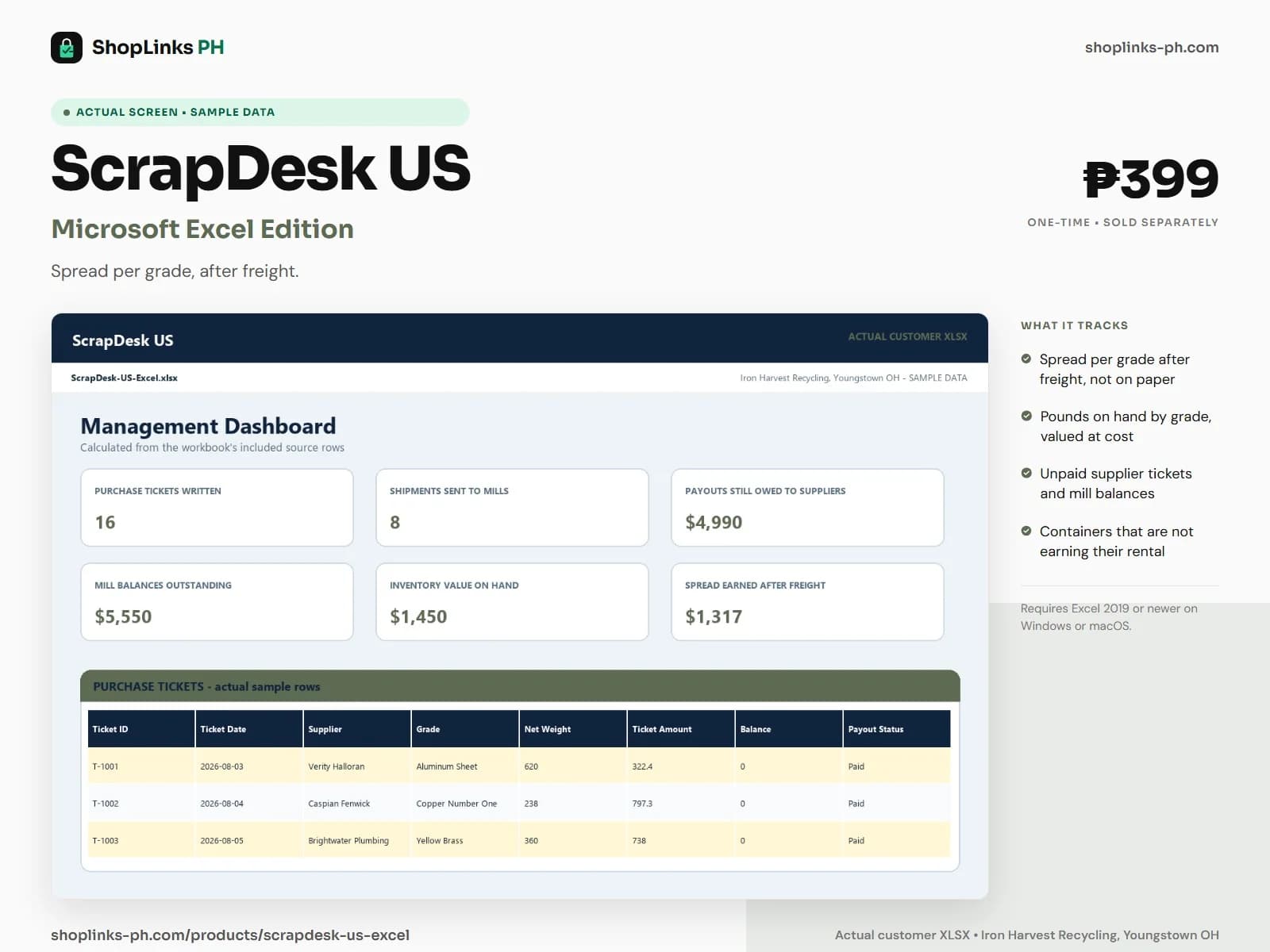
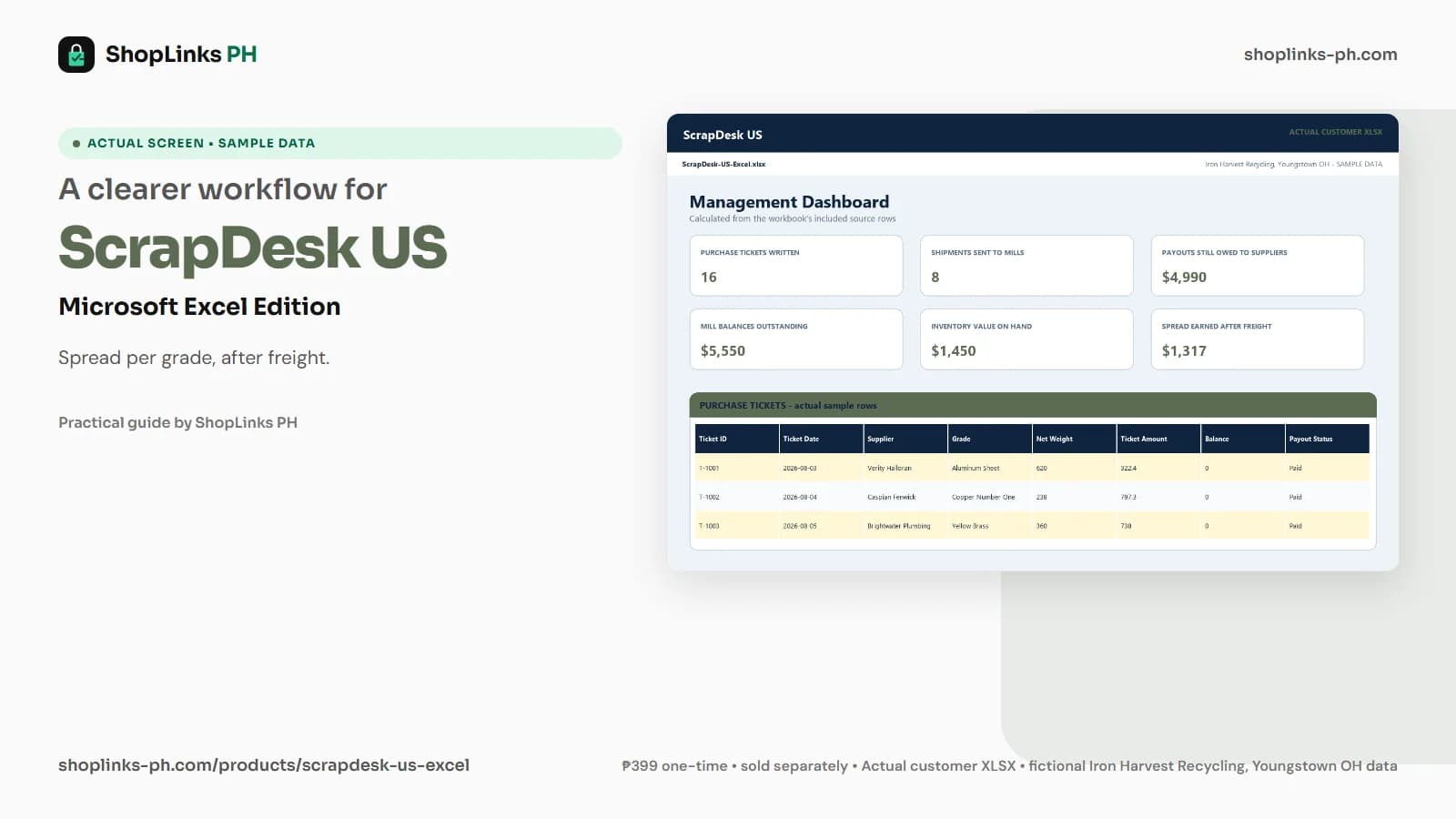
Iron Harvest Recycling buys by the pound all day and sells by the truckload once a week. The board out front carries the buy prices, the mill carries the sell prices, and everyone assumes the difference is the business. Then a bulky aluminum load goes to Cleveland and the freight quietly eats the whole spread, and nothing on paper says so. ScrapDesk US records the ticket, the load and the freight on the same system.
The ticket is the unit
Every load over the scale is a ticket: gross weight, tare weight, and a grade. The net weight is the difference and the ticket amount is that weight times the grade's buy price, so nobody multiplies in their head at the window.
Payouts land against the ticket, whether the drawer paid cash on the spot or the account waits for a check, and each ticket carries its own balance until it is settled.
Spread lives on the grade
A grade carries one buy price and one sell price per pound, and the spread per pound and spread percent derive from the pair. Move the buy price once and every ticket written afterward follows it.
That is the paper spread. The real spread only appears on a shipment, where the same weight is priced out at the sell price, costed at the buy price and then charged the freight it took to move.
Freight decides the load
Ferrous grades carry a few cents a pound and survive a short haul. A nonferrous load that is bulky for its weight can cost more to move than the cents it earns, and the shipment margin says so in dollars.
Grade by grade, the summary labels the result Healthy, Thin, Low or Loss against the revenue of the loads shipped. A grade that reads Loss is a routing decision, not a bad month.
Pounds on the ground
Inventory by grade is everything purchased of that grade minus everything shipped of it. It never goes negative because it is built from the tickets and the loads, not from a count somebody remembered to do.
Valued at the buy price, it is the money sitting in the yard. Next to it, each container shows its pulls, its haul fees and its pounds, so a can sitting all month reads Not earning.
Review exceptions every week
Resolve duplicate IDs, missing links, overdue balances, negative amounts, and open operational items in CHECKS before using the dashboard for decisions.
ScrapDesk US Microsoft Excel Edition is designed for Microsoft Excel 2019 or newer on Windows or macOS.
No seller identification, photographs or law-enforcement reporting of any kind, no scale hardware or ticket printer integration, no state or federal compliance filings, no employee payroll, and no card processing or automatic mill invoicing.