Key takeaways
- List items with appraised values against their ticket.
- Term days and grace days drive maturity, expiry, and status.
- Redemption amount is principal plus accrued interest.
- Renewals extend maturity and restart the interest clock.
A pawn counter runs on two numbers a customer asks for at the window: how much did I pawn, and how much do I pay to get it back today. When those numbers live in a ledger book and a calculator, the answer changes depending on who is on duty. SanglaDesk PH puts the principal, the rate, the term, and the grace period on one ticket row and lets the sheet work out the interest, the redemption amount, and whether the ticket is Active, Matured, or Expired.
Give every pledge a ticket and every ticket its items
Items are listed with an appraised value and a storage location against the ticket they belong to, so a ticket holding a necklace and a bracelet shows one combined appraised value.
That total sits beside the principal, which makes the loan-to-value of each pledge visible without a second computation.
Let the dates decide the status
A ticket records the date pawned, the term days, and the grace days. Maturity is the date pawned plus the term, and expiry is maturity plus the grace period, so both are computed rather than written by hand.
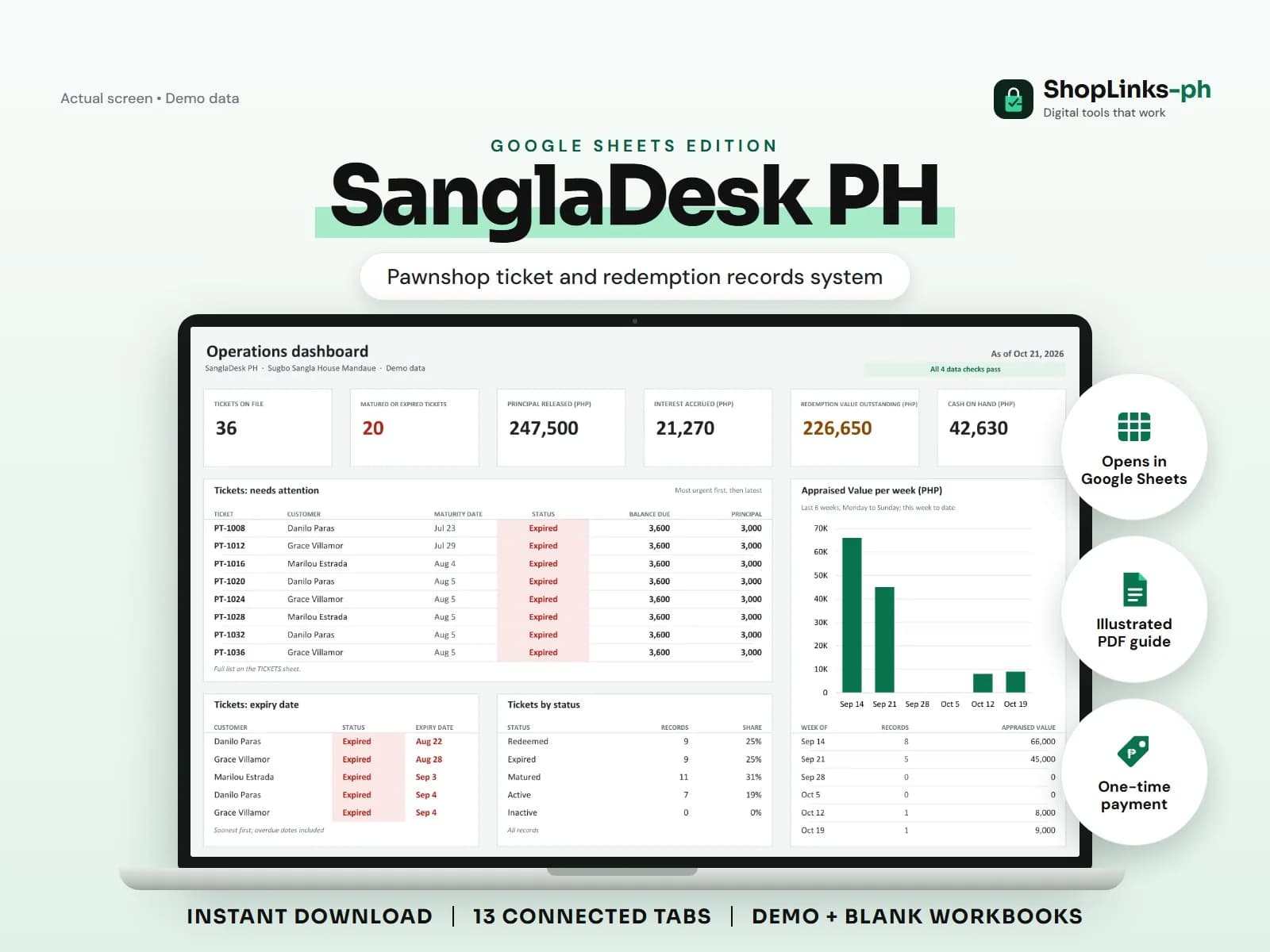
Status reads Active before maturity, Matured between maturity and expiry, and Expired after the grace period ends. The expired list is the list that needs attention.
Interest that answers the window question
Interest accrues by the month started at the ticket's own rate, with a one-month minimum, counted from the interest start date. Redemption amount is simply principal plus that interest.
A renewal moves the interest start date forward by one full term and pushes maturity out with it, which is exactly what the customer paid for.
Close the loop with cash
A redemption row closes the ticket, sets its status to Redeemed, and clears the balance due. Cash movements record the release, the renewal, the redemption, and the day-to-day outflows.
The dashboard shows principal released, interest accrued, redemption value still outstanding, and cash on hand, which are the four figures an owner checks before closing.
Review exceptions every week
Resolve duplicate IDs, missing links, overdue balances, negative amounts, and open operational items in CHECKS before using the dashboard for decisions.
SanglaDesk PH Google Sheets Edition is designed for use with a Google account and current desktop Google Sheets.
No BSP pawnshop licensing, registration or regulatory reporting, anti-money-laundering or covered-transaction reporting, appraisal or valuation advice, credit checks, auction permits, official receipts, or tax filing.