Key takeaways
- Choose the decision the feedback should help.
- Learn about the experience without leading the answer.
- Choose one issue worth investigating.
- Keep improvements that are supported by the evidence.
Start with the next decision
Collect useful feedback and turn recurring issues into a small improvement test. For small shops and service businesses reviewing customer feedback manually, the useful starting point is a concrete task with an owner and a finished result. A document helps only when it makes the next action easier to understand. Start with one real case and keep the amount of paperwork proportionate to the work.
Use a small practice case
Fictional shop Isla Wrap receives comments that its pickup instructions are unclear. It records anonymous feedback references and tests a revised collection message. Before using real records, walk through a fictional case like this. It makes missing inputs easier to notice without exposing private customer or business details. The sample quantities, dates and amounts illustrate the process; they are not recommendations for your own operation.
Feedback objective
Choose the decision the feedback should help. Focus on one recent experience. Avoid asking questions you have no plan to act on.
For example: Understand whether the pickup message helps customers find the collection counter without calling the shop. Do not treat a few responses as representative of every customer.
Five-question feedback form
Learn about the experience without leading the answer. Use neutral wording and allow a skipped question. Collect contact details only when appropriate and willingly provided.
For example: Sample response: I found the store, but did not know pickup was at the side counter. A photo or entrance note would help. Ask separate permission before public use of feedback or identifying details.
Theme and priority review
Choose one issue worth investigating. Read the original comments before grouping them. Consider a serious isolated issue even when it is not frequent.
For example: Three of eight responses mention the collection counter. Test clearer directions; acknowledge that the small sample may not reflect all pickups. A count is useful context, not an automatic priority score.
Learning and next review
Keep improvements that are supported by the evidence. Compare the evidence with the original success signal. Record uncertainty and any new issue the change introduced.
For example: Clarification calls fell from 5 of 20 pickups to 2 of 20. Keep the clearer message for another review period; pickup mix differed, so avoid claiming causation. Preserve the old version so you can understand what actually changed.
Test the exception before sharing the record
Try the same task with one missing input: an unanswered question, a changed quantity, an absent owner or an unconfirmed date. Keep the affected decision visibly open, assign a person to confirm the fact and set a next update. A blank response should never silently turn into an approval. Write N/A with a reason when a field does not apply, and preserve the evidence needed to understand your decision later.
Keep one current working copy
After using the record, note the step that caused confusion and revise that part. Add a revision date so the next person can identify the current copy. Archive the completed record according to your business needs, and share only the information the recipient needs. Keep examples clearly labeled and check names, dates, amounts, links and permissions before sending a customer-facing message.
A ready-made starting point
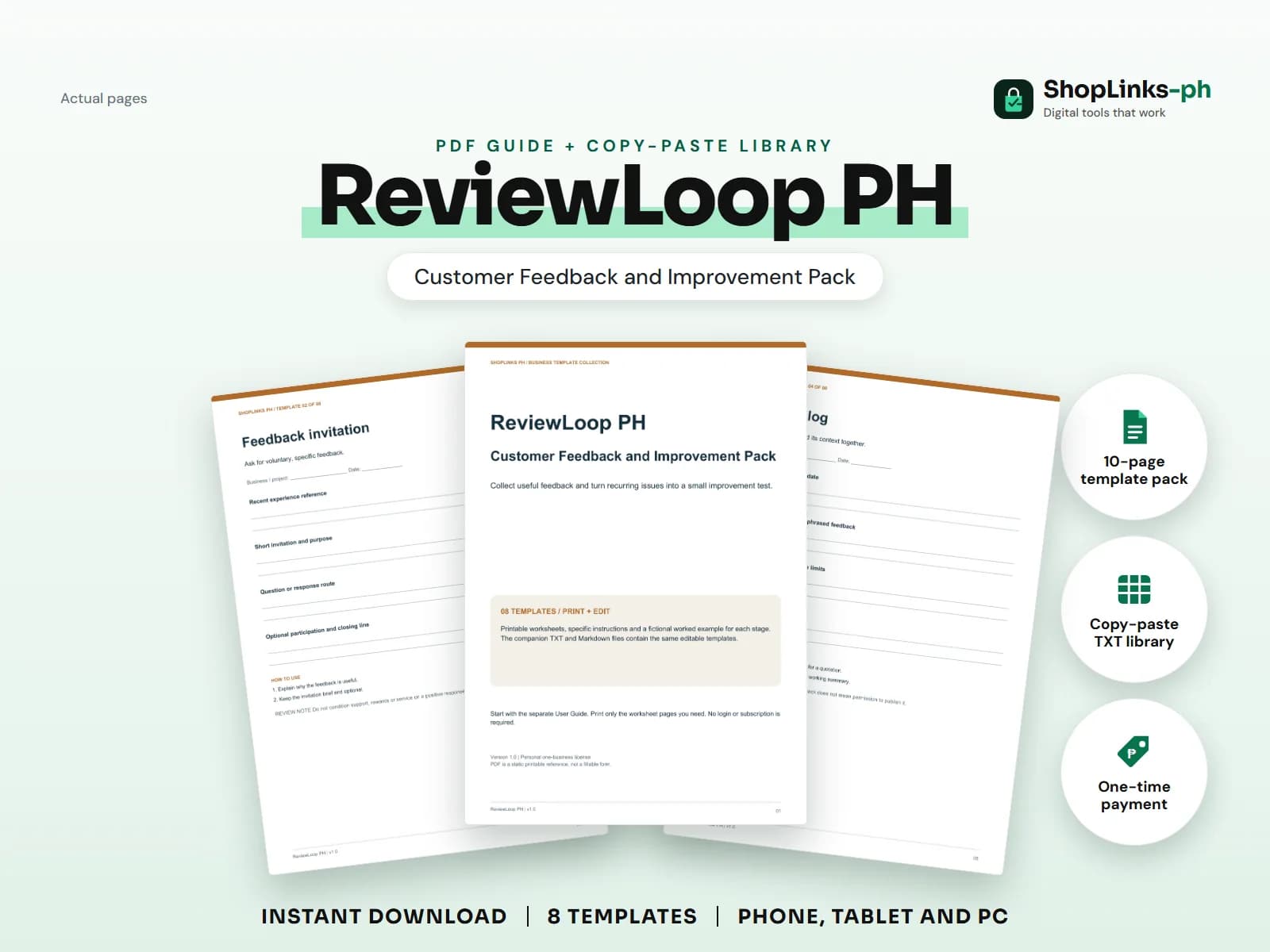
ReviewLoop PH includes eight practical templates, a printable PDF, editable TXT and Markdown versions, fictional worked examples and an illustrated user guide. Manual feedback templates only; no survey hosting, sentiment analysis, CRM integration, review manipulation or automated outreach. You can print the relevant page or copy the text into your preferred editor, then adapt it to the actual task.