Key takeaways
- Costs are booked to the phase that incurred them.
- Only approved change orders move the contract.
- Billed and collected are tracked separately.
- Subcontractor insurance is flagged before it lapses.
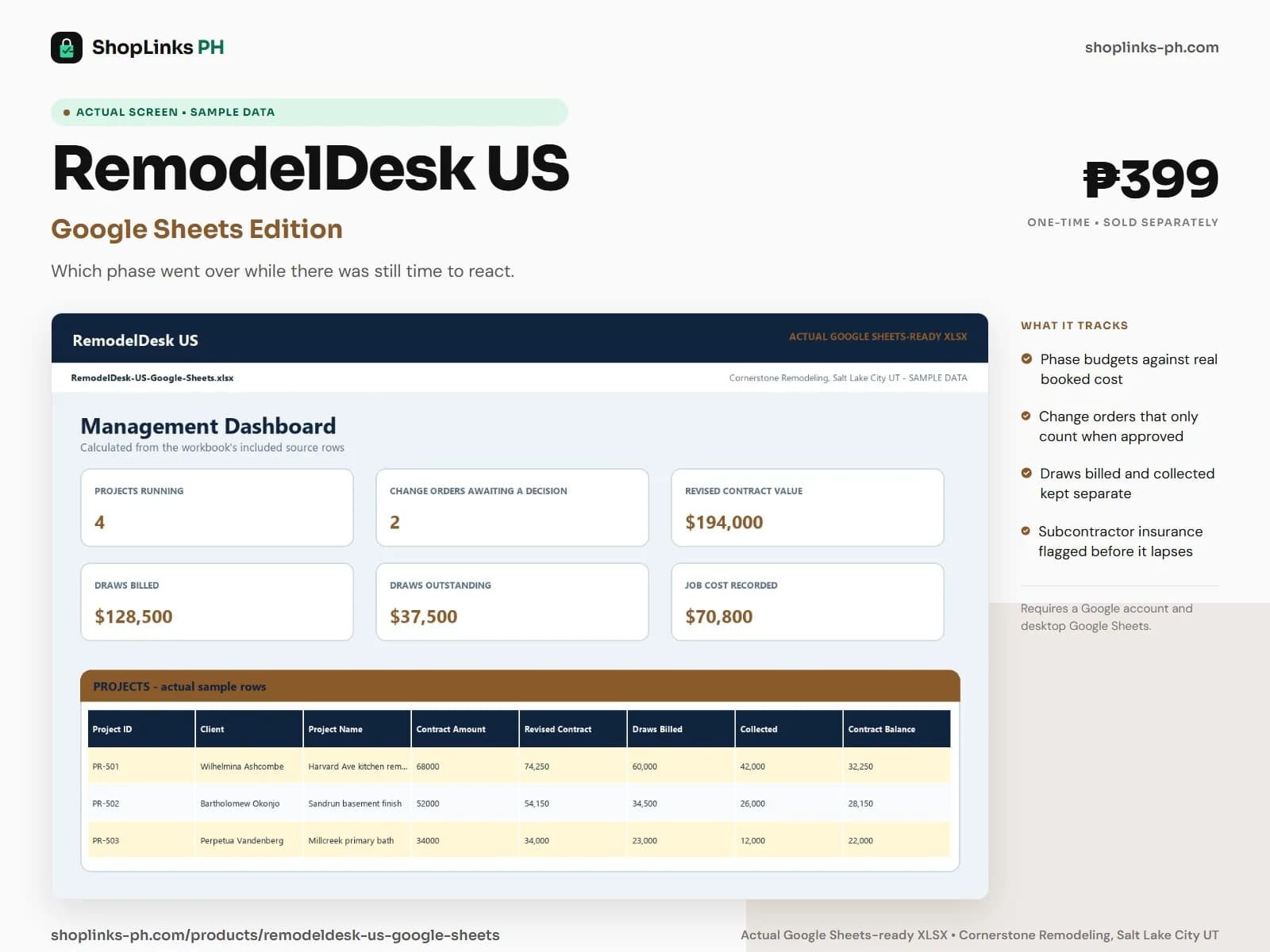
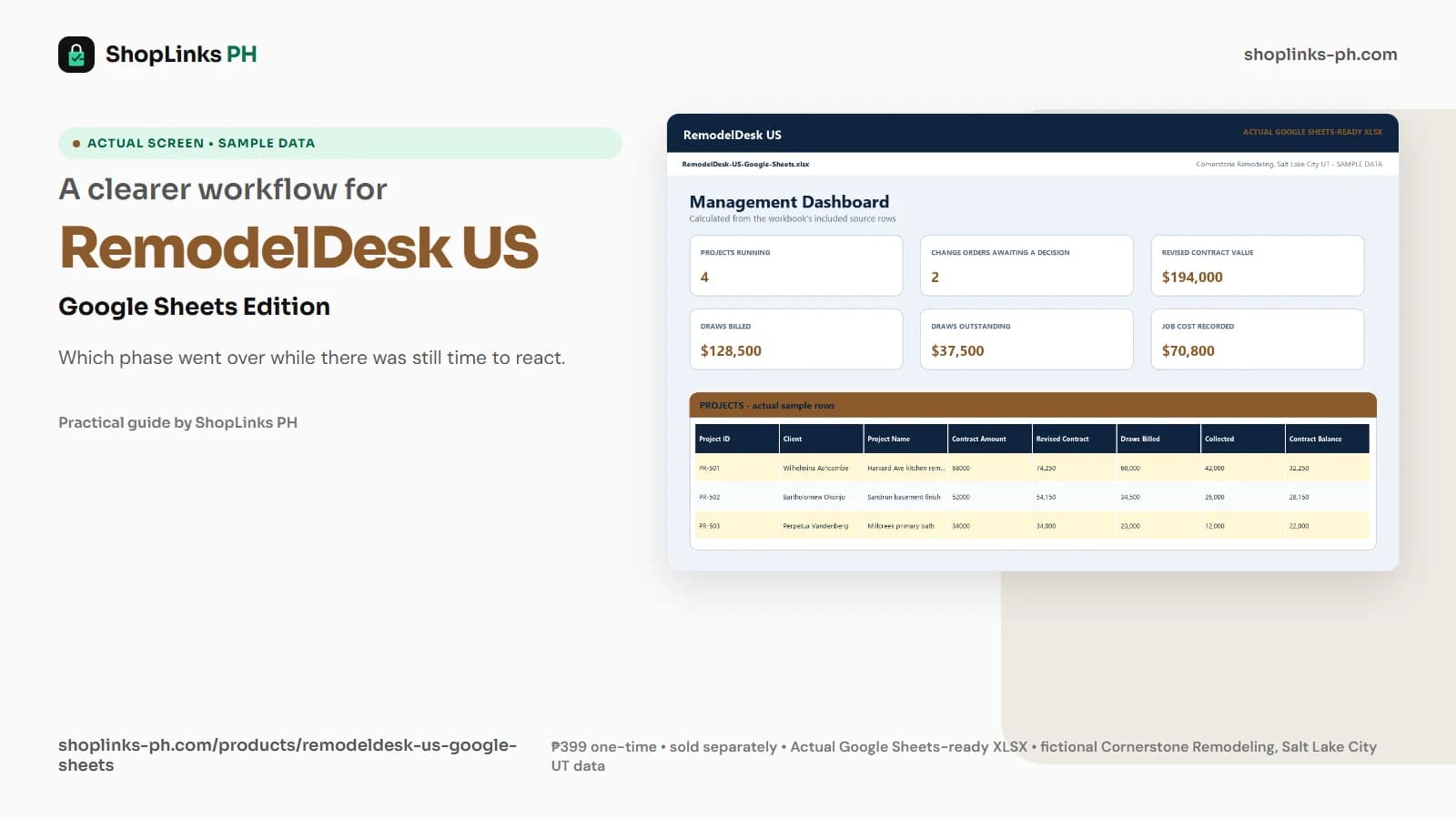
A remodel is priced as one number and executed as six or seven. The demolition, the rough mechanicals, the drywall, the cabinets each carry their own budget inside the contract, and a job that is going wrong usually shows it in one phase weeks before it shows in the bank. Most remodelers find out at the end. RemodelDesk US puts cost against budget while the job is still running.
Cost booked to a phase
Every cost records the project and the phase that incurred it, so a phase accumulates actual cost against the budget it was given.
The variance is the early warning, and it is only early if costs are booked as they arrive rather than reconciled at completion.
Change orders that count
A change order carries an amount and an approval state, and only approved ones move the revised contract.
Pending ones stay visible as work discussed and not yet sold, which on a remodel is usually several thousand dollars.
Billed is not collected
Draws carry their own balance and days late, and the project tracks both billed and collected.
A project fully drawn and partly collected is a different problem from one that is under-drawn, and both are common mid-job.
Margin while it is still unfinished
Margin to date compares what has been billed against what has been spent, rather than crediting an unfinished job with its whole contract.
That is the only honest reading available before completion, and it is the one that should drive the next draw.
Review exceptions every week
Resolve duplicate IDs, missing links, overdue balances, negative amounts, and open operational items in CHECKS before using the dashboard for decisions.
RemodelDesk US Google Sheets Edition is designed for use with a Google account and current desktop Google Sheets.
No AIA billing or lien waiver generation, no permit filing or inspection scheduling, no estimating takeoff or plan measurement, no payroll or certified payroll, and no client-facing project portal.