Key takeaways
- Average daily gain compares calves of different ages fairly.
- Feed cost is booked to the pasture that ate it.
- Lot margin is net of commission, yardage and carrying cost.
- An unsold lot never counts as margin.
Sagebrush Cattle Co. runs sixteen cows across three pastures and sold five loads in August. The check from the sale barn arrives net of commission and yardage, the hay bill arrives two weeks later, and by then nobody remembers which pasture the hay went to or which cows raised the light calves. RanchDesk US records the calf, the feed and the lot as they happen, and keeps no animal health records at all.
The calf carries its own numbers
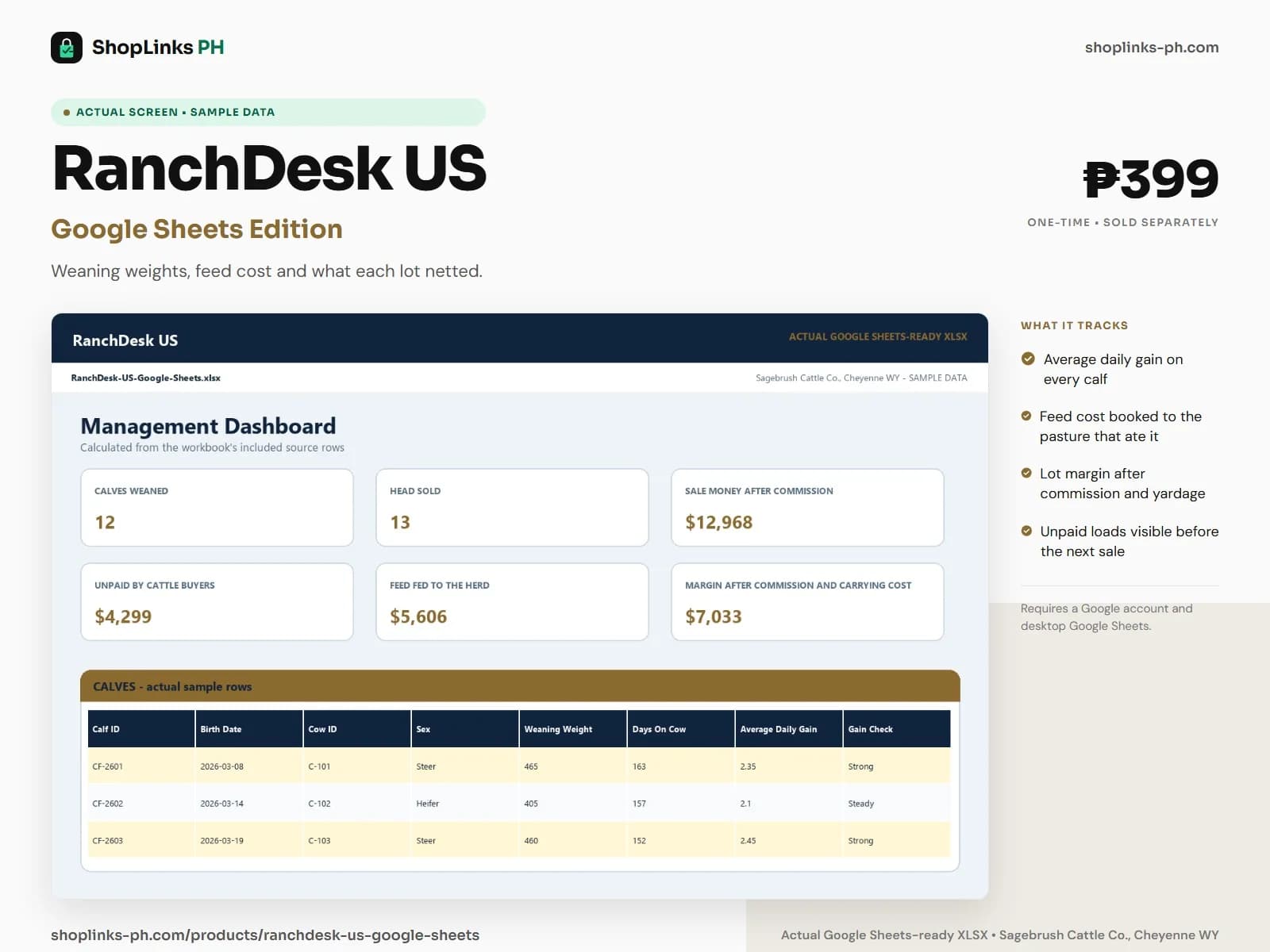
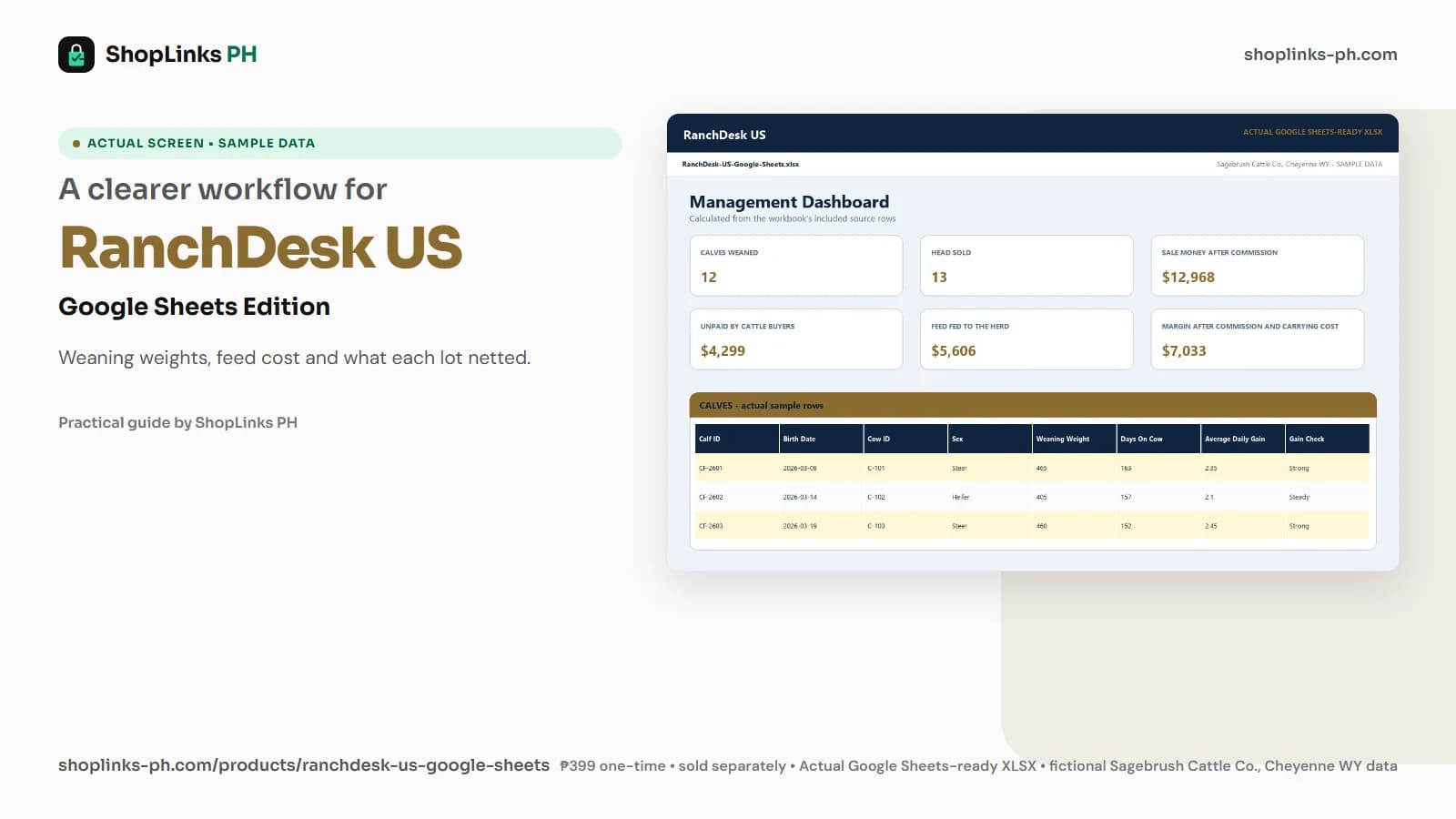
Each calf records its dam's tag, the season it was born in, its sex, birth date and birth weight. On weaning day the weaning date and weight go on the same row, and days on cow and average daily gain derive from them.
Gain is the honest measure. A calf born in March with 163 days on the cow and one born in late April are not comparable by weaning weight, but they are directly comparable by pounds gained per day.
Feed lands on a pasture
Feed purchases record the supplier, feed type, quantity, unit and unit cost, and feed use records what actually went out, always against the pasture it was fed on, so the cost follows the cattle rather than the calendar.
The pasture summary then totals feed cost against the sale money attributed to that pasture, which is the only way to see that the short pasture ate twice the hay for the same number of calves.
A lot is worth its animals
Every sale lot lists the animals tagged to it, each with its own sale weight and price per pound. Head count, total weight and gross all total from those rows, so a load is never a single remembered figure.
Lot net subtracts commission and yardage, carrying cost applies your own cost per head, and lot margin is what was left. A lot still consigned earns none of these until its status turns to Sold.
Which pasture is carrying the herd
The pasture summary counts active cows against capacity, totals feed cost and sale revenue, and labels each pasture Healthy, Thin, Low or Loss by stocking and margin together in a single column.
A pasture whose calving season is still open reads In progress instead, because a group with calves not yet on the ground has costs without revenue and should not be judged against one that has sold.
Review exceptions every week
Resolve duplicate IDs, missing links, overdue balances, negative amounts, and open operational items in CHECKS before using the dashboard for decisions.
RanchDesk US Google Sheets Edition is designed for use with a Google account and current desktop Google Sheets.
No veterinary, vaccination or medical treatment records of any kind, no brand inspection or livestock regulatory filing, no breeding or genetic evaluation data, no payroll or tax filing for ranch hands, and no auction market or electronic ear tag integrations.