Key takeaways
- Delivery price comes from the customer's tier.
- Gas cost comes from the load the gallons came off.
- Miles and driver hours are subtracted before margin.
- Every customer carries a margin per gallon label.
Blue Flame Propane ran fifteen deliveries in August off four wholesale loads bought at four different prices. One of them was ninety gallons at the end of a sixty four mile round trip in Burlington. The invoice looked fine and the driver was back by noon, so nobody asked what that stop actually earned once the truck and the hours were counted.
Price comes from the tier
Every customer carries a delivery type, a price tier and the price per gallon that tier pays. A delivery takes the price from the customer, so changing a tier moves every future delivery without anyone retyping a number.
Revenue is the gallons times that price. The keep-full and will-call split sits on the customer too, so the route list and the pricing list are the same list.
Cost comes from the load
Each delivery names the wholesale load its gallons came off, and the cost per gallon is read from that load. A week when the terminal was short and the price moved four cents is costed at four cents more, not at an average.
The load register then shows gallons purchased, gallons delivered, gallons on hand and a label of In storage, Nearly out or Emptied, so buying ahead is a decision rather than a guess.
Miles and hours are real money
Net margin subtracts the miles at the truck's own cost per mile and the driver hours at that driver's rate. A newer bobtail costs more per mile and the register knows it.
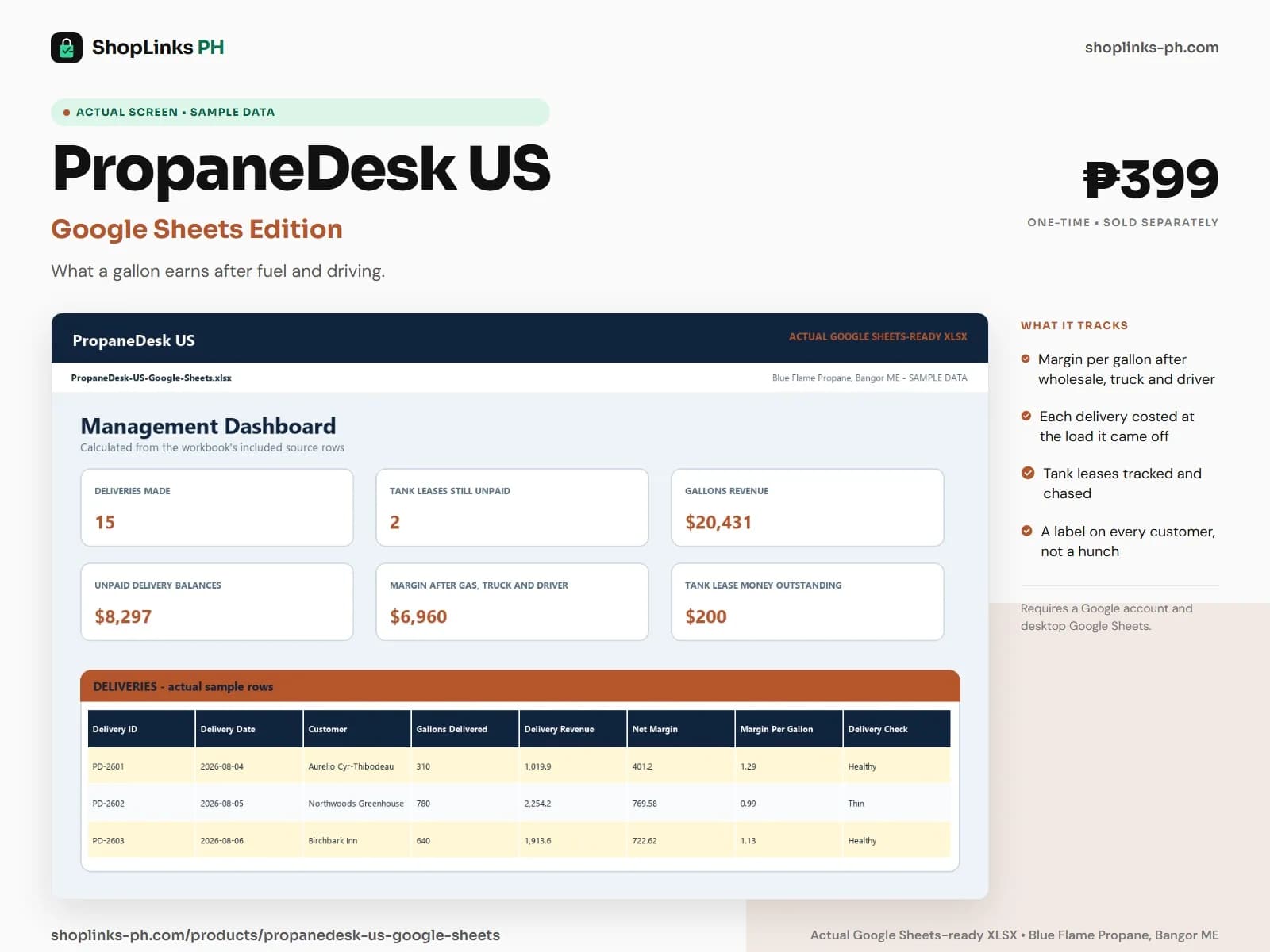
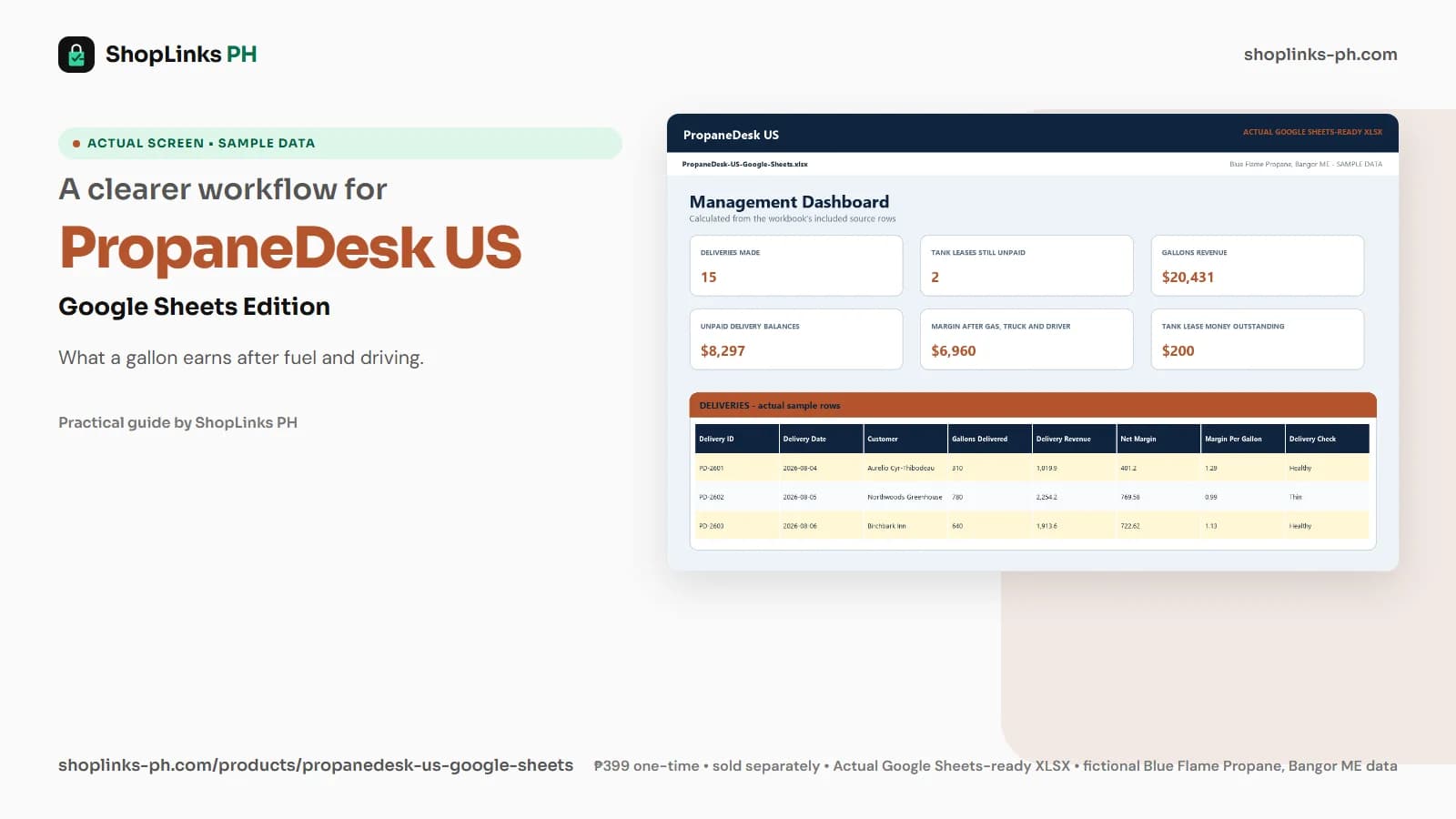
Margin per gallon is net margin divided by the gallons delivered. A ninety gallon drop at the end of a long road can read a negative number, and that is the honest answer.
Which customers are worth the route
The customer summary totals delivered gallons, revenue, gas cost and net margin, then labels each customer Healthy, Thin, Low or Loss by margin per gallon.
A commercial account on a thin tier can still read Healthy because the drops are large and close. A small residential tank thirty five miles out can read Loss at the highest price on the book.
Review exceptions every week
Resolve duplicate IDs, missing links, overdue balances, negative amounts, and open operational items in CHECKS before using the dashboard for decisions.
PropaneDesk US Google Sheets Edition is designed for use with a Google account and current desktop Google Sheets.
No hazmat or transport compliance filing, no tank certification records beyond an inspection date, no driver payroll or hours of service logs, no tank monitor or telemetry feeds, and no fuel tax reporting.