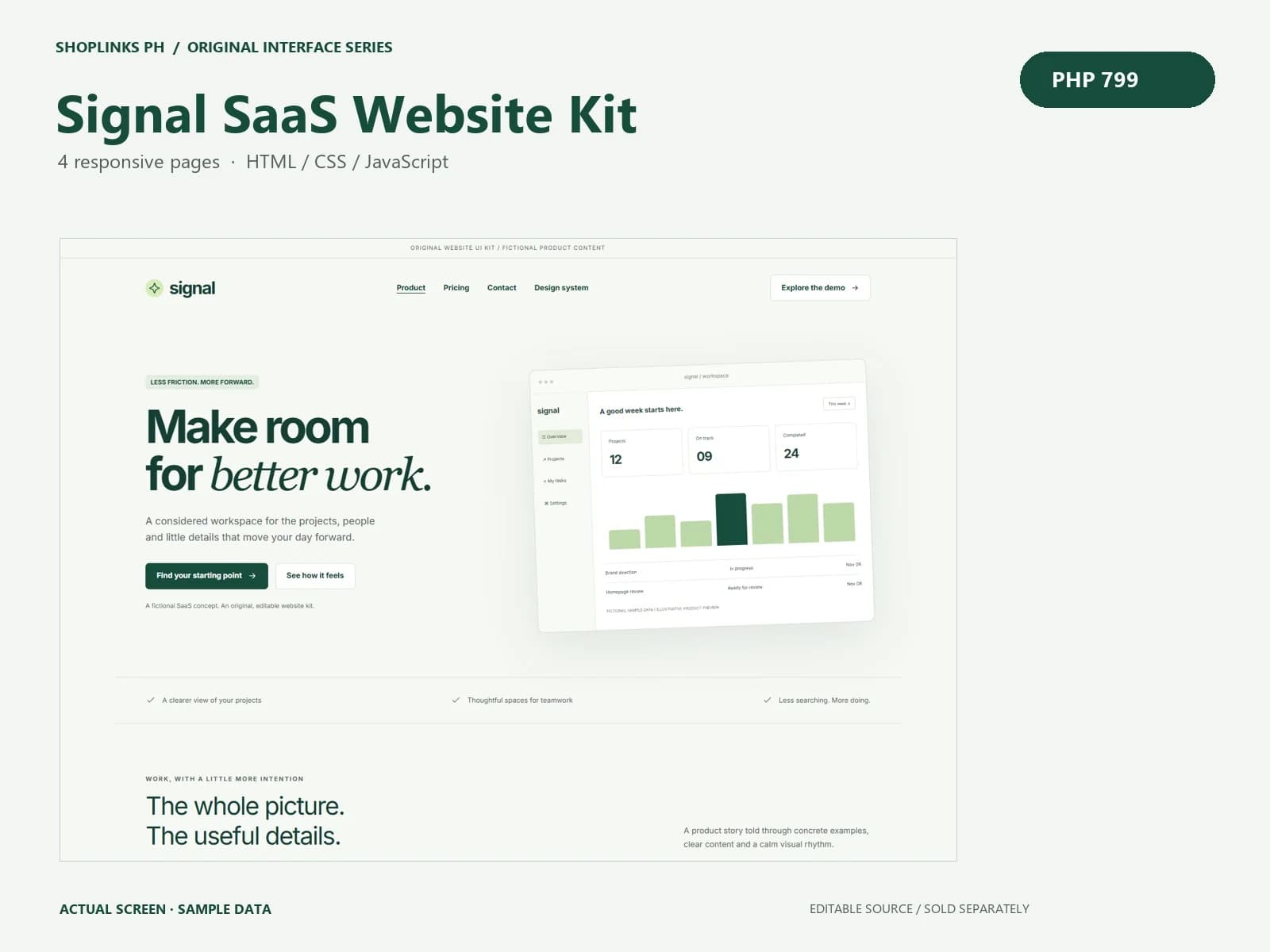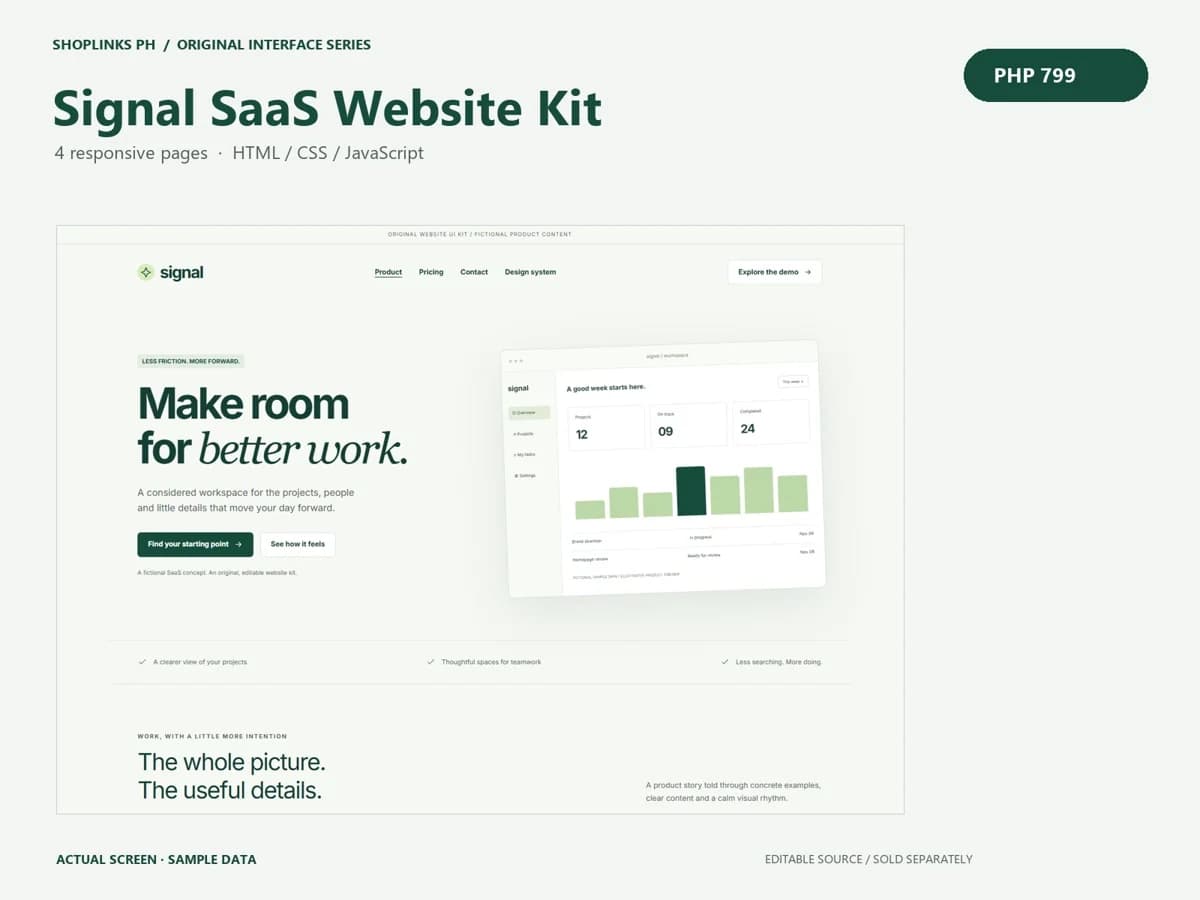
Key takeaways
- Start with one complete user workflow
- Customize source and test across screen sizes
- Connect and verify live services separately
Plan the product story before styling it
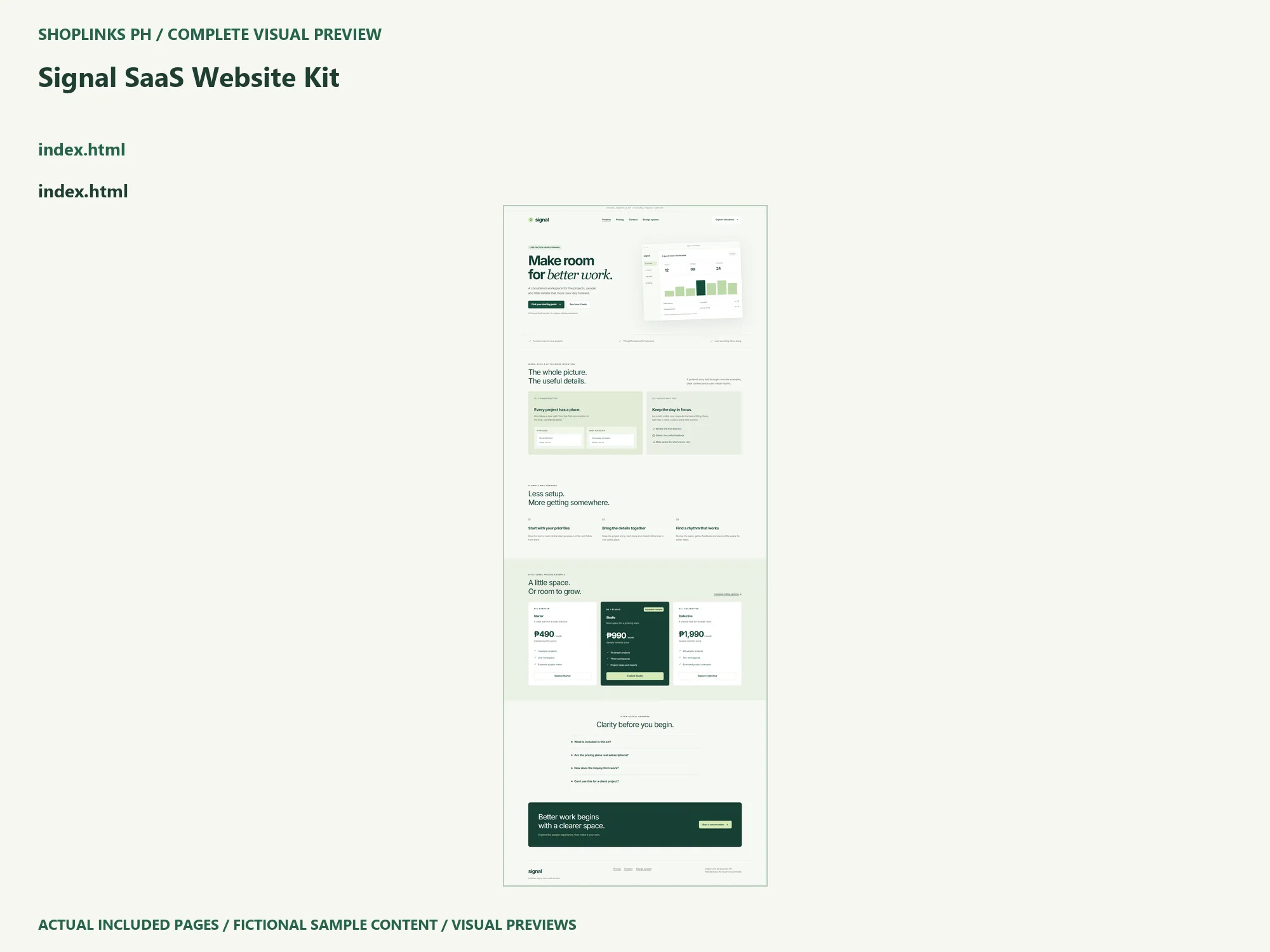
A marketing website works best when the visitor can understand the product, inspect its practical details and choose a clear next step. Start by writing a one-sentence description of the real product and naming the audience. In Signal, the example brand is fictional. Replace its project-workspace story with verified information about your service. Keep the first heading short, then make the next section add useful detail rather than repeating the same promise.
Make one controlled customization
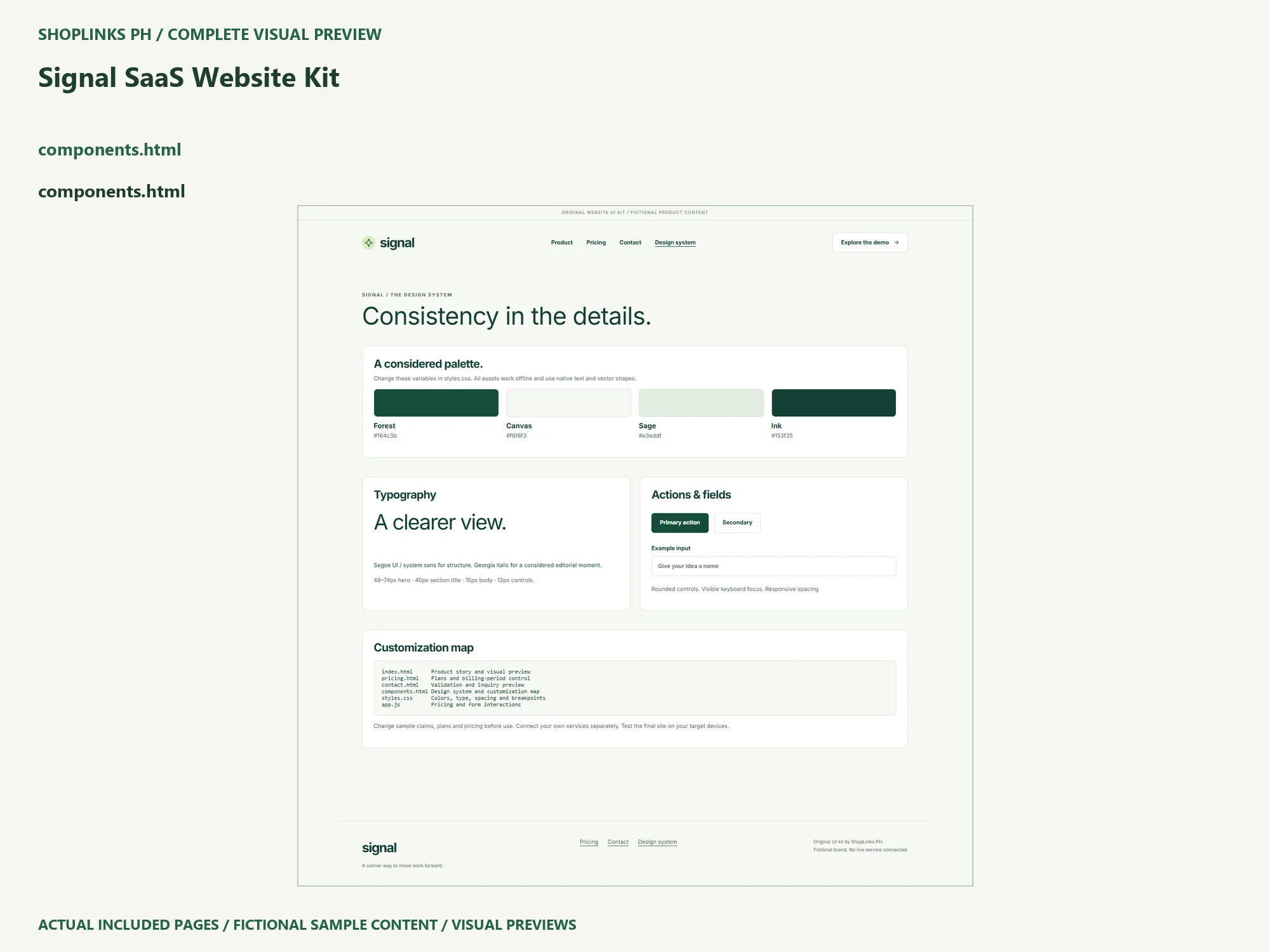
Extract the package into a new folder and keep an untouched copy. Open site/index.html, visit every screen, and read the illustrated guide before editing. Use a text editor to change one heading and one accent color. The shared styles.css file contains named variables for the canvas, surface, text and accent. Keep the original spacing and type hierarchy during the first pass so you can judge the effect of the content change without several moving parts.
Test the full inquiry path
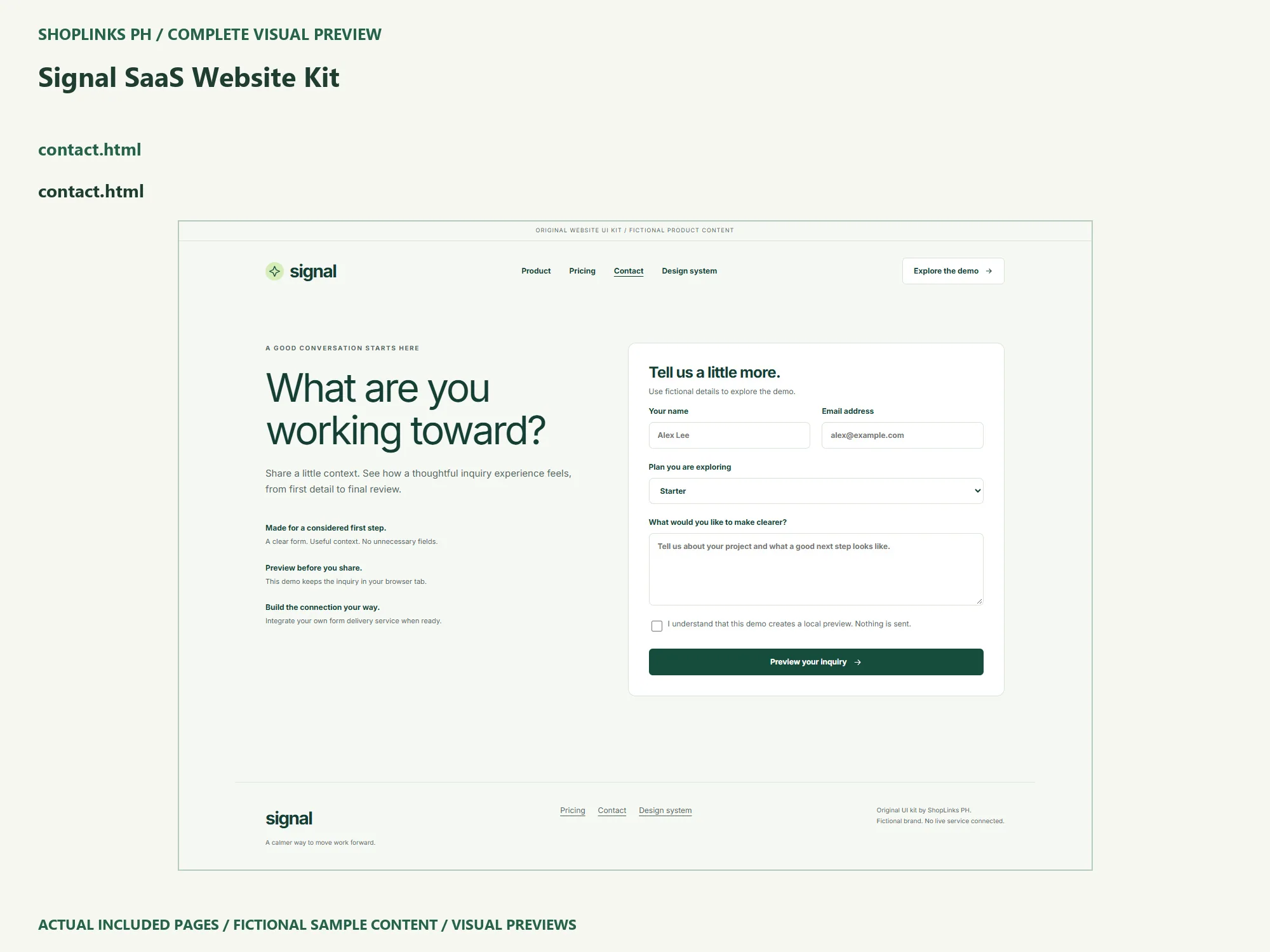
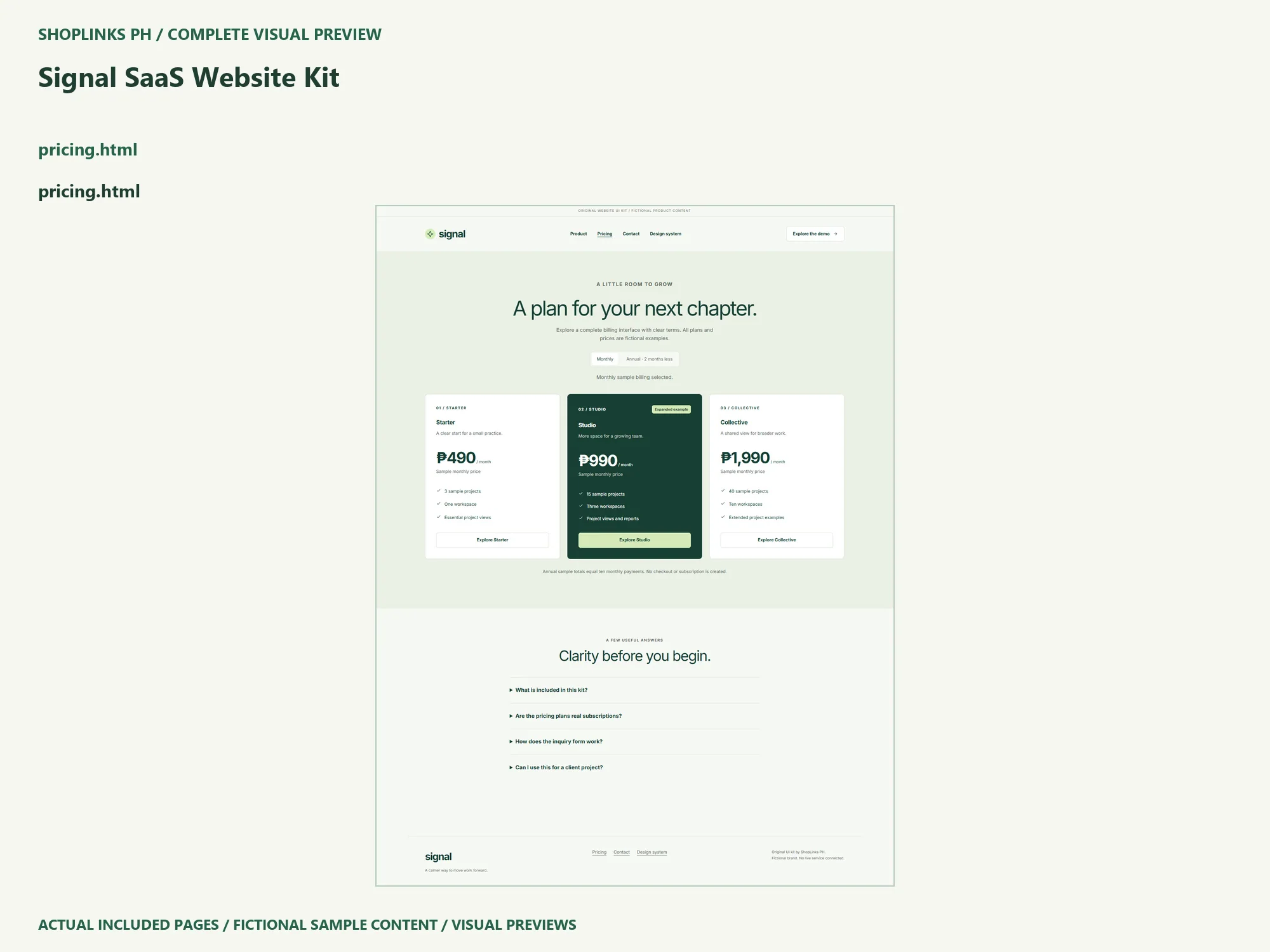
Visit Pricing and switch between Monthly and Annual. The annual sample totals equal ten monthly prices and are billed once in the demonstration. Follow a plan into Contact, then enter fictional details and preview the inquiry. Download the JSON and inspect its fields. Empty names, invalid email addresses and short messages should stop the workflow. The form creates a local preview; connecting an email or CRM service remains a separate implementation.
Check more than the attractive screen
After customization, inspect the actual phone, tablet and desktop layouts you intend to support. Try a long customer name, an empty search and keyboard navigation. Check visible focus, readable labels and the way tables scroll inside their own container. Inspect downloads independently. The local QA uses Chromium with emulated viewport sizes; that evidence does not replace testing other browser engines, physical devices or assistive technology for a particular launch.
Know which parts are still yours to build
Static website UI kit. Plan prices describe a fictional SaaS brand. No subscription, authentication, form delivery, hosting or backend is included. Before showing private information, plan identity, authorization, server-side validation and data ownership. Before collecting inquiries or money, test the full external delivery or payment flow in an isolated environment. Do not assume a visual form, a paid-looking badge or an invoice preview supplies a working backend. State these boundaries in the client handoff as well as in your implementation notes.
Keep a useful release copy
Give the edited version a date, keep the source beside its screenshots and record the checks you actually ran. Share a short setup note explaining the starting file, supported environment and remaining integration work. One license covers one end website for your business or one client, including a source handoff for maintaining that site. Editable template resale is prohibited. Explore the kit, its included files and its requirements on the ShopLinks product page: View Signal SaaS Website Kit
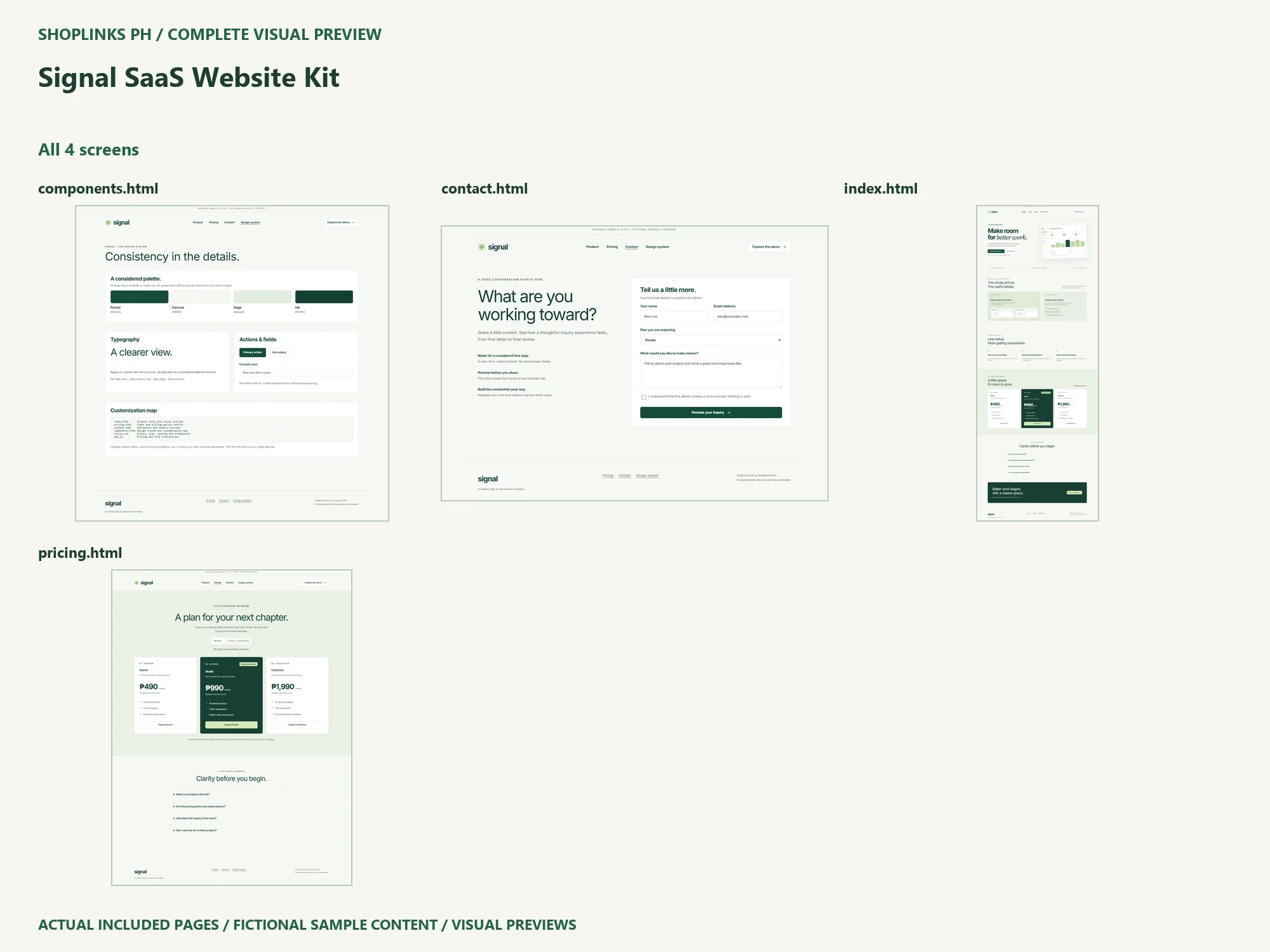
Complete page preview
See all 4 included UI screens below. These are static visual previews of the included source, with fictional sample content. Select an image to open it at full size and use browser zoom.