Key takeaways
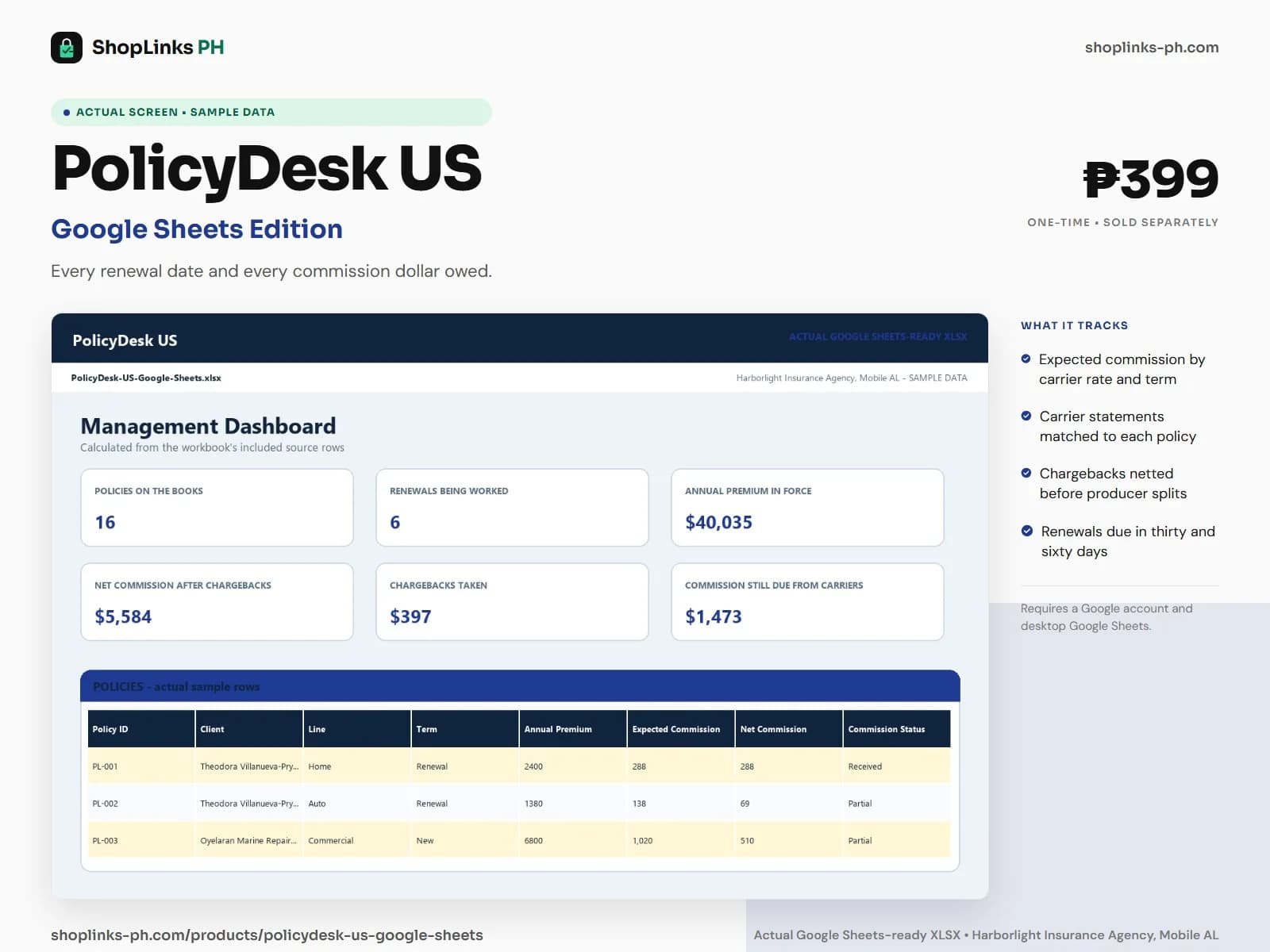
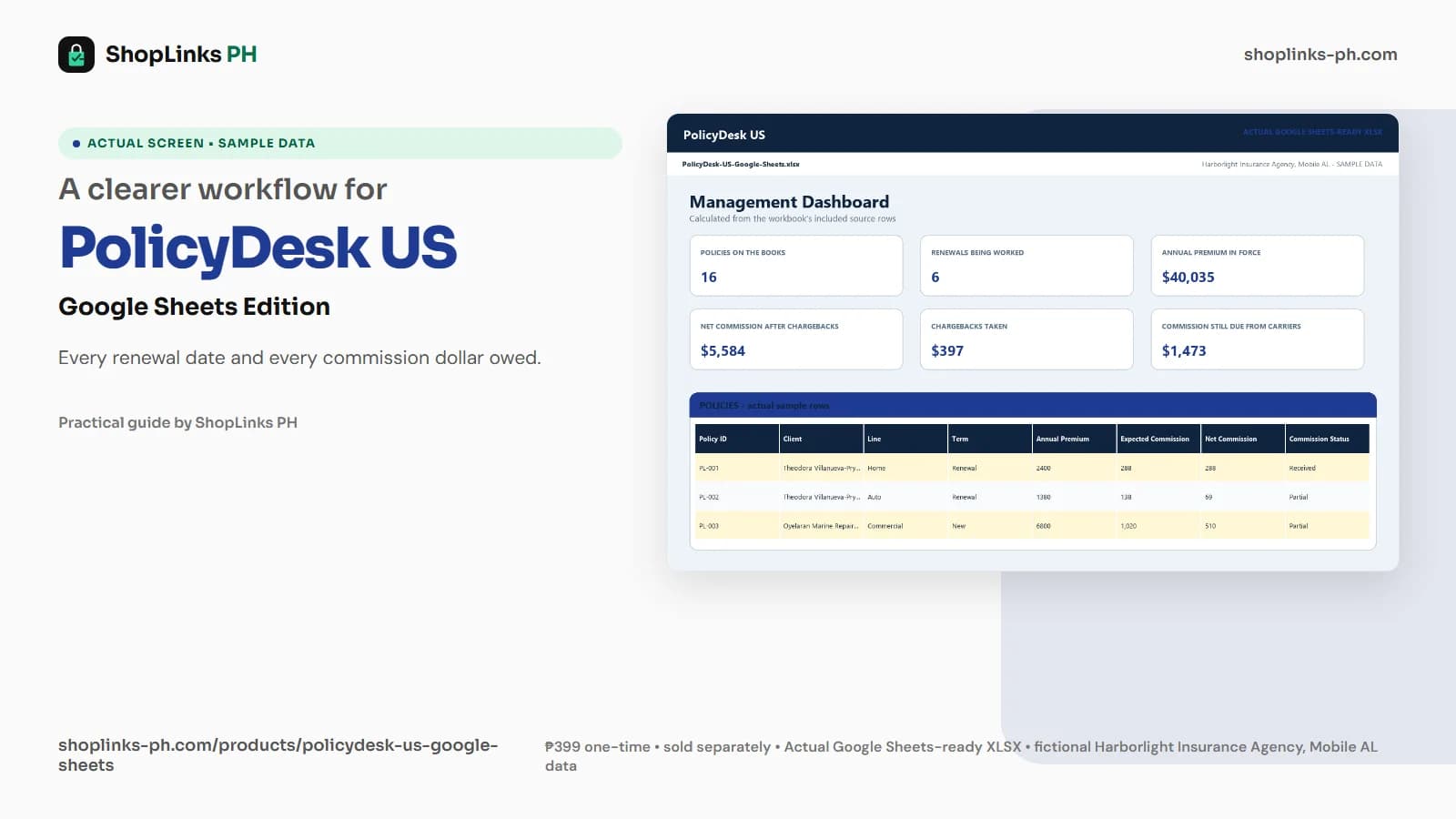
- Expected commission follows the carrier rate and the term.
- Statements are matched to the policy they pay.
- Chargebacks come off before producer splits.
- Renewals read Due in 30, Due in 60 or Later.
An independent agency closes August with four carrier statements in the inbox, two of them in different formats. A commercial account renewed early, a home policy was cancelled after the house sold, an auto policy fell off for nonpayment and a life policy paid its advance. The producer wants to know his split, and the principal wants to know which renewals land before October. PolicyDesk US keeps each of those answers on its own record.
Commission the rates promise
Each carrier carries a new business and a renewal percent, and each policy takes the right one by its term, so expected commission follows the premium.
That gives every carrier statement something to be compared against, instead of being accepted as whatever number arrived.
Statements matched to policies
Every commission payment is recorded against the policy it pays, so a policy reads Received, Partial or Awaiting on its own row.
A home renewal missing from the carrier statement shows up as a balance still due rather than disappearing into a monthly total.
Chargebacks before splits
Cancellations, nonpayment and endorsements that reduce premium are recorded as chargebacks against the policy and subtracted from what was received.
The producer split is applied to the net figure, so nobody is paid a share of commission the carrier has already taken back.
Renewals on a calendar
Each policy counts the days to its expiration and reads Due in 30, Due in 60 or Later, and renewals are logged as they move from quoting to an outcome.
The Monday list is short, specific and written before the client calls about a price increase.
Review exceptions every week
Resolve duplicate IDs, missing links, overdue balances, negative amounts, and open operational items in CHECKS before using the dashboard for decisions.
PolicyDesk US Google Sheets Edition is designed for use with a Google account and current desktop Google Sheets.
No insurance, licensing or compliance advice, no quoting or rating engine, no carrier download or agency management system integration, no premium trust or tax accounting, and no producer payroll.