Key takeaways
- Labor cost follows the plumber who did the work.
- Permit fees are billed but excluded from margin.
- Permit status follows the inspection result.
- Warranty end dates are computed from the install.
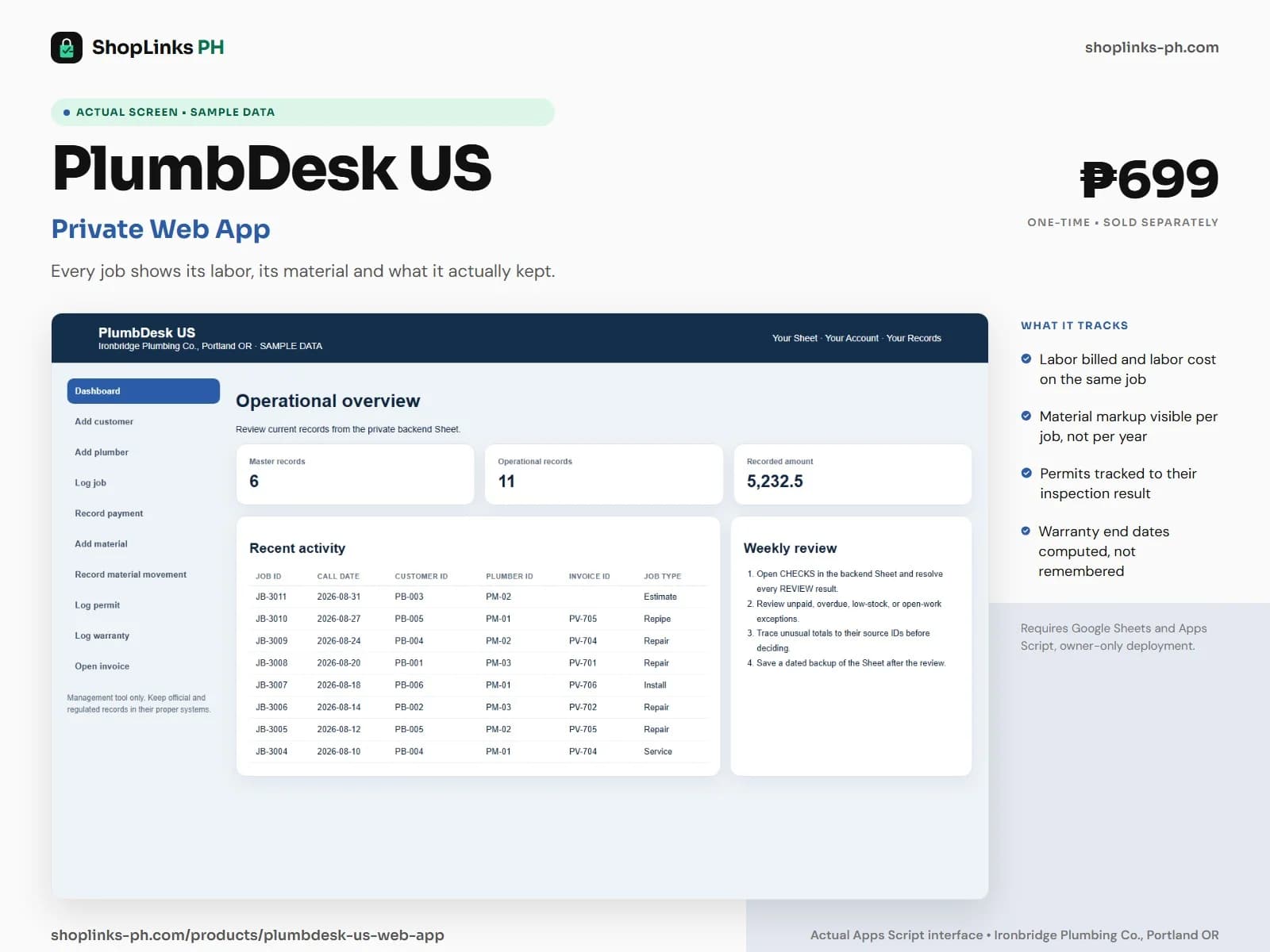
A plumbing job carries four different kinds of money and most shops measure one of them. Labor is billed at a rate, material is marked up from a cost, a trip charge covers the drive, and a permit fee is collected and handed straight to a jurisdiction. Treating all four as revenue makes a business look more profitable than it is, because the permit fee was never yours and the apprentice hour did not cost what the master hour cost. PlumbDesk US separates them on the job itself.
The plumber decides the cost
Every plumber carries a licence class, an hourly cost and a billable rate. A job records the hours once and both figures follow from whoever actually did the work.
This is the difference between a shop that knows its apprentice jobs are profitable and one that assumes they are because the rate looked low.
Pass-through money is not margin
A permit fee is added to the total charge because the customer pays it, and removed again from the job margin because the jurisdiction keeps it.
Material is recorded with both a cost and a sell price, so the markup on a water heater is a visible number on the job rather than an inventory adjustment at year end.
Permits that close themselves
A permit record carries the jurisdiction, the applied date, the permit number and the inspection result, and its status reads Applied, Issued, Correction required or Closed without a second list.
The one that matters is Correction required, because a failed inspection on a repipe is the kind of thing that gets discovered when the customer calls, not when the shop reviews its week.
Warranties with a date, not a memory
Every install logs the item, the install date and the warranty months, and the end date is computed from them.
When a customer calls about a two-year-old water heater, the question of whether the callback is free is answered by a field rather than by an argument.
Review exceptions every week
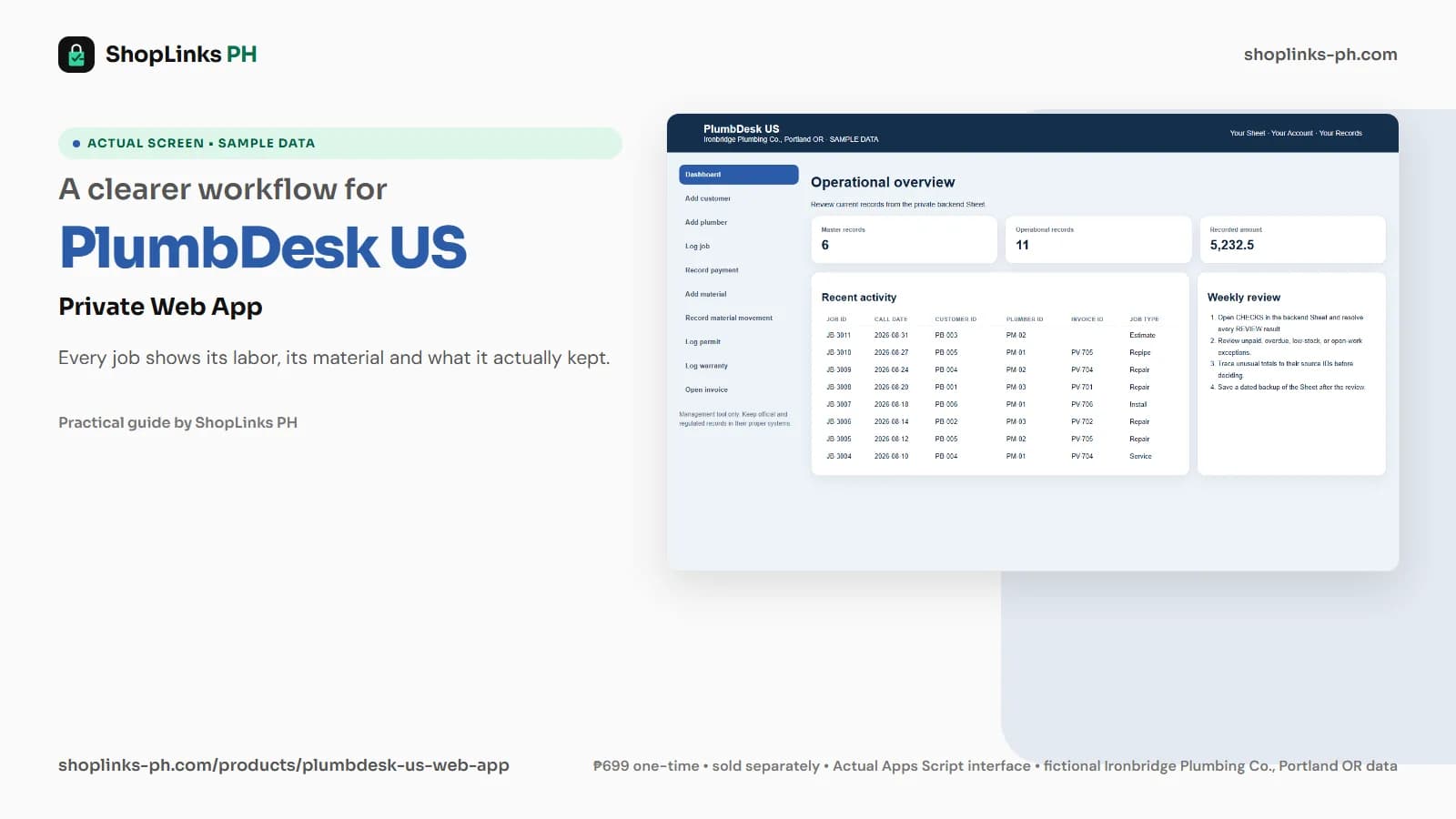
Resolve duplicate IDs, missing links, overdue balances, negative amounts, and open operational items in CHECKS before using the dashboard for decisions.
PlumbDesk US Private Google Sheets Web App is designed for use with a Google account, Google Sheets, and Apps Script, using owner-only deployment by default.
No jurisdiction permit filing or electronic plan submission, no state licensing or continuing education records, no lien or contract document generation, no dispatch or GPS routing app, and no automatic customer notifications.