Key takeaways
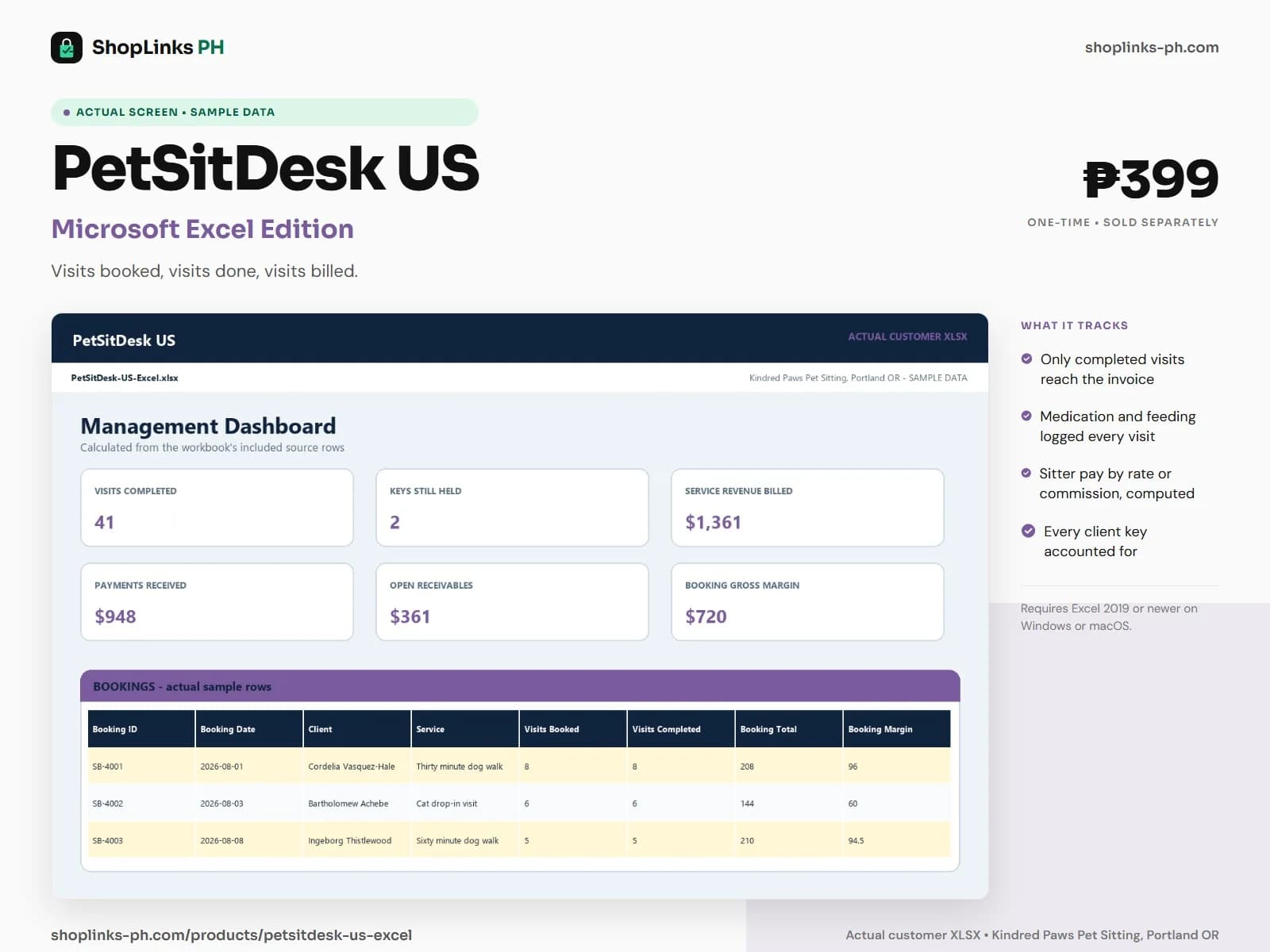
- Only completed visits are billed.
- Feeding and medication are logged per visit.
- Sitter pay follows the pay type.
- Every key issued is accounted for.
Pet sitting is sold in blocks and delivered one visit at a time. A client books eight walks for the fortnight, then works from home on two of the days and cancels. The sitter remembers; the invoice does not, and it goes out for eight or for six depending on who writes it. Multiply by a full book and the difference is a month's profit in either direction. PetSitDesk US bills from the visits that actually happened.
The visit is the billable unit
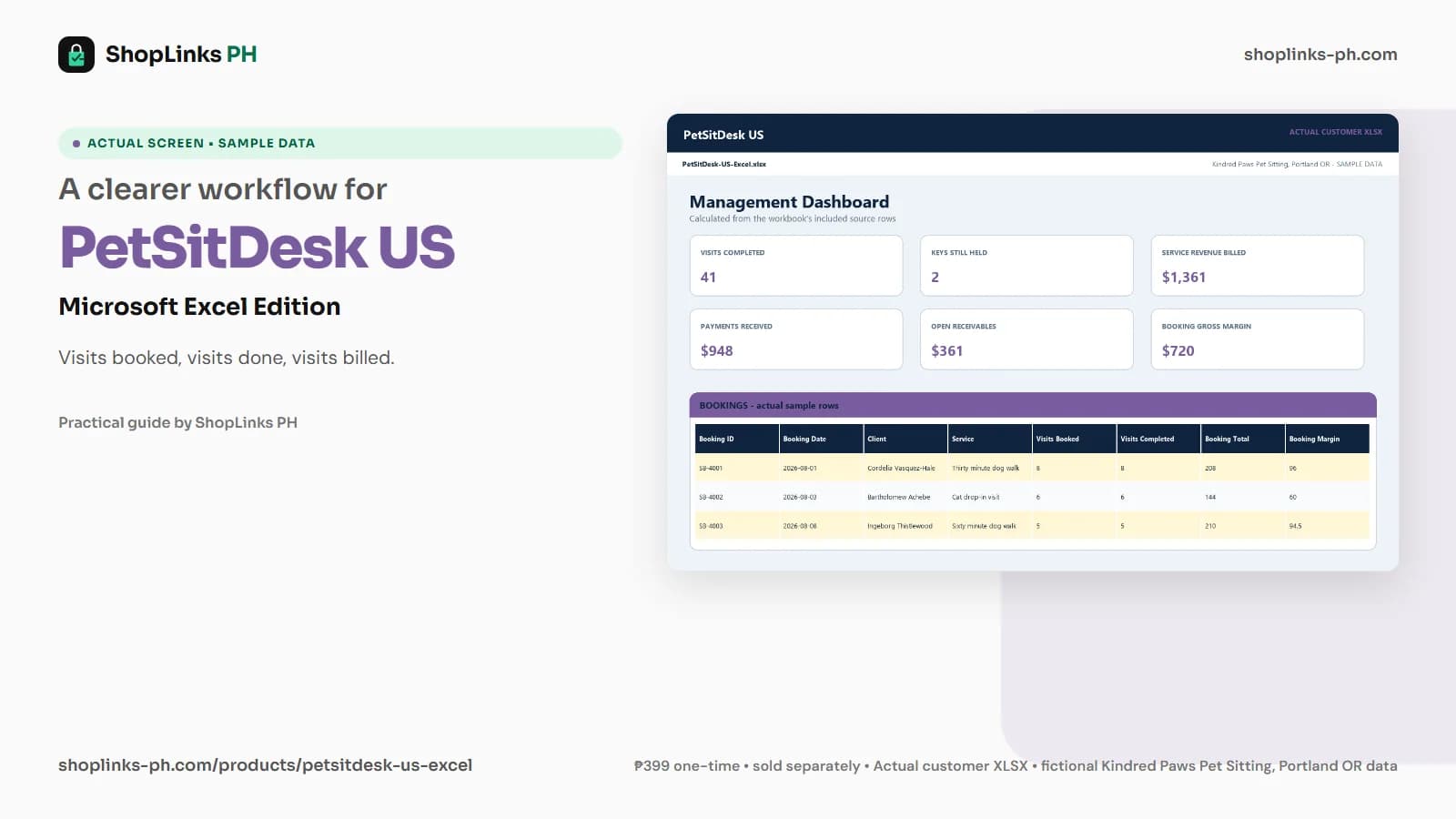
A booking records the visits booked and a unit price, and the total accumulates from visits logged as completed.
Visits outstanding then shows what is still owed to the client, which is the list worth reading before anyone comes home.
Care instructions with evidence
Each visit records whether the pet was fed, whether medication was given and whether the walk actually happened.
For a cat on a thyroid tablet this is not administration, it is the record that answers a worried client at eleven at night.
Two ways to pay a sitter
A per-visit walker earns a rate for each completed visit; a commission sitter earns a share of what was billed.
Because the rule lives on the sitter record, the pay run is computed from the same visits that produced the invoice.
Keys are a liability
Every spare key, lockbox key and garage remote is logged with who holds it and when it came back.
A business holding a dozen client keys with no register has a problem it will only discover at the worst possible moment.
Review exceptions every week
Resolve duplicate IDs, missing links, overdue balances, negative amounts, and open operational items in CHECKS before using the dashboard for decisions.
PetSitDesk US Microsoft Excel Edition is designed for Microsoft Excel 2019 or newer on Windows or macOS.
No client booking app or scheduling portal, no GPS check-in or visit verification, no veterinary records or medical advice, no insurance or bonding records, and no payroll or contractor tax filing.