Key takeaways
- Interest and payoff derive from the ticket, not a calculator.
- An extension is a month of interest, recorded once.
- Forfeited principal becomes the resale cost basis.
- Only completed sales count toward category margin.
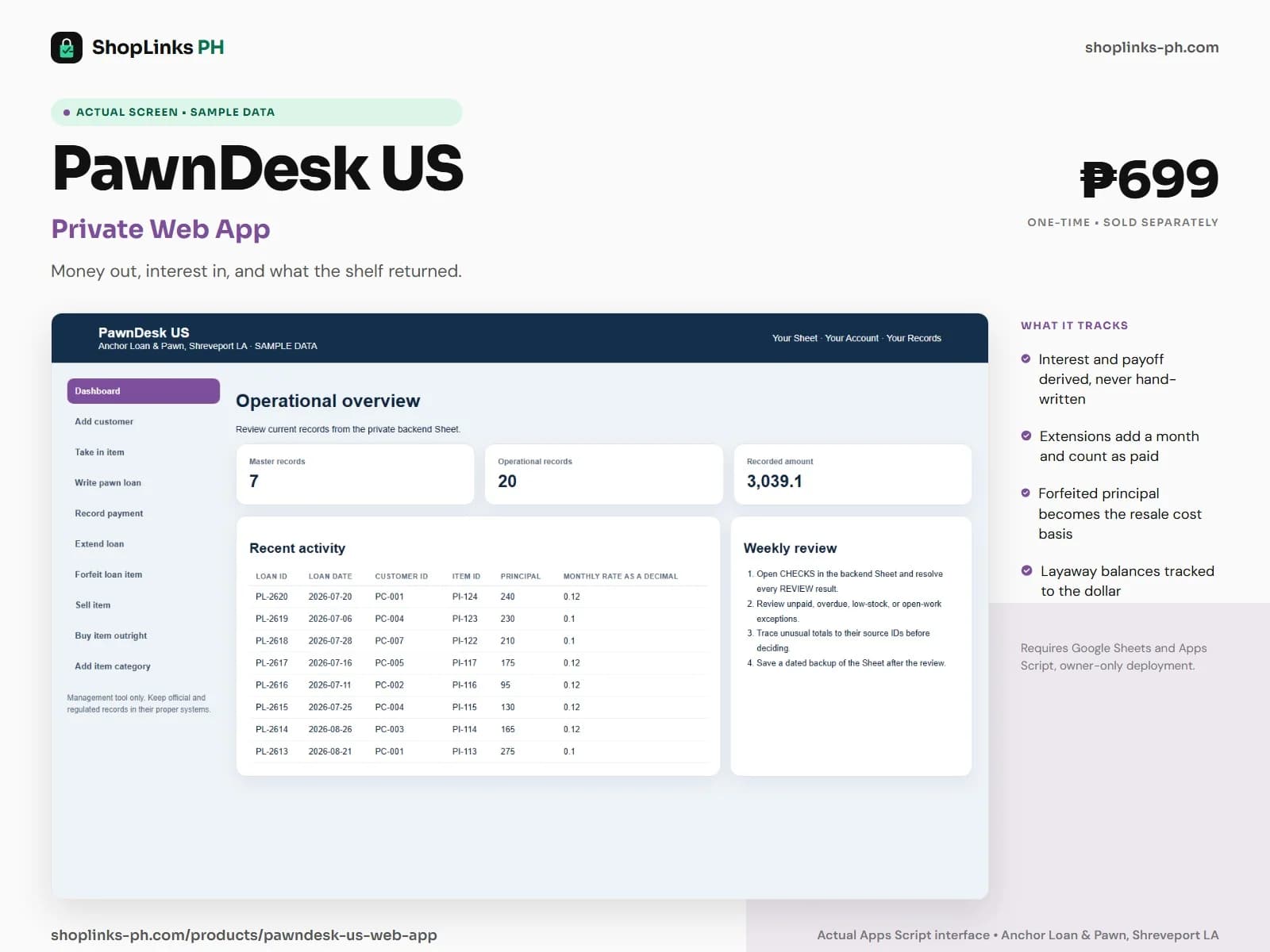
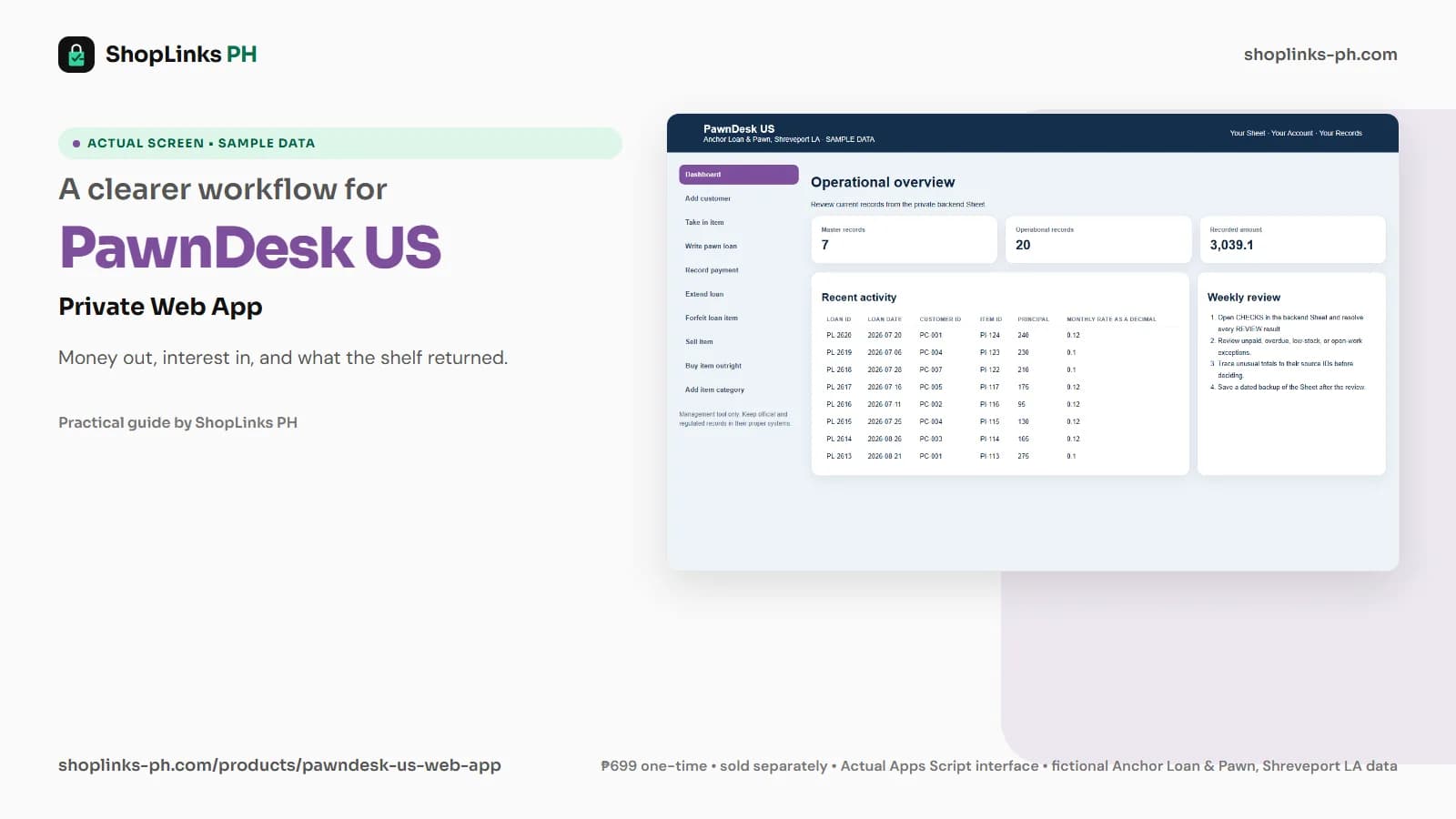
Anchor Loan & Pawn writes twenty loans a month and keeps none of them on paper past the ticket. By the end of August the owner can say what is in the till but not what is out on the street, which loans are past due, or whether the tool wall is earning its space. PawnDesk US derives the interest, the payoff and the resale margin from the loan ticket itself, and stores no identification documents at all.
The loan ticket does the arithmetic
Each loan records the customer, the item, the principal, the monthly rate and the term in days. Months accrued, the due date, interest due and the payoff amount all derive from those, so nothing is written twice.
An extension pays a month forward: it adds a month to the accrual, pushes the due date by thirty days, and counts as money already received, so the balance stays honest without a second ticket.
Forfeiture moves the money, not the loss
When a term runs out, a forfeiture record ties the loan to the item, takes the loan's balance to zero and carries the principal across as the cost the shop now has in the goods.
That carried cost is the one number that decides whether the shelf is worth anything. A forfeited loan is not a bad debt; it is inventory bought at the price you lent.
Resale against what you lent
Every sale looks up its cost basis automatically: the carried cost of the forfeited loan, or the price paid if the item was bought outright at the counter. Margin and margin percent follow from the sale price.
A sale paid in full reads Completed. A layaway keeps its balance visible until the last dollar arrives, and is left out of the category margin so a half-paid item never flatters the month.
Which categories bring the money back
The category summary counts loans written and redeemed, totals principal still out, interest earned on redeemed loans, items forfeited and resale margin on completed sales, so the loan book and the shelf are finally read side by side.
Redemption percent is the trade's real question. Jewelry redeems and pays interest; tools forfeit and pay margin. Both can work, but only if you know which one each shelf is doing.
Review exceptions every week
Resolve duplicate IDs, missing links, overdue balances, negative amounts, and open operational items in CHECKS before using the dashboard for decisions.
PawnDesk US Private Google Sheets Web App is designed for use with a Google account, Google Sheets, and Apps Script, using owner-only deployment by default.
No identification documents, scans or photographs are stored anywhere, only a Yes or No ID Checked flag on the customer, and no law enforcement or regulatory reporting, no state pawn licensing filings, no interest rate compliance opinions, and no credit checks or card processing.