Key takeaways
- Every item carries a return on cost.
- Reservations price quantity times days.
- Damage is charged at replacement cost.
- Crew hours make install effort visible.
An event rental business is a warehouse of capital that earns only when it is somewhere else. Three hundred chairs at four thousand two hundred dollars, a dance floor at four thousand eight hundred, a tent at sixteen and a half thousand. Some of that stock goes out most weekends and some of it has not moved since spring, and most rental owners could not say which is which without walking the warehouse. PartyRentDesk US puts a return figure on every item.
Return on what it cost
Item utilization totals what each piece has earned in rental against its acquisition cost, and labels it Strong, Steady, Slow or Never reserved.
That is the buying decision for next season and the retiring decision for this one, both stated as a number.
Priced by quantity and days
A reservation charges the quantity for the days it is out at the item's own daily rate, so a two day wedding and a single day meeting are priced correctly without arithmetic at the counter.
The event total then assembles from the reservations rather than from a quoted lump sum.
Damage that gets charged
Returned and damaged quantities are recorded per reservation, and damage is charged at replacement cost against the event.
Rental businesses absorb a great deal of breakage simply because nobody wrote it down at the return dock.
The crew is the variable cost
Install crews carry an hourly cost, and the event records the hours actually spent.
A tent and dance floor install is a different proposition from dropping sixty chairs, and only the crew hours make that visible in the margin.
Review exceptions every week
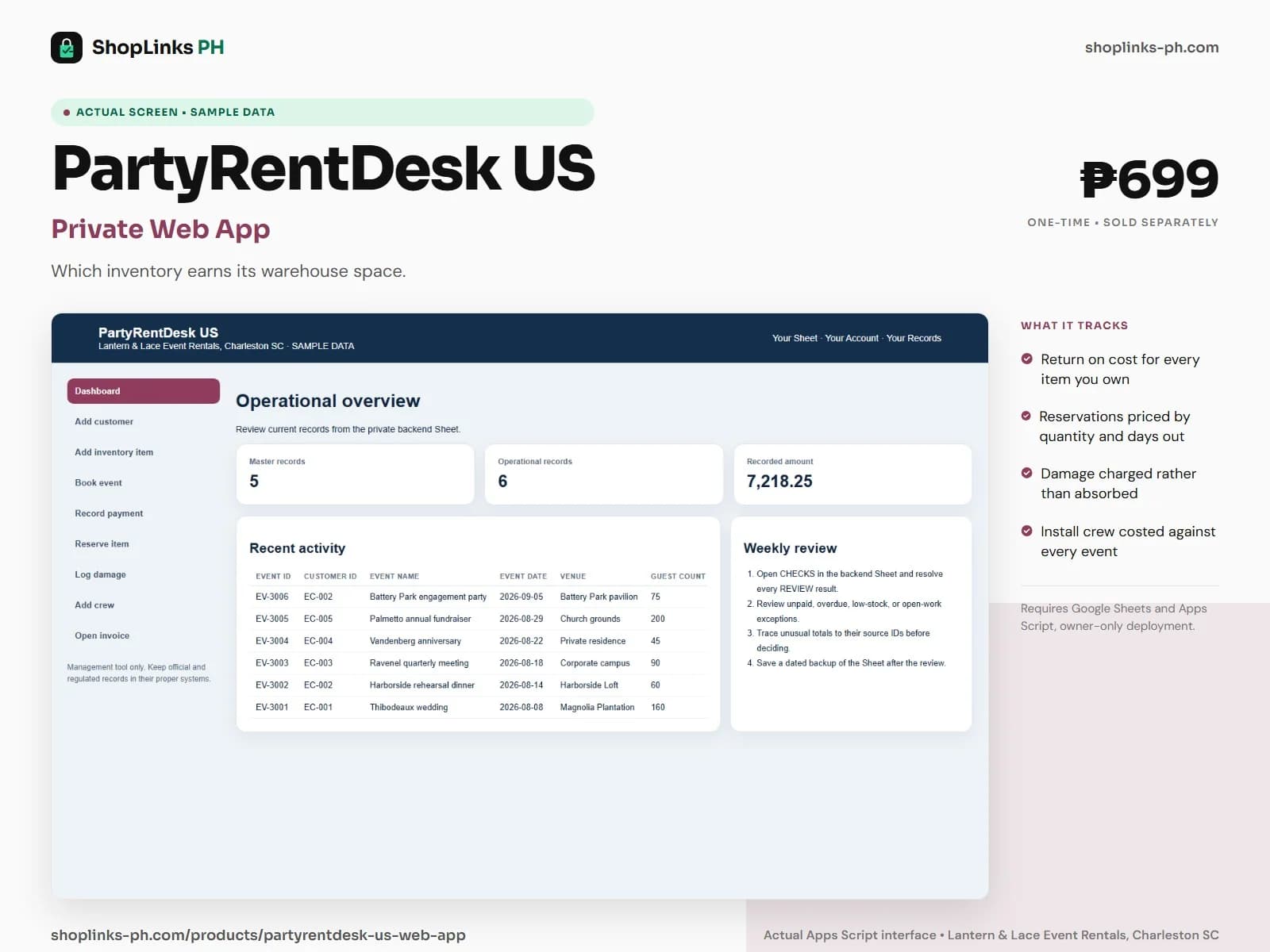
Resolve duplicate IDs, missing links, overdue balances, negative amounts, and open operational items in CHECKS before using the dashboard for decisions.
PartyRentDesk US Private Google Sheets Web App is designed for use with a Google account, Google Sheets, and Apps Script, using owner-only deployment by default.
No online booking or availability calendar, no double-booking prevention, no delivery routing or GPS, no contract or waiver generation, and no damage waiver insurance administration.