Key takeaways
- Choose a partner for a concrete reason.
- Open with a relevant, low-pressure proposal.
- Document the specific offer for review.
- Choose whether to repeat, revise or stop.
Start with the next decision
Build a specific partnership proposal and track an agreed pilot. For small businesses proposing a modest local collaboration, the useful starting point is a concrete task with an owner and a finished result. A document helps only when it makes the next action easier to understand. Start with one real case and keep the amount of paperwork proportionate to the work.
Use a small practice case
Fictional stationery shop Isla Paper proposes a weekend display at Isla Cafe. The pilot is a small collaboration idea; no commercial terms are pre-agreed. Before using real records, walk through a fictional case like this. It makes missing inputs easier to notice without exposing private customer or business details. The sample quantities, dates and amounts illustrate the process; they are not recommendations for your own operation.
Partner fit map
Choose a partner for a concrete reason. Use public business information and a relevant business contact. Explain a benefit for both sides without inventing demand.
For example: Cafe visitors may use desk stationery; the shop can provide a compact sample display. The cafe has limited counter space. A possible audience overlap is a hypothesis to discuss, not proof of likely sales.
First outreach message
Open with a relevant, low-pressure proposal. Personalize the reason using a public, relevant business detail. Ask for a conversation rather than assuming agreement.
For example: Hello Isla Cafe team. We make desk stationery and have a small weekend display idea that may suit your counter. May I send a one-page outline for you to review? Send only through an appropriate business channel and respect a decline.
One-page pilot proposal
Document the specific offer for review. Turn discussion notes into a concise written proposal. Mark unresolved commercial details as open decisions.
For example: Shop supplies and maintains a 30 cm display. Cafe reviews placement. Any fees, stock custody and customer order handling must be agreed before launch. This worksheet is not a partnership contract; use suitable advice for binding terms.
Pilot review and next step
Choose whether to repeat, revise or stop. Review both parties experience, including operational effort. Agree changes before extending the pilot.
For example: Cafe reports the display fit well but blocked the pickup sign. Revise placement before considering another weekend. A completed pilot does not automatically authorize an ongoing collaboration.
Test the exception before sharing the record
Try the same task with one missing input: an unanswered question, a changed quantity, an absent owner or an unconfirmed date. Keep the affected decision visibly open, assign a person to confirm the fact and set a next update. A blank response should never silently turn into an approval. Write N/A with a reason when a field does not apply, and preserve the evidence needed to understand your decision later.
Keep one current working copy
After using the record, note the step that caused confusion and revise that part. Add a revision date so the next person can identify the current copy. Archive the completed record according to your business needs, and share only the information the recipient needs. Keep examples clearly labeled and check names, dates, amounts, links and permissions before sending a customer-facing message.
A ready-made starting point
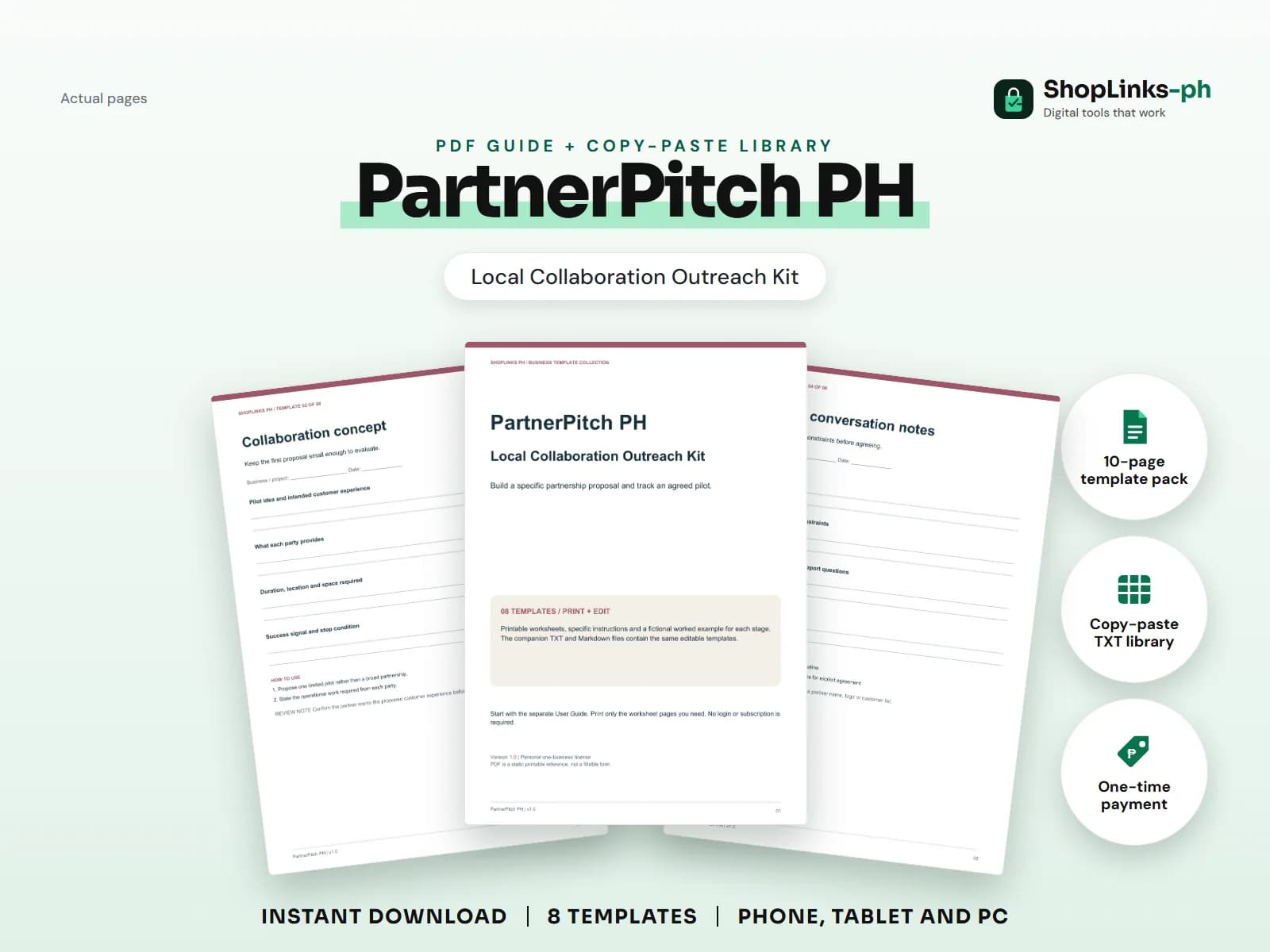
PartnerPitch PH includes eight practical templates, a printable PDF, editable TXT and Markdown versions, fictional worked examples and an illustrated user guide. Planning and communication templates only; no partner directory, bulk sending tool, contract, affiliate platform or revenue guarantee. You can print the relevant page or copy the text into your preferred editor, then adapt it to the actual task.