Key takeaways
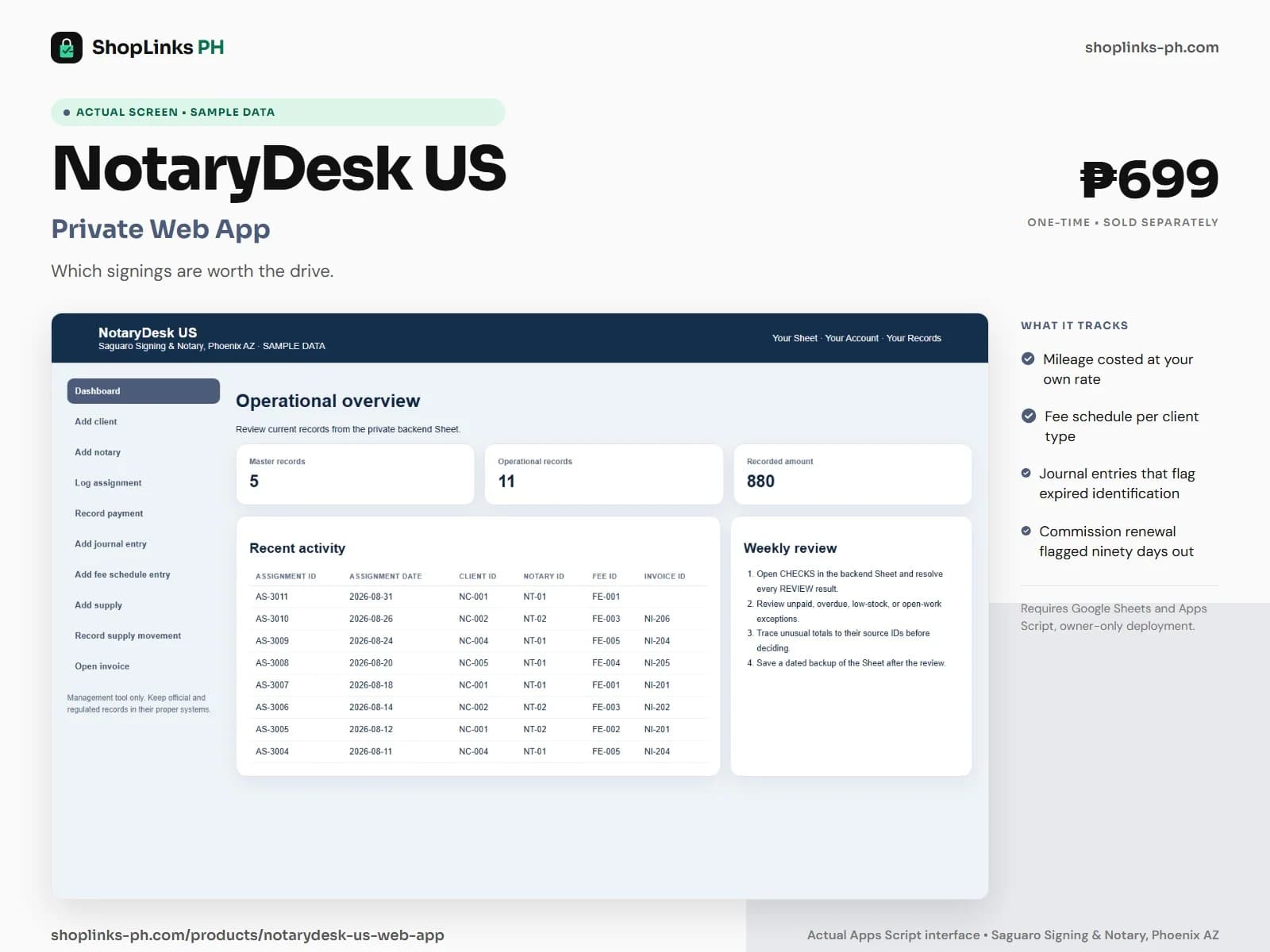
- Mileage is costed at your own rate.
- Fee schedules keep client rates distinct.
- Journal entries flag identification defects.
- Commission expiry is flagged in advance.
A mobile notary is paid per signing and costed per mile, and the two are set by different people. The signing service sets the fee; the borrower's address sets the drive. A ninety-five dollar assignment twenty-eight miles away and a hundred and fifty dollar assignment eight miles away are not remotely the same job, and a month of the former is how a busy notary ends up disappointed. NotaryDesk US costs the drive.
The drive is the cost
Each assignment records the miles driven, and the notary's own mileage rate turns that into money.
Margin per assignment then makes the comparison that matters: which clients send work that is worth accepting.
Fee schedules by client type
Travel and print fees come from the fee schedule entry for that service, so title company rates and signing service rates stay distinct.
Printing is a real cost on a loan packet, and recording the paper used against the assignment keeps it from disappearing into office overhead.
A journal that checks itself
Every act is recorded with the signer, the document, the identification presented and its expiry date.
The entry reads ID expired at signing when the identification had lapsed before the act, and ID expiry not recorded when the date was never captured, which is the more common failure.
The commission behind everything
A notary commission and its errors and omissions cover both carry expiry dates, and the status reads Renew soon ninety days out.
An expired commission is not a paperwork problem, it is every future assignment cancelled.
Review exceptions every week
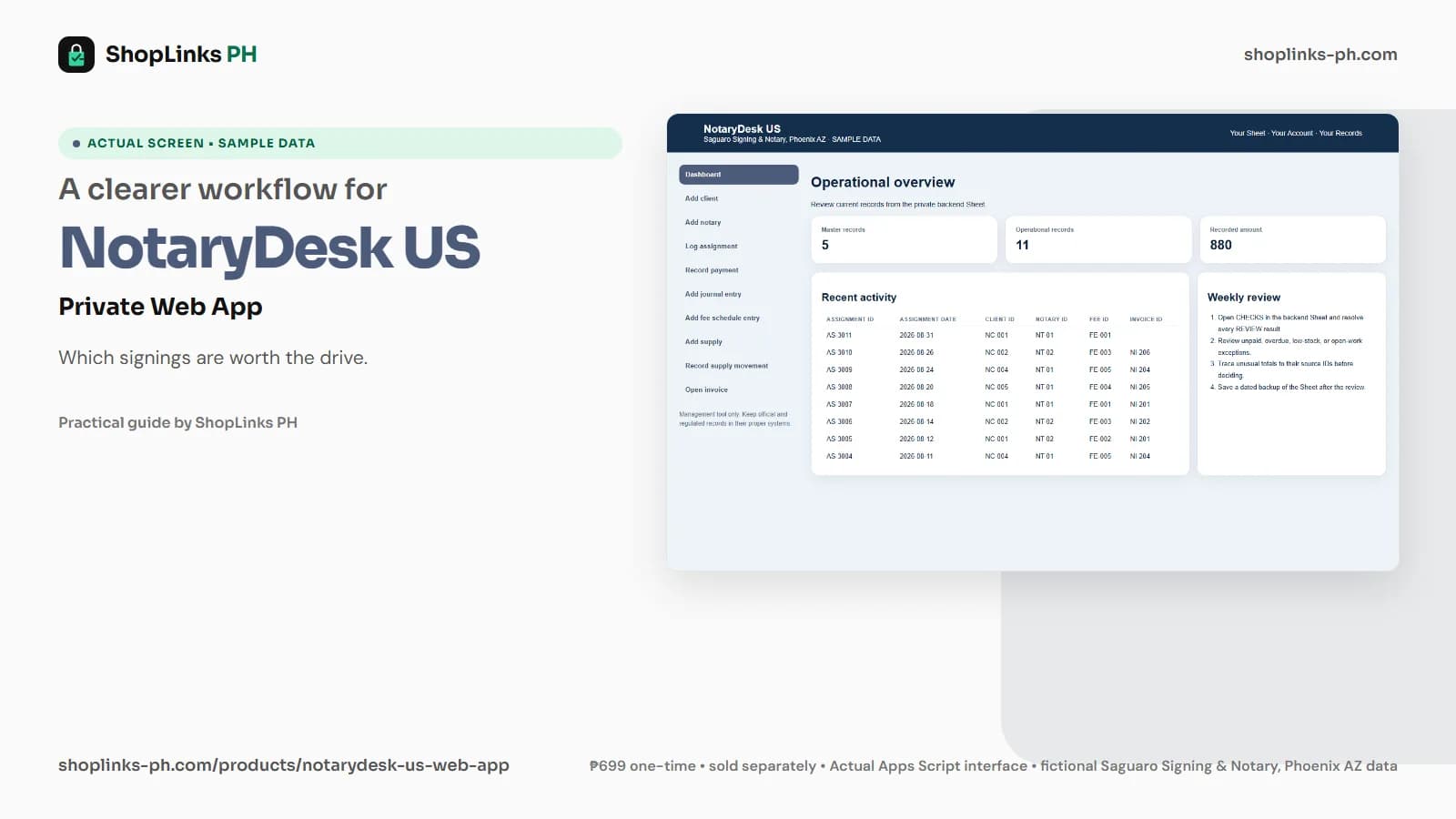
Resolve duplicate IDs, missing links, overdue balances, negative amounts, and open operational items in CHECKS before using the dashboard for decisions.
NotaryDesk US Private Google Sheets Web App is designed for use with a Google account, Google Sheets, and Apps Script, using owner-only deployment by default.
No electronic or remote online notarisation platform, no state commission filing or journal submission, no document preparation or legal advice, no e-signature integration, and no background screening records.