Key takeaways
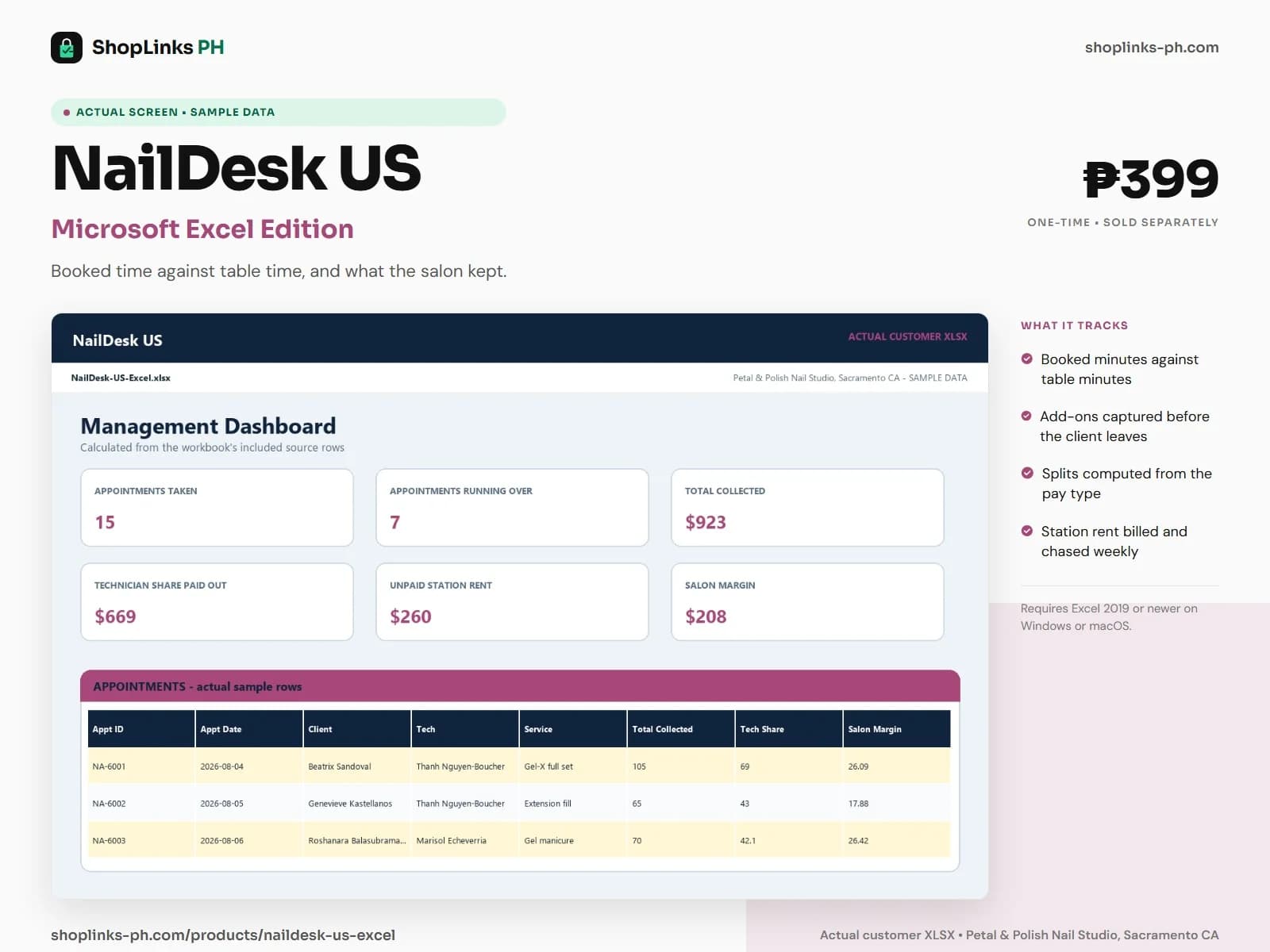
- Booked minutes and table minutes are both recorded.
- Add-ons are captured at the table.
- Splits derive from the pay type.
- Rented and commission stations compare directly.
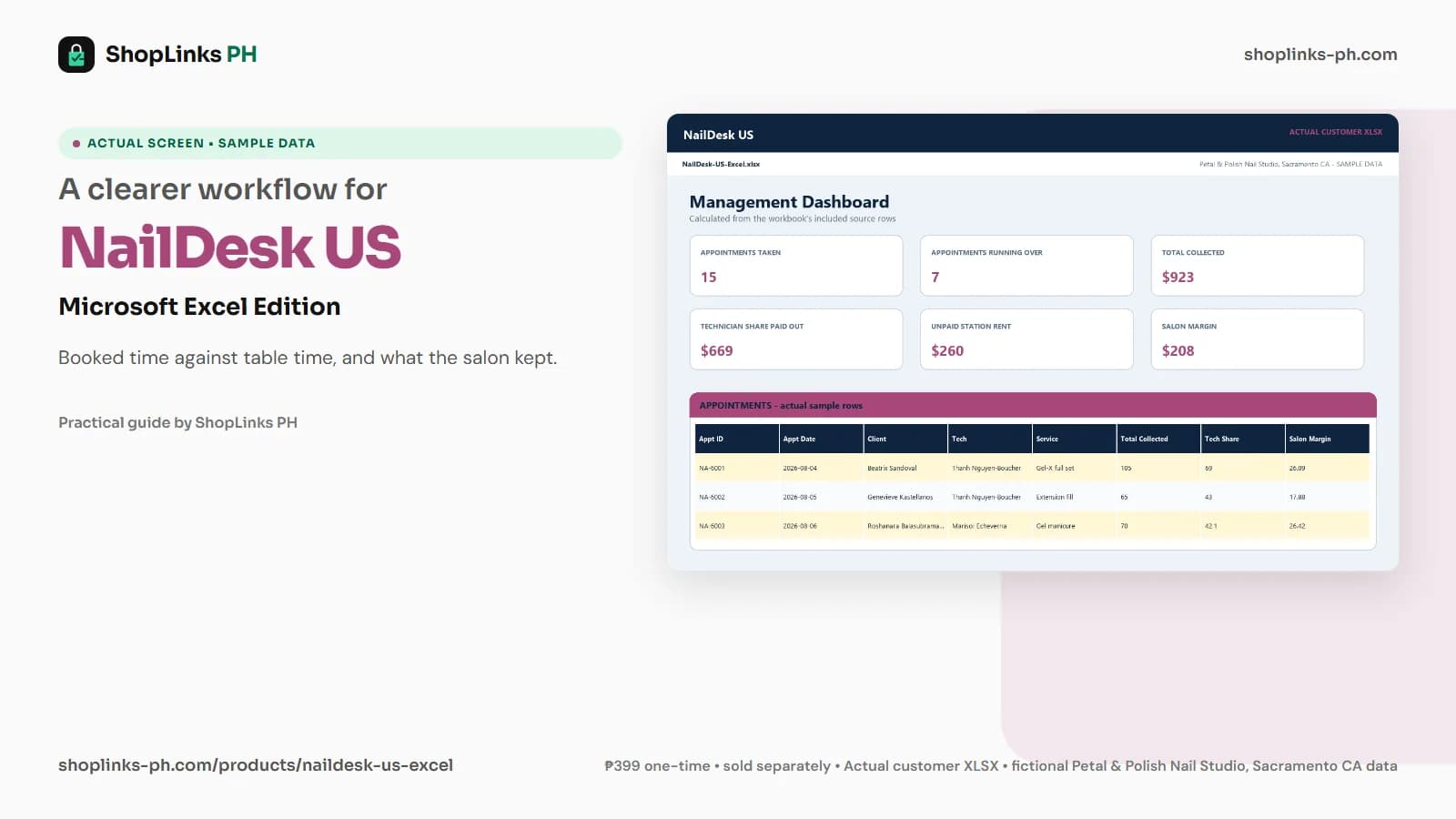
A nail salon books in fixed slots and works in variable ones. The gel manicure allowed fifty-five minutes takes sixty-five when the previous set needs soaking off, and the book does not adjust. Do that four times a day and the last client waits, the technician skips lunch, and the salon takes exactly what it planned to take. NailDesk US records the booked time and the real time and puts the difference in front of you.
Booked minutes and table minutes
Every service carries the minutes it is booked for, and every appointment records the minutes it actually took.
A service that consistently overruns is a booking template that needs changing, not a technician who needs hurrying.
Add-ons decided at the table
Chrome finishes, nail art, repairs and treatments are recorded as add-ons against the appointment, each with its own charge and minutes.
These are agreed while the client is in the chair and are the most commonly forgotten money in a salon, because the ticket was written at the door.
Splits that follow the pay type
A station renter keeps the service, the add-ons and the tip; a commission technician keeps their percentage of the service and add-ons, plus the tip.
Because the rule sits on the technician record, the split is right even when the salon runs both arrangements at once.
Product and the station question
Supplies are drawn against the appointment, so a Gel-X set carries its tip box and a soak-off carries its acetone.
The technician summary then combines salon margin with the rent billed, which is how a rented station and a commission chair become directly comparable.
Review exceptions every week
Resolve duplicate IDs, missing links, overdue balances, negative amounts, and open operational items in CHECKS before using the dashboard for decisions.
NailDesk US Microsoft Excel Edition is designed for Microsoft Excel 2019 or newer on Windows or macOS.
No online booking or client-facing scheduling app, no card terminal or point of sale integration, no state board licensing or sanitation records, no payroll or contractor tax filing, and no automatic client reminders.