Key takeaways
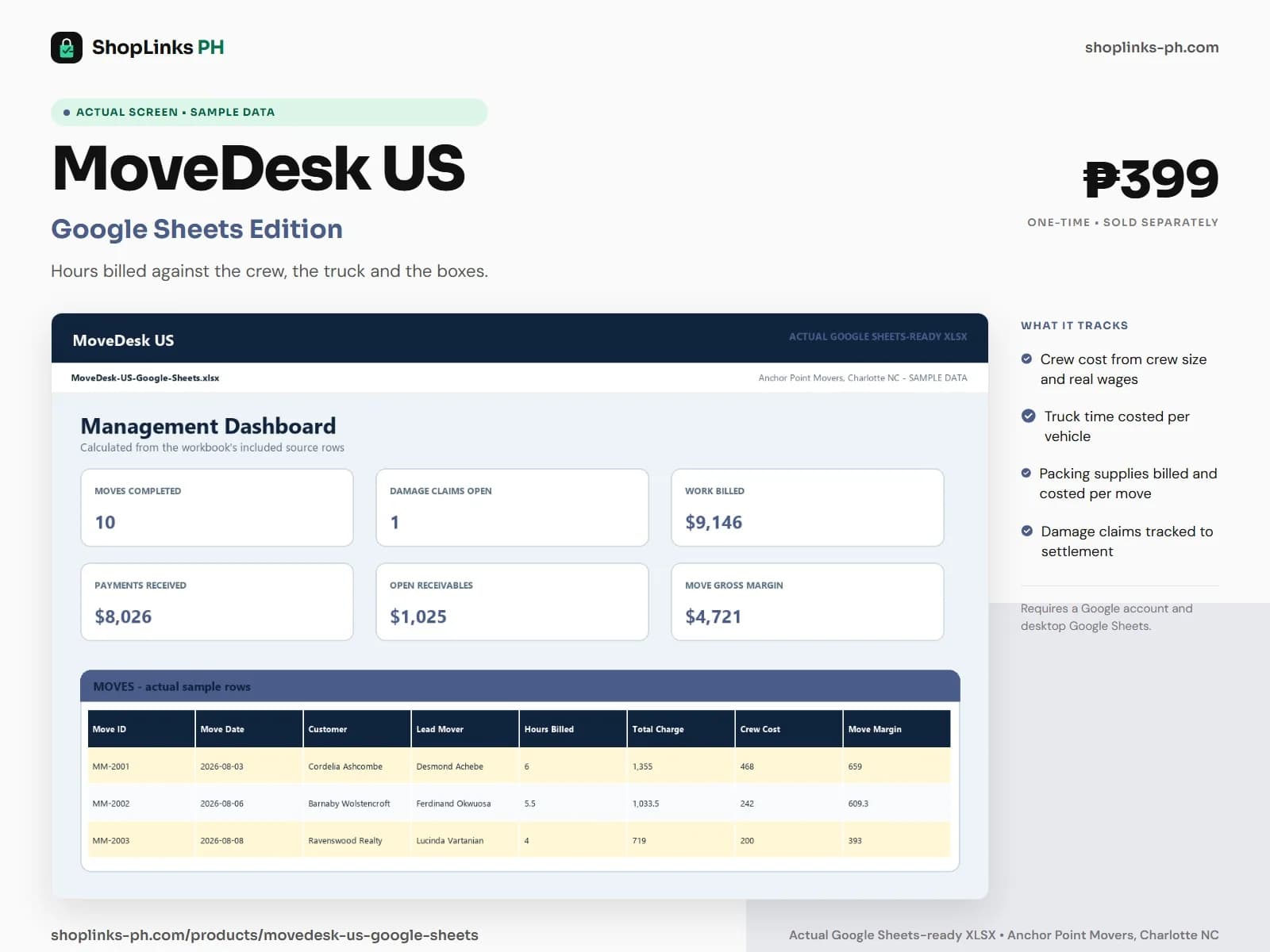
- Crew cost follows crew size and real wages.
- Truck time is costed per vehicle.
- Supplies are billed and costed per move.
- Damage claims carry their own status.
A moving company sells hours and buys hours, and the two are not the same hour. The customer is billed a crew rate that covers three movers, a truck and everything else. The business pays three separate wages, fuel and maintenance on a specific vehicle, and a box of stretch wrap nobody charged for. The gap between the rate and the cost is the entire margin, and it moves with every crew size. MoveDesk US computes both sides from the same hours.
One hour, two figures
The labor charge is the hours billed at the crew rate. The crew cost multiplies the same hours by the crew size and the mover's own wage.
Because crew size sits on the move, a four-mover job at a higher rate can be compared honestly against a two-mover job, which is the pricing question most movers guess at.
The truck is a cost too
Each truck carries an hourly cost, so a twenty-six foot box and a sixteen foot box are not charged to the job as the same thing.
On short apartment moves this changes the answer, because the smaller truck is often the difference between a thin job and a reasonable one.
Supplies that get billed
Packing supply carries a cost and a sell price, and only move-use movements count, so a warehouse restock never inflates a job.
The same movements keep stock current, which matters because supplies are the most commonly given-away item in the trade.
Claims that do not go quiet
A damage claim records what was damaged, what was claimed and what was approved, and reads Under review, Approved or Settled on its own.
An unsettled claim is a real liability and a real customer relationship, and both are easy to lose track of in a busy month.
Review exceptions every week
Resolve duplicate IDs, missing links, overdue balances, negative amounts, and open operational items in CHECKS before using the dashboard for decisions.
MoveDesk US Google Sheets Edition is designed for use with a Google account and current desktop Google Sheets.
No DOT or interstate authority filing, no bill of lading or federal tariff documentation, no cargo insurance underwriting or claim adjudication, no dispatch or GPS routing, and no customer booking portal.