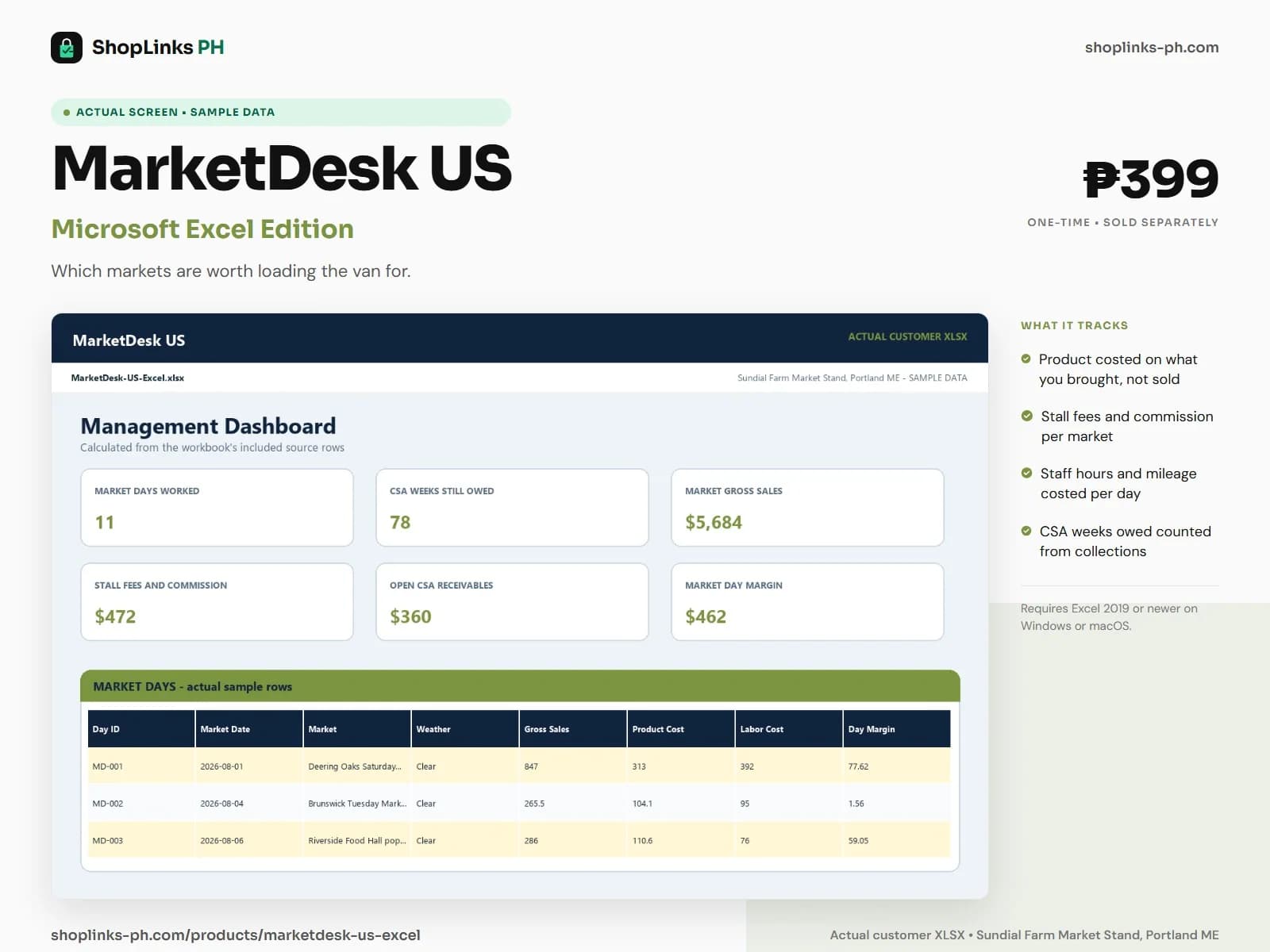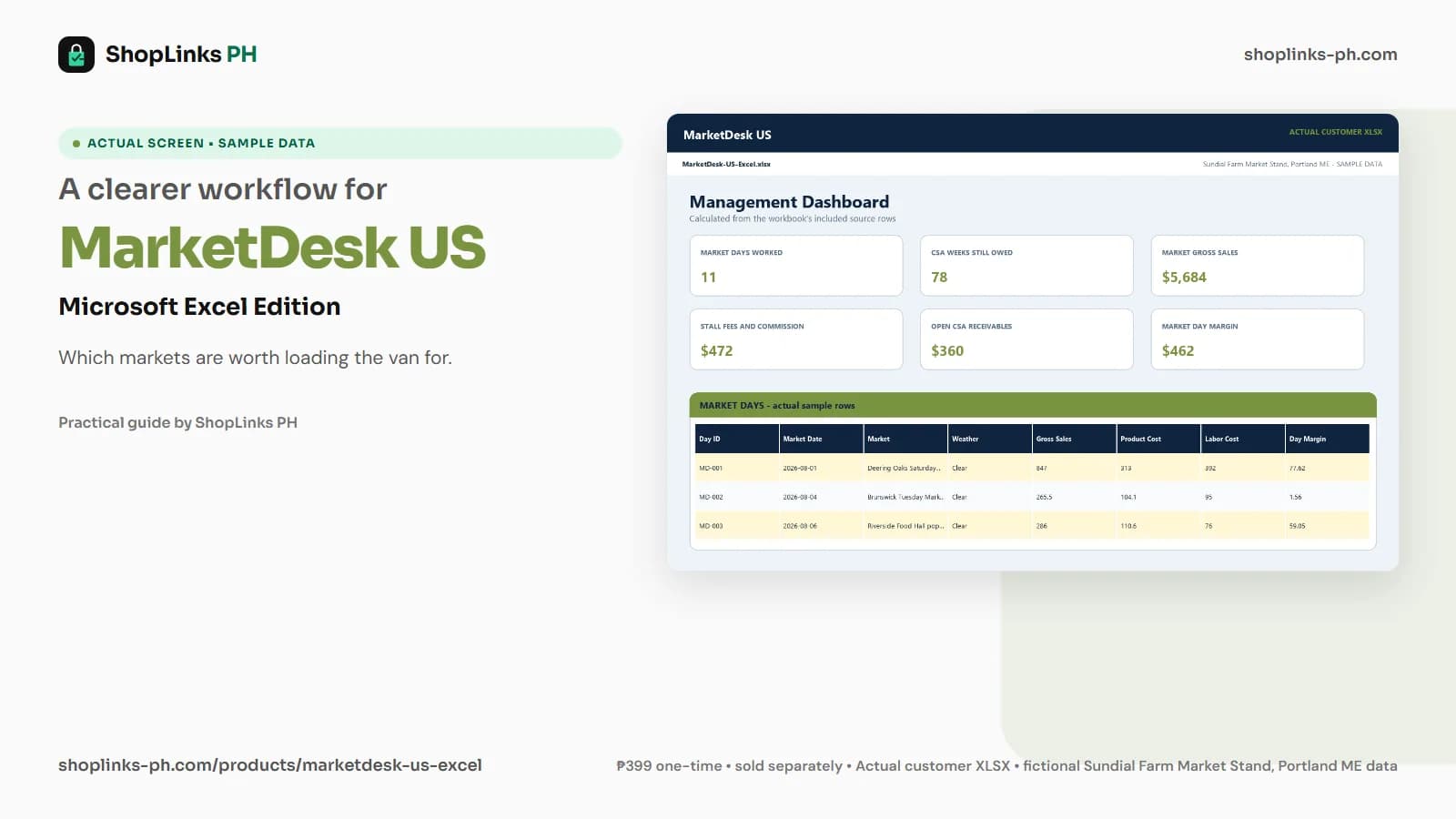
Key takeaways
- Product is costed on what was brought.
- Stall fees and commission come from the market.
- Staff and travel are costed per day.
- CSA weeks owed come from collections.
A farmers market stand takes cash all morning and feels profitable by definition. Then there is a fifty-five dollar stall fee, two people for seven hours, a fifty mile round trip, and half a crate of greens that went to compost because it rained. None of those are visible in the cash box. MarketDesk US costs the day rather than counting the takings.
Cost what you brought, earn on what sold
Each product line records units brought and units sold, and the cost is charged on everything brought.
That is what makes a wet Saturday visible as the loss it is, rather than as a quiet day.
Fees belong to the market
A flat stall fee and a percentage of gross are completely different propositions, and each market carries its own.
A twelve percent pop-up is cheap on a slow day and expensive on a good one, which is the comparison a vendor needs before reapplying.
Staff and the drive
Labor cost multiplies hours by staff count by rate, and travel cost applies your own mileage rate to the miles.
A small market fifty miles away can consume more in staff and fuel than it returns, and it will still feel like a busy morning.
CSA weeks are an obligation
Weeks delivered count from shares actually collected, so weeks remaining is what you still owe rather than what the calendar suggests.
Money taken in April for food delivered in September is a liability, and it is the one most likely to be spent as though it were profit.
Review exceptions every week
Resolve duplicate IDs, missing links, overdue balances, negative amounts, and open operational items in CHECKS before using the dashboard for decisions.
MarketDesk US Microsoft Excel Edition is designed for Microsoft Excel 2019 or newer on Windows or macOS.
No market application or permit filing, no organic or food safety certification records, no CSA member portal or online sign-up, no card reader integration, and no crop planning or planting schedules.