Key takeaways
- Decide whether the event fits the offer and capacity.
- Allocate the limited table space deliberately.
- Reconcile each item across the event.
- Decide what to change before the next market.
Start with the next decision
Organize stall readiness, stock movement and the post-event review. For small sellers preparing a bazaar or pop-up stall, the useful starting point is a concrete task with an owner and a finished result. A document helps only when it makes the next action easier to understand. Start with one real case and keep the amount of paperwork proportionate to the work.
Use a small practice case
Fictional maker Isla Crafts is preparing a one-day indoor market with 40 tote bags and 30 bookmarks. Figures and venue arrangements are sample data. Before using real records, walk through a fictional case like this. It makes missing inputs easier to notice without exposing private customer or business details. The sample quantities, dates and amounts illustrate the process; they are not recommendations for your own operation.
Event fit worksheet
Decide whether the event fits the offer and capacity. Ask the organizer for written inclusions and event conditions. Consider the practical workload before paying a stall fee.
For example: Indoor craft fair offers a 1.5 m table and one chair. Seller needs a second chair and confirms whether it is permitted. Verify venue-specific requirements directly with the organizer.
Stall layout plan
Allocate the limited table space deliberately. Measure the display before the event. Keep the customer path and staff working area clear.
For example: Left: tote display; center: priced sample; right: checkout and packing. Reserve bags remain behind the table. Test the display with the actual largest product and its packaging.
Stock movement sheet
Reconcile each item across the event. Manually calculate opening plus additions minus sales and other units out. Count actual closing stock independently before explaining differences.
For example: Totes: 40 opening + 0 added - 12 sold - 1 display damage = 27 expected. Actual count: 27; difference: 0. Record non-sale stock movements at the time they happen.
Event review
Decide what to change before the next market. Review operational effort alongside the sales record. Choose one measurable display or preparation improvement.
For example: Six shoppers ask about tote dimensions. Add a size sign to the sample tote and compare questions at the next event. Do not judge a whole selling channel from one event alone.
Test the exception before sharing the record
Try the same task with one missing input: an unanswered question, a changed quantity, an absent owner or an unconfirmed date. Keep the affected decision visibly open, assign a person to confirm the fact and set a next update. A blank response should never silently turn into an approval. Write N/A with a reason when a field does not apply, and preserve the evidence needed to understand your decision later.
Keep one current working copy
After using the record, note the step that caused confusion and revise that part. Add a revision date so the next person can identify the current copy. Archive the completed record according to your business needs, and share only the information the recipient needs. Keep examples clearly labeled and check names, dates, amounts, links and permissions before sending a customer-facing message.
A ready-made starting point
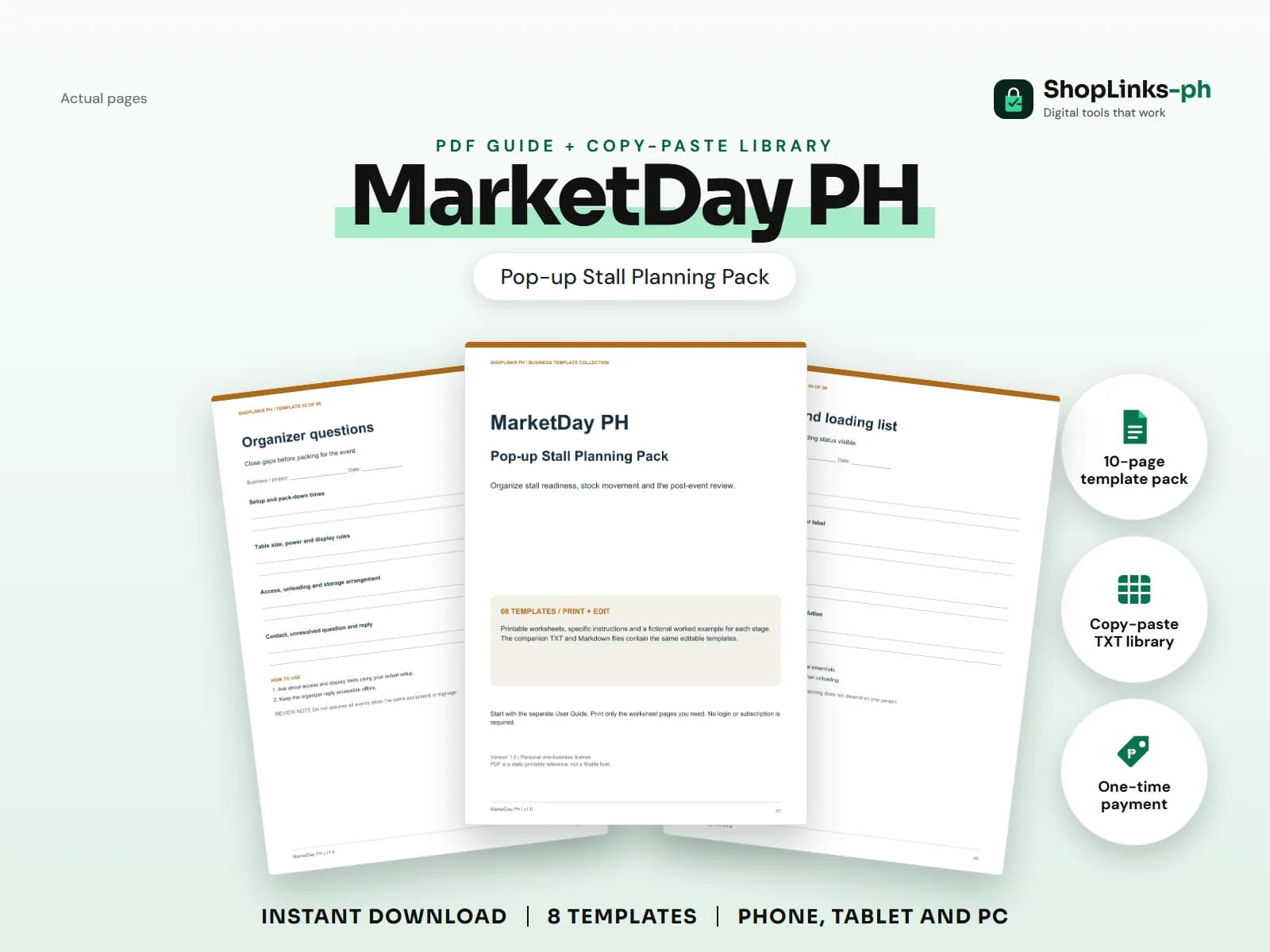
MarketDay PH includes eight practical templates, a printable PDF, editable TXT and Markdown versions, fictional worked examples and an illustrated user guide. Manual event planning only; no POS, tax records, permit advice, live stock tracking or automatic cash reconciliation. You can print the relevant page or copy the text into your preferred editor, then adapt it to the actual task.