Key takeaways
- Material cost comes from a bill of materials.
- Every channel's fees are derived per order.
- Profit per order counts labels and materials.
- Materials read Reorder before they run out.
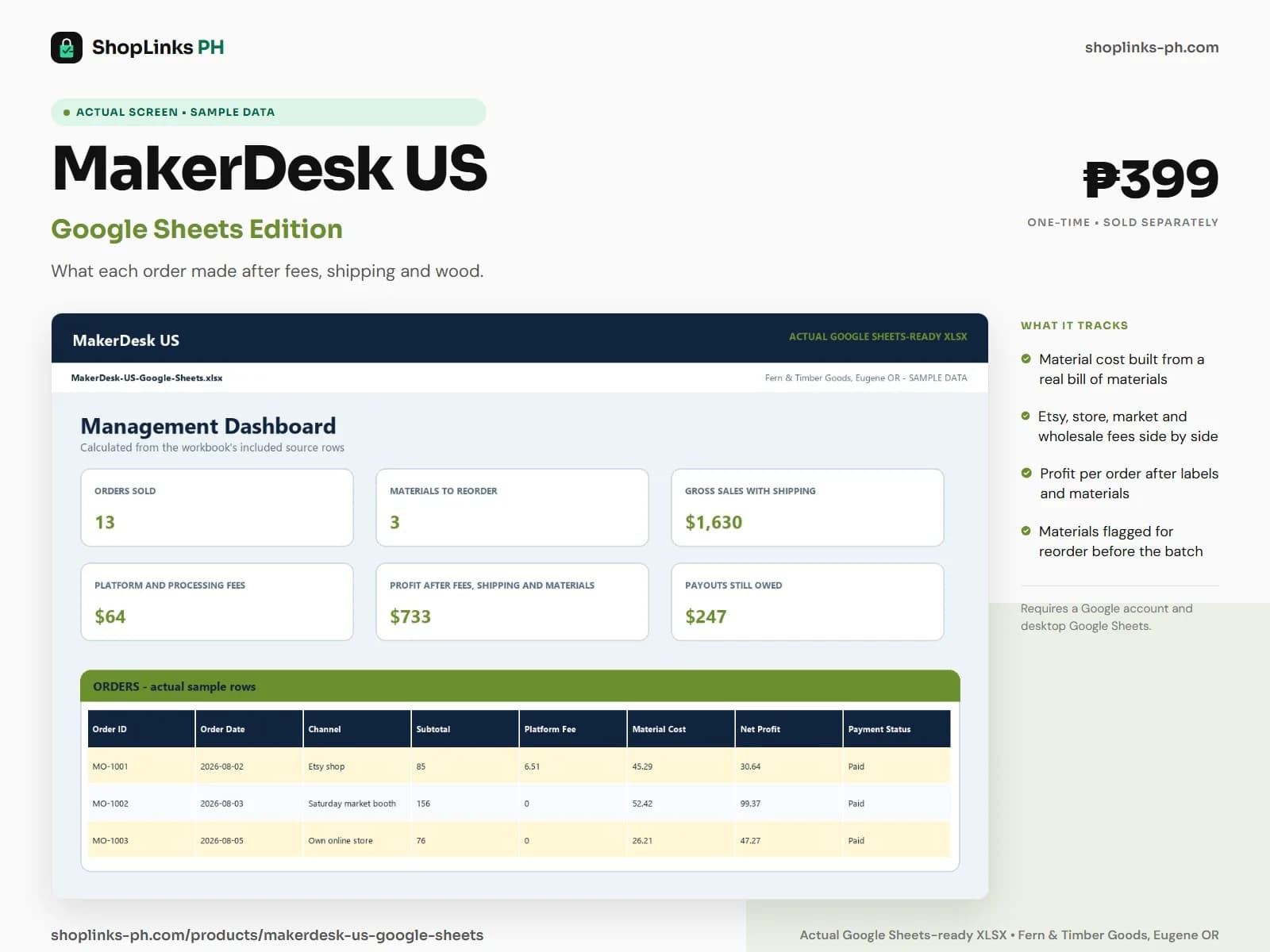
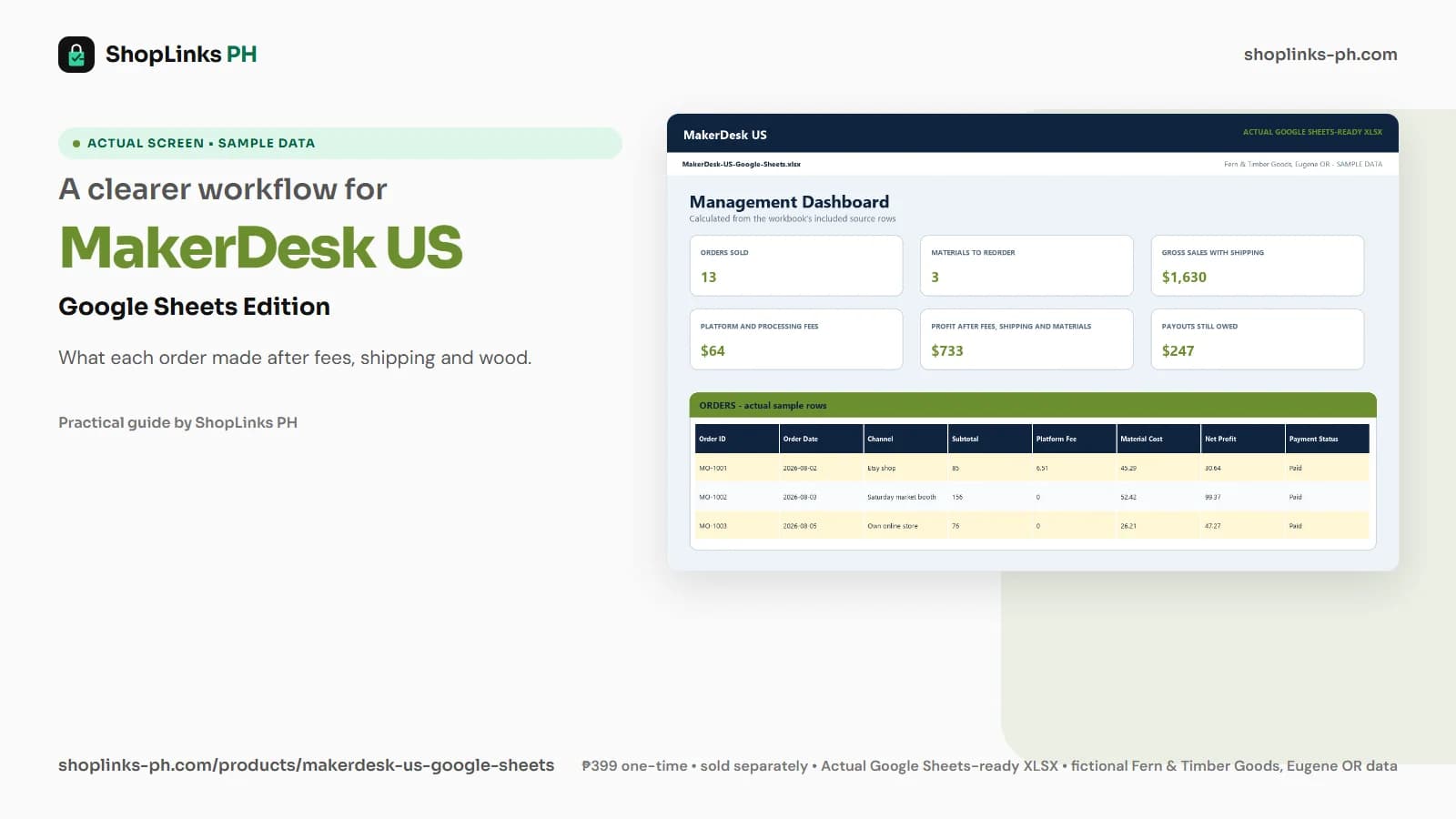
Fern & Timber Goods is a woodworking shop in Eugene selling on Etsy, through its own online store, at the Saturday market and wholesale to a boutique in Corvallis. An $85 walnut board looks like the best product in the line until the walnut, the oil, the gift box, the Etsy fees and a $11.40 label are counted. The coaster sets made from offcuts look free and are not. MakerDesk US puts the material, the fee and the label on every order.
Material cost from a bill of materials
Each product lists the materials it uses and how much of each per unit, so its material cost is the sum of those lines at current unit costs rather than a number guessed when the listing went up.
Unit margin and margin per labor hour follow from the list price and labor minutes, and each product reads Pays well, Thin or Underpriced, which is how a coaster set made from offcuts gets found out.
Fees derived per channel
Each channel carries its own transaction percentage, processing percentage, fixed processing fee and listing fee per unit, so the same board sold on Etsy, through the store or at the market is charged exactly what that channel takes.
An order records its lines, the shipping charged and the label cost, and the platform fee, processing fee, material cost and net profit derive from those entries without a calculator.
Payouts matched to orders
Each order computes the amount the channel should pay out after its fees, and payouts are recorded against the order, so every order reads Paid, Partial or Unpaid and a wholesale balance on net 30 stays visible.
A cancelled order keeps its lines for the record but counts as zero sales, zero fees and zero material cost, so it never inflates the month or the channel summary.
Materials before they run out
Stock received, order use and adjustments are recorded as material movements, and on hand is opening stock plus what came in less what went out, flagged Reorder at or below the level you set.
The channel summary then totals gross sales, fees, shipping, materials and net profit per channel, and labels each Healthy, Thin or Loss by the share of every sales dollar it keeps.
Review exceptions every week
Resolve duplicate IDs, missing links, overdue balances, negative amounts, and open operational items in CHECKS before using the dashboard for decisions.
MakerDesk US Google Sheets Edition is designed for use with a Google account and current desktop Google Sheets.
No Etsy, Shopify or marketplace integration or automatic order import, no sales tax calculation or filing, no shipping label purchase, no inventory of finished goods by location, and no income tax or bookkeeping reports.