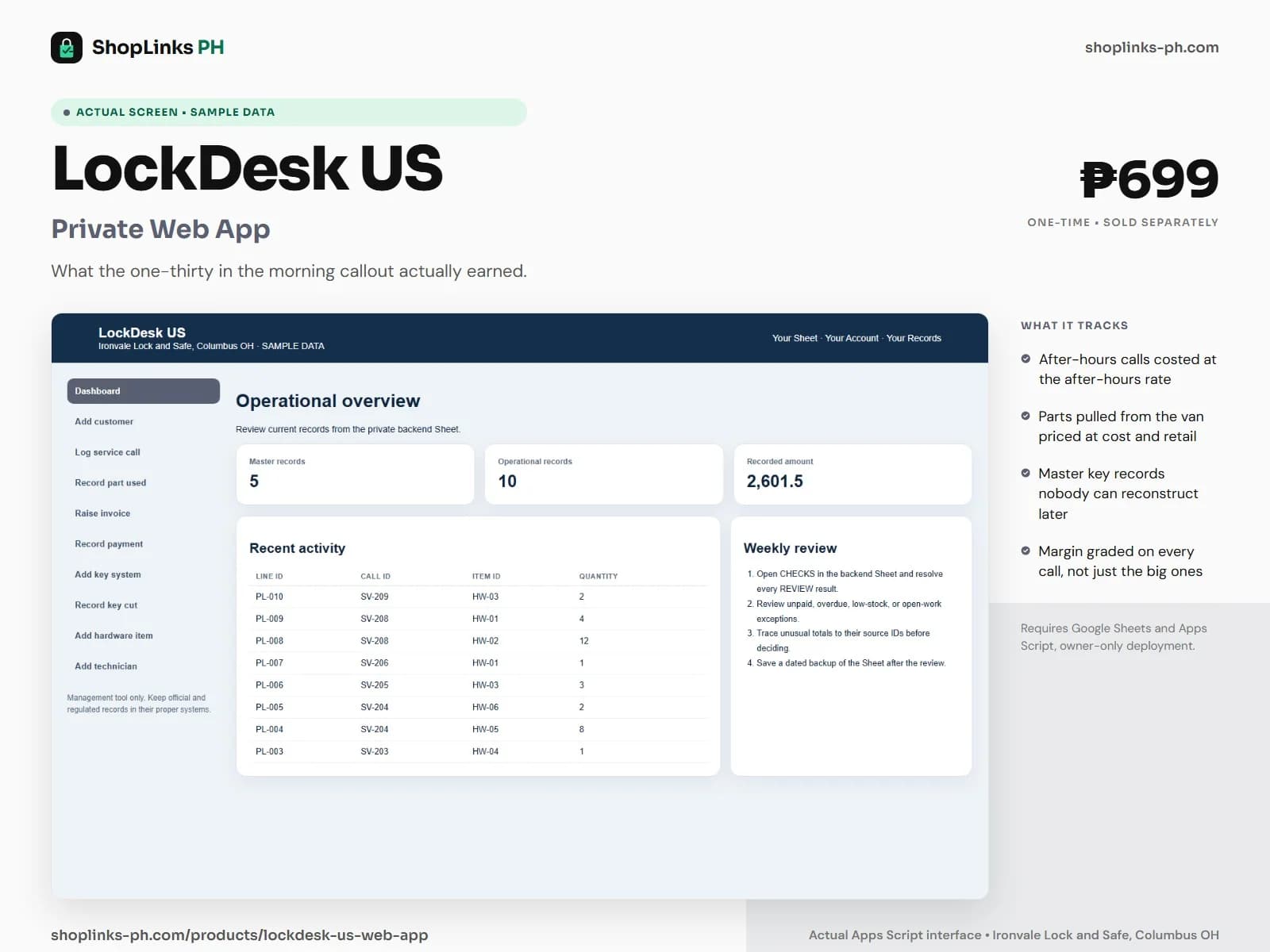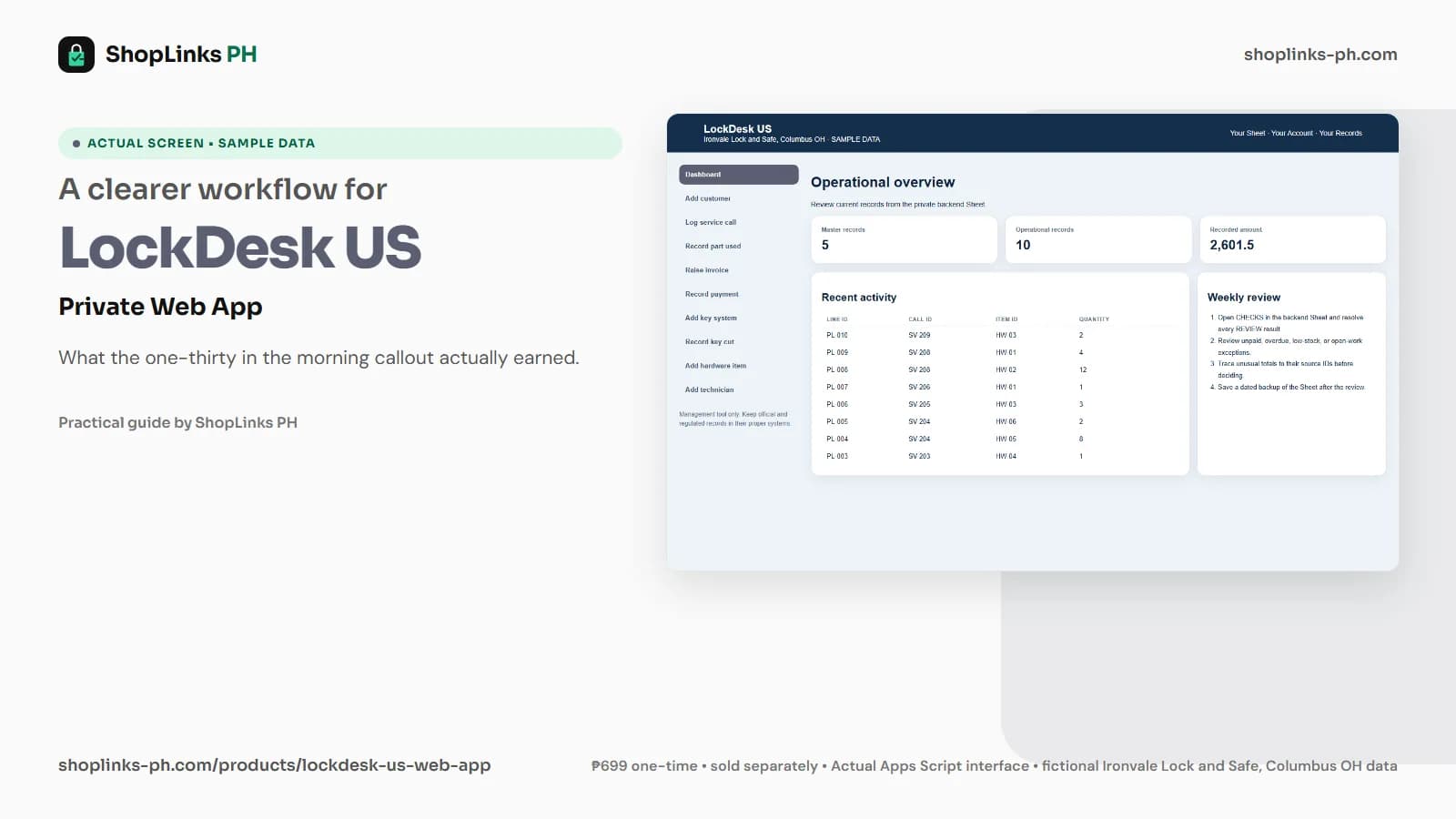
Key takeaways
- Each call totals its own labor, trip charge and parts.
- After-hours work is costed at the after-hours rate.
- Every key cut on a system is recorded and tracked.
- Margin is graded call by call, not month by month.
A locksmith's day is made of small jobs that are easy to price and hard to measure. A lockout here, a rekey there, a commercial install that runs long. The money is decided in twenty-minute increments and reviewed, if at all, at the end of the quarter. LockDesk US puts the cost of each call next to what it was billed.
The call carries its own total
Labor hours, labor rate, trip charge and parts used all sit on the call record, and the call total builds from them.
The invoice is then raised from a figure the records support rather than from a number remembered on the drive home.
After hours costs more than it bills
The rate type on the call decides which technician cost applies, standard or after-hours, and the margin is read against that.
A call worked at two in the morning and billed at the day rate shows up immediately instead of hiding inside a busy month.
Systems that cannot be recreated
A commercial key system records its keyway, cylinder count and level structure, and every key cut against it is a record with a stamp, a code and a holder.
Keys that never came back stay visible, which is the difference between a scheduled rekey and an emergency one.
Parts, invoices and what is left
Parts used draw both cost and sell price from the hardware list, so van stock falls and the call carries its material cost.
Call margin subtracts the technician and the parts, and grades the result, which makes a weak pattern visible while it can still be repriced.
Review exceptions every week
Resolve duplicate IDs, missing links, overdue balances, negative amounts, and open operational items in CHECKS before using the dashboard for decisions.
LockDesk US Private Google Sheets Web App is designed for use with a Google account, Google Sheets, and Apps Script, using owner-only deployment by default.
No dispatch or live technician tracking, no key control software integration or code retrieval service, no automotive key programming data, no GPS or route planning, and no card processing.