Key takeaways
- Price and cost both come from the size.
- Extras are billed and costed on one line.
- Slots count themselves and warn before the pit does.
- Balances are current when the van leaves.
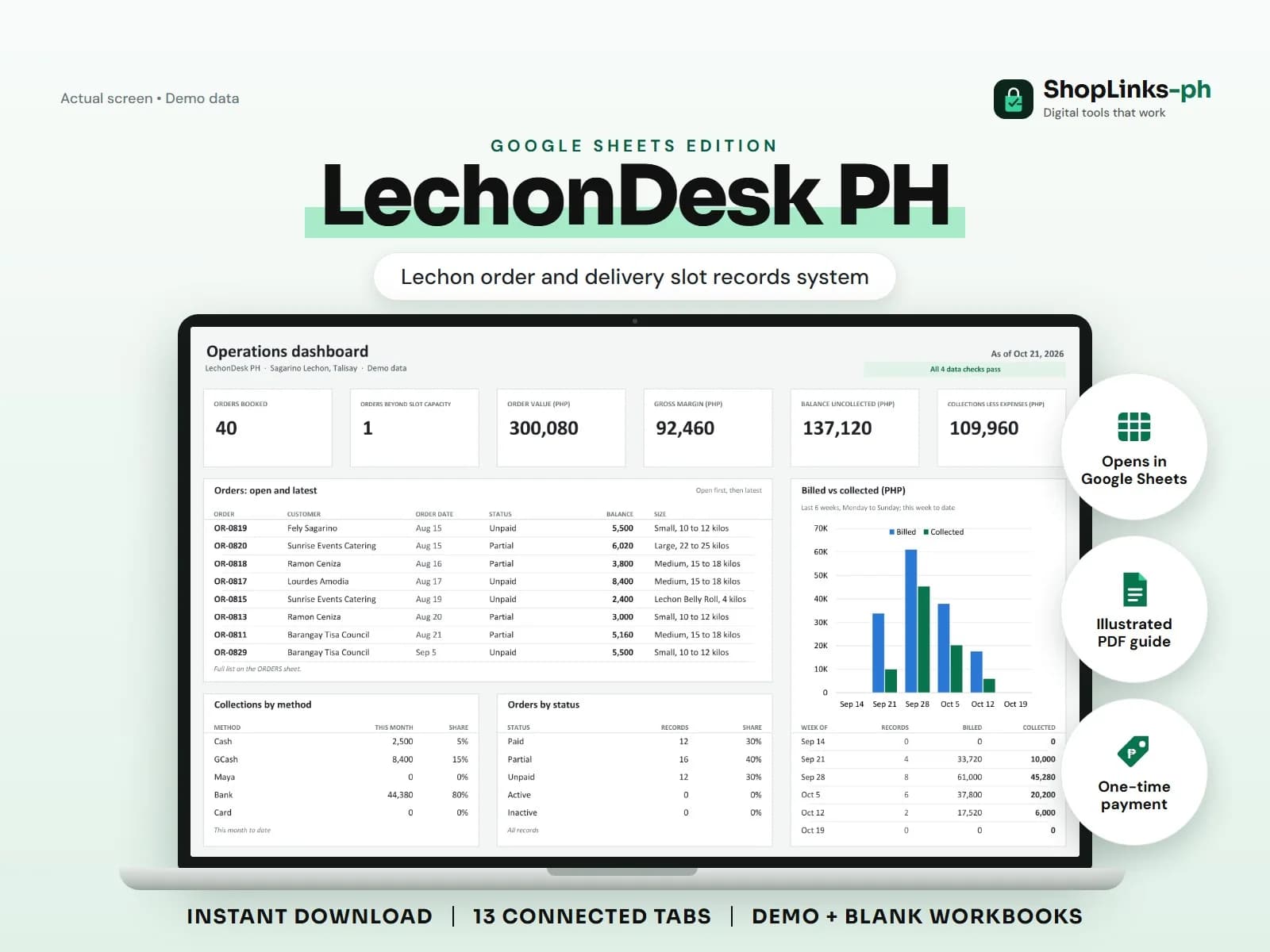
A lechon business fails on two days a year, and both are fiesta days. Orders are accepted over the phone faster than the pit can roast, extras are promised without being priced, and by the afternoon someone is calling to ask where their lechon is. LechonDesk PH keeps sizes, slots, orders, extras and payments in one place so that the answer to can you take one more order is a number rather than an optimistic yes.
The size decides both price and cost
Each size carries a selling price and what that carcass costs the business. An order points at a size and inherits both.
That is what makes margin visible at booking time instead of at the end of the month, when the charcoal and the roasters have already been paid.
Extras are lines, not favours
Extra sauce, a bamboo pole, chopping on site, delivery outside the city: each is a line with a quantity, a unit price and a unit cost.
The order total and the cost total both grow from those same lines, so a generous extra cannot quietly eat the margin of the order it was added to.
A slot that counts itself
Every delivery slot carries a maximum number of orders. Each order counts how many other orders already share its date and slot, and reads Overbooked when the count passes that maximum.
This is the single number that saves a fiesta. It appears while the order is being taken, not after the pit is already behind.
Deposits, balances and the day after
Lechon is usually reserved with a deposit and settled on delivery. Payments are recorded against the order, so the balance is current when the van leaves.
The checks count duplicate order identifiers, orders naming a customer who is not on file, lines pointing at an order that does not exist, and orders sitting in overbooked slots.
Review exceptions every week
Resolve duplicate IDs, missing links, overdue balances, negative amounts, and open operational items in CHECKS before using the dashboard for decisions.
LechonDesk PH Google Sheets Edition is designed for use with a Google account and current desktop Google Sheets.
No live hog purchasing, weighing or slaughterhouse records, no meat inspection or NMIS documentation, no delivery routing or driver tracking, no online storefront or payment gateway, and no automatic reminders to customers with unpaid balances.