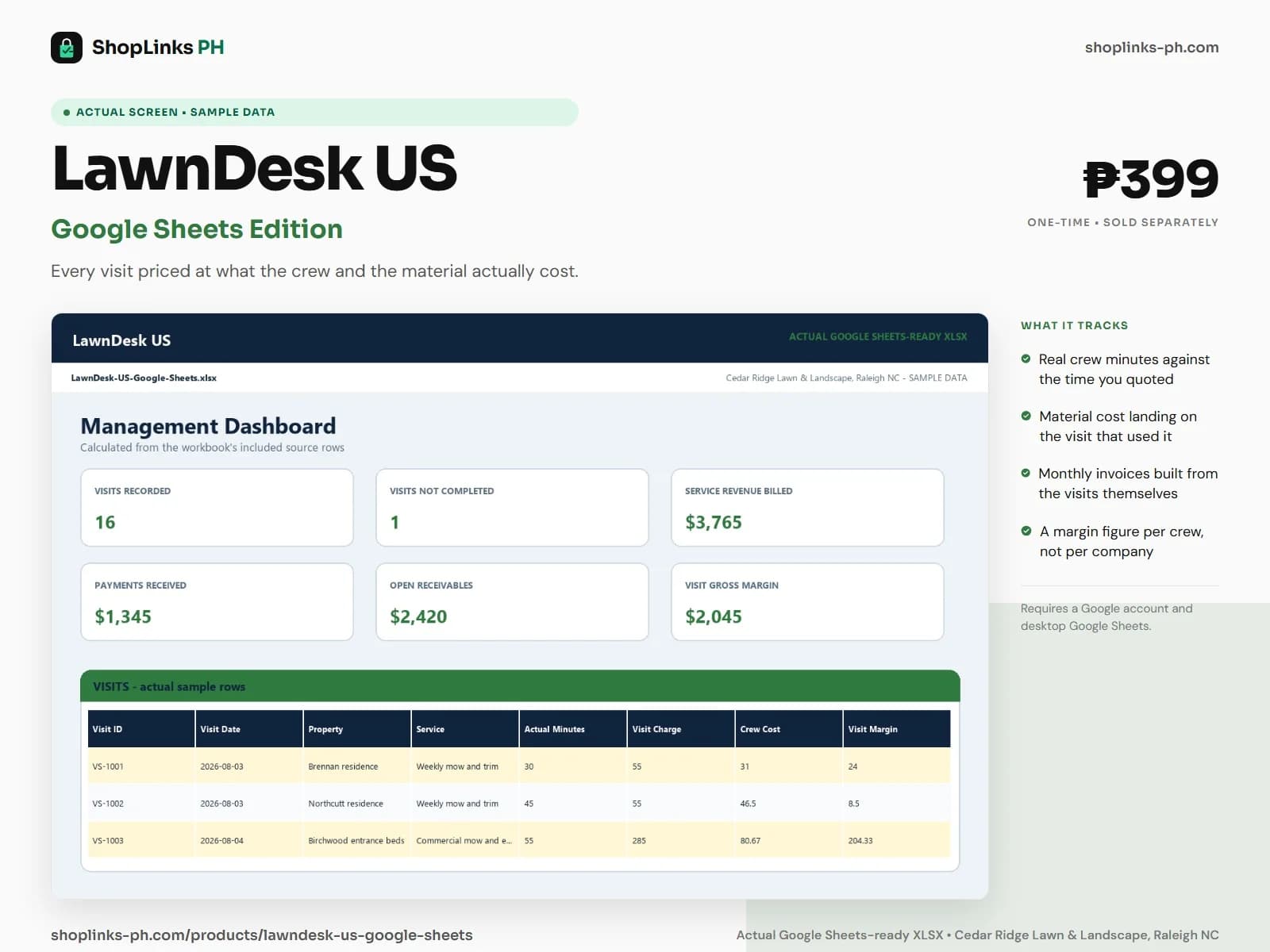
Key takeaways
- Actual minutes, not quoted minutes, drive crew cost.
- Material cost lands on the visit that consumed it.
- Invoices accumulate from tagged visits.
- Each crew carries its own measured margin.
A lawn care route looks profitable in aggregate and often is not. The weekly price was set years ago on a property that has since grown a new bed, a fence and a slope the crew has to trim by hand. Nothing in a paper route sheet records that the yard now takes an hour instead of forty-five minutes, so the loss hides inside a healthy-looking monthly deposit. LawnDesk US attaches a cost to every visit at the moment it is logged.
Minutes are the real price
Each service carries the crew minutes it is supposed to take. Each visit records the minutes it actually took, and the difference is computed rather than remembered.
Crew cost then follows from the crew's own hourly cost applied to those real minutes, which is why a fifteen-minute gate problem shows up as money rather than as an annoyance.
Material belongs to the job
Mulch, fertilizer and herbicide are drawn against a specific visit, so the enhancement that consumed nine yards of mulch carries that cost instead of spreading it across the month.
The same movements keep the material register current, so the reorder level is based on what the crews actually used.
Invoices are assembled, not retyped
Visits are tagged to the monthly invoice they belong to, and the invoice total accumulates from them. A visit that was rained out and charged nothing simply contributes nothing.
Payments post against the invoice, so partial payments from an HOA board leave a correct balance rather than an argument.
Margin per crew, not per company
Crew summary totals the revenue each crew produced, the visit cost it consumed, and the fuel, repair and disposal expenses tagged to it.
A plain Healthy, Thin or Loss label makes the comparison between a residential route and a commercial route honest, which is the decision most operators actually need before spring.
Review exceptions every week
Resolve duplicate IDs, missing links, overdue balances, negative amounts, and open operational items in CHECKS before using the dashboard for decisions.
LawnDesk US Google Sheets Edition is designed for use with a Google account and current desktop Google Sheets.
No GPS or route optimization, no pesticide applicator licensing or state application reporting, no payroll filing or tax returns, no customer-facing scheduling app, and no automatic text or email reminders.