Key takeaways
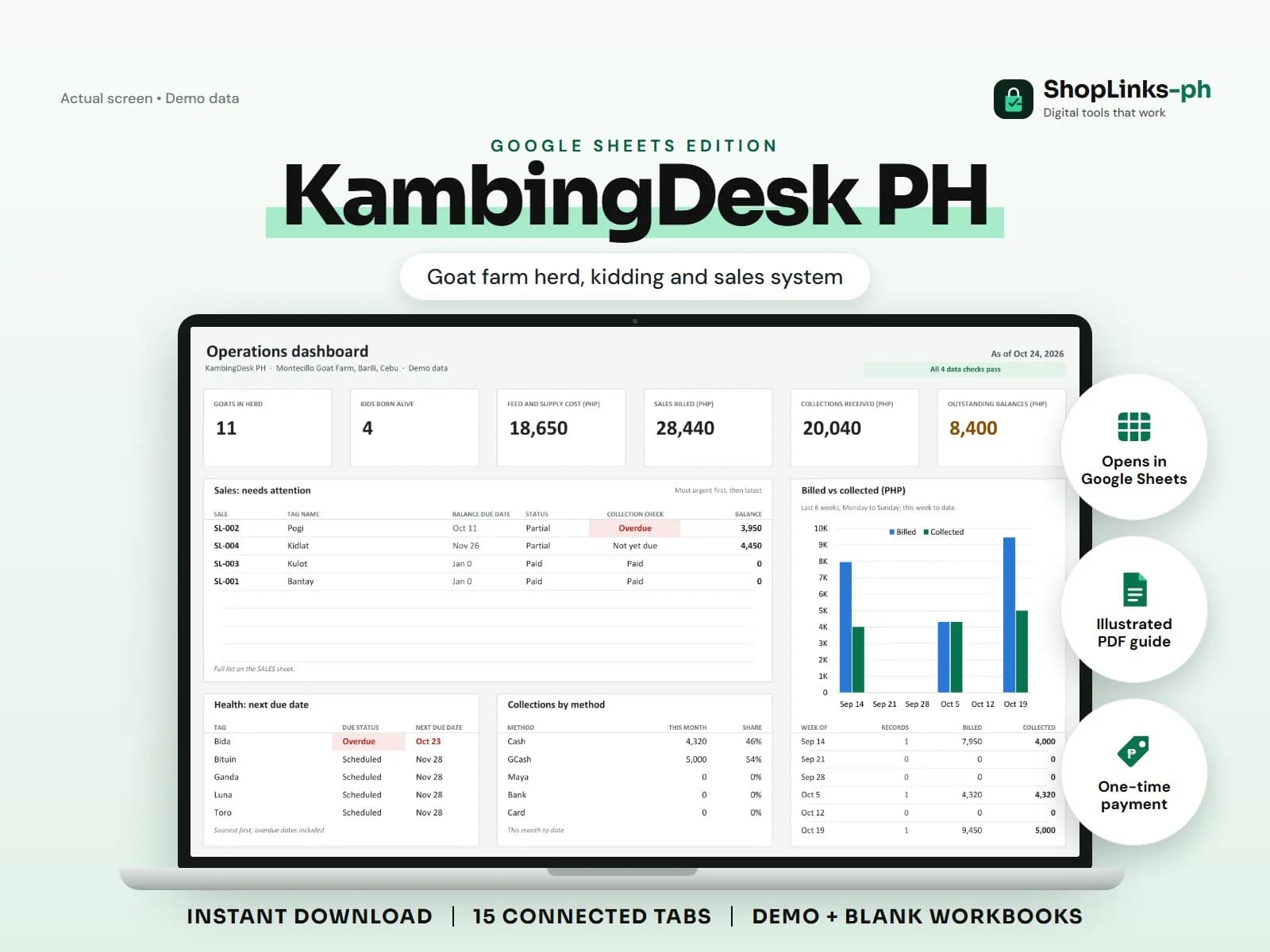
- Every goat carries its tag, parents, cost and status.
- Breeding dates become expected kidding dates automatically.
- Only the current health schedule can show Overdue.
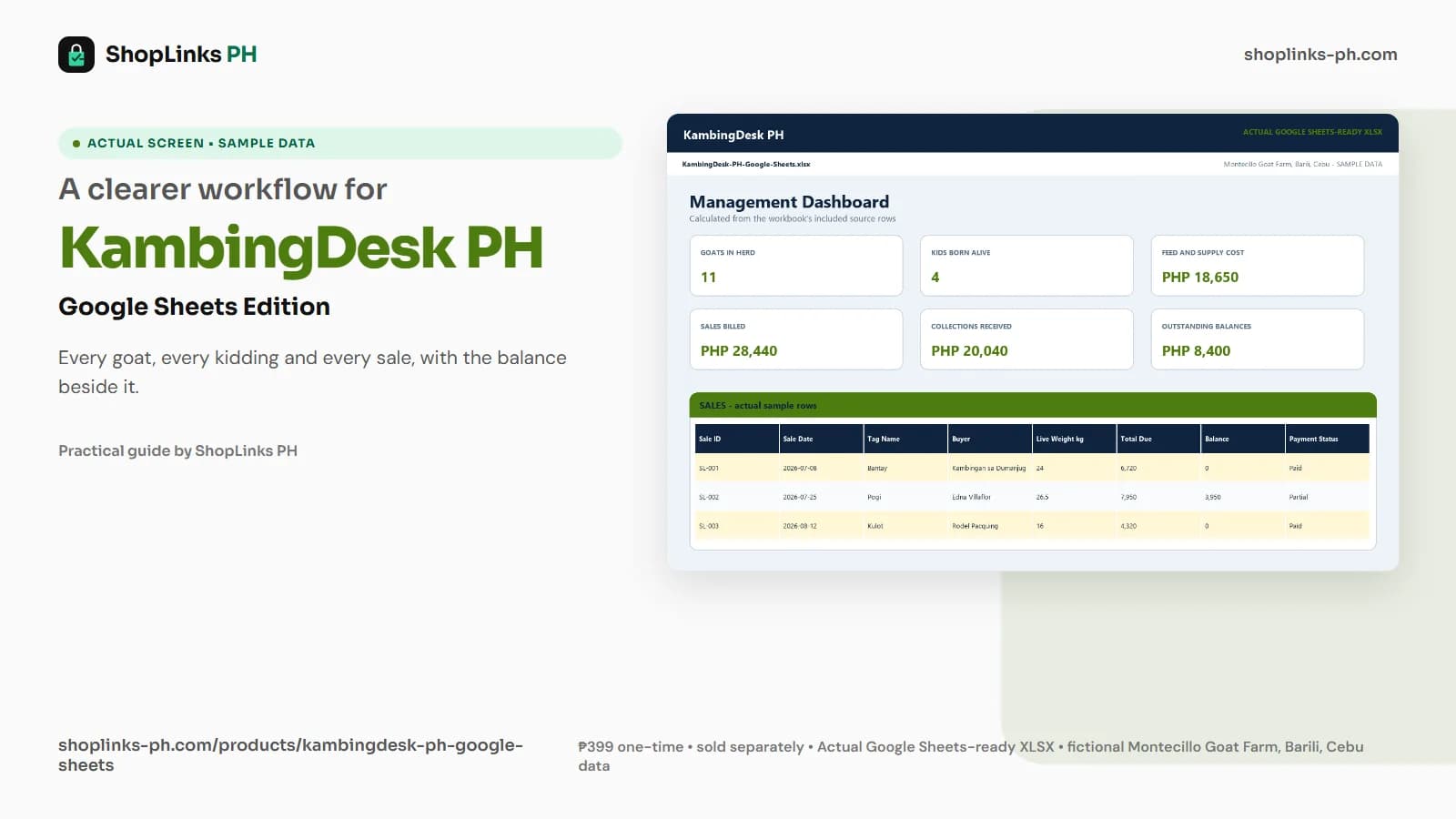
- Each sale shows its balance and its margin per head.
Goat raising looks simple from the outside: a few does, a buck, napier grass and patience. The records are where small farms lose track. Kids are born at night and sold months later, a deworming date lives in someone's memory, and a fiesta buyer pays half and promises the rest after the town feast. KambingDesk PH keeps each goat as one record from birth or purchase to sale, so the herd, the schedule and the money stay attached to the same tag.
One tag, one record
Every goat gets an identifier and a tag name, with breed, sex, birth date, dam, sire and source. A purchased goat carries what it cost; a kid born on the farm starts at zero and collects its health spending as it grows.
Because dam and sire are recorded, a doe's kidding history and a buck's offspring can be read back later, which is what an upgrading program needs before deciding which kids to keep.
Breeding dates that become kidding dates
A breeding record names the doe, the buck and the date, and the expected kidding date is set 150 days later. A pregnancy check marks it Confirmed, Pending or Open, and an open doe is flagged for rebreeding instead of being quietly waited on.
When the kidding is recorded with kids born and kids alive, survival percent follows. A farm that sees survival falling across several kiddings has a housing, nutrition or weather problem worth solving before the next season.
Health and growth you can check
Deworming, vaccination, vitamins and vet visits are logged per goat with a cost and a next due date. A treatment reads Done once a later one of the same type is recorded, so only the current schedule can show Overdue.
Weigh-ins compare each goat's weight with its previous weighing and compute daily gain in grams. Growers below fifty grams a day are labelled Slow, which is often the first sign of worms, poor forage or a bully in the pen.
Sales by live weight, margin by head
Each sale records the goat, the buyer, the live weight and the price per kilo, and the total is computed rather than rounded in someone's head. Payments are recorded as they arrive, and a balance with a due date reads Overdue once that date passes.
Goat cost is the purchase price plus the health spending logged to that animal, so each sale shows a gross margin per head. Feed is tracked herd-wide in its own sheet, which keeps the monthly feed bill honest without pretending to know which goat ate which bundle.
Review exceptions every week
Resolve duplicate IDs, missing links, overdue balances, negative amounts, and open operational items in CHECKS before using the dashboard for decisions.
KambingDesk PH Google Sheets Edition is designed for use with a Google account and current desktop Google Sheets.
No veterinary diagnosis or dosage advice, no pedigree registry or breed association filing, no livestock insurance claim, no market price feed, and no automatic SMS to buyers.