Key takeaways
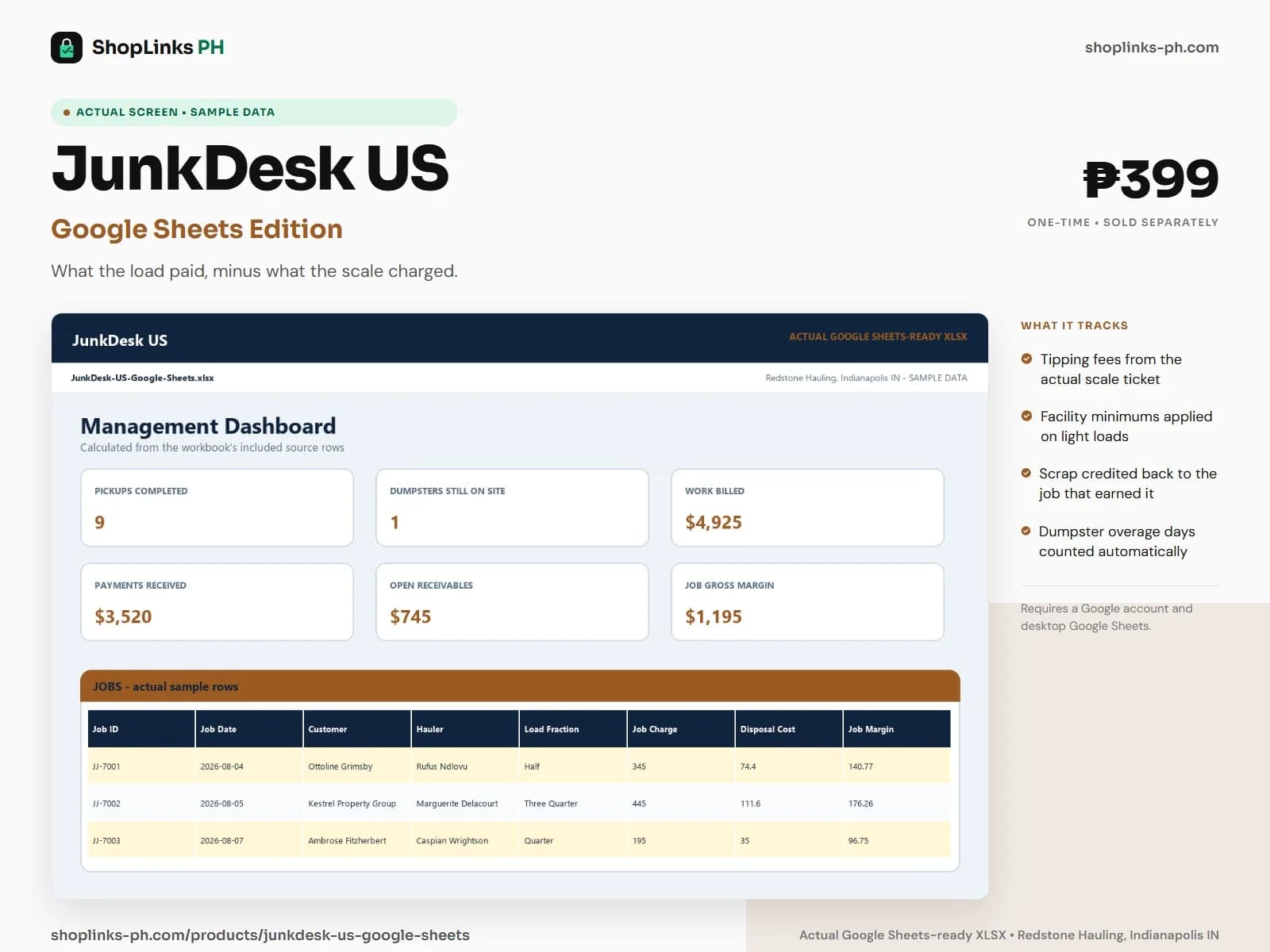
- Facility minimums apply automatically on light loads.
- Scrap credit belongs to the job that earned it.
- Truck cost varies by vehicle.
- Overage days accrue until pickup is recorded.
Junk removal is priced by how full the truck gets and costed by what the scale says. Those two things are only loosely related. A half load of mattresses is light and cheap to dump; a half load of tile is heavy and expensive. Price by volume and cost by weight for long enough and a business ends up subsidising exactly the loads it advertises for. JunkDesk US puts the scale ticket on the job.
The scale decides the cost
Each job carries its disposal ticket with the tonnage, the rate and the facility minimum, and the cost is the greater of the minimum and the weighed amount.
That minimum matters more than it looks. A single-item pickup that weighs four hundred pounds still costs the facility minimum, and pricing that job as though disposal were free is a common way to lose money on the easiest work.
Scrap is revenue, not a tip
Appliance steel, copper and brass are recorded against the job that produced them, at the buyer's rate, and credited back into that job's margin.
An estate clear-out with two refrigerators and a range behaves very differently from one without, and the difference belongs to the job rather than to a general scrap income line.
Crew and truck, from the same minutes
Labor cost multiplies the minutes by the crew size and the hauler's wage. Truck cost applies the vehicle's own hourly rate to those same minutes.
The roll-off hook truck costs more per hour than a dump body, which is exactly why rental delivery runs should not be costed like pickups.
Dumpsters that count their own days
A rental records the delivery date, the included days and the daily rate, and the overage is computed from the pickup date.
A container with no pickup date reads On site and keeps accruing, which turns a forgotten dumpster from a loss into a line on an invoice.
Review exceptions every week
Resolve duplicate IDs, missing links, overdue balances, negative amounts, and open operational items in CHECKS before using the dashboard for decisions.
JunkDesk US Google Sheets Edition is designed for use with a Google account and current desktop Google Sheets.
No landfill or transfer station account integration, no scrap market pricing feeds, no DOT or waste hauling permit filing, no route optimization or GPS, and no customer booking portal.