Key takeaways
- Recurring revenue is divided by hours consumed.
- Tickets cost hours at a loaded rate.
- Hardware margin is calculated, not assumed.
- Contract, project and hardware margin stay separate.
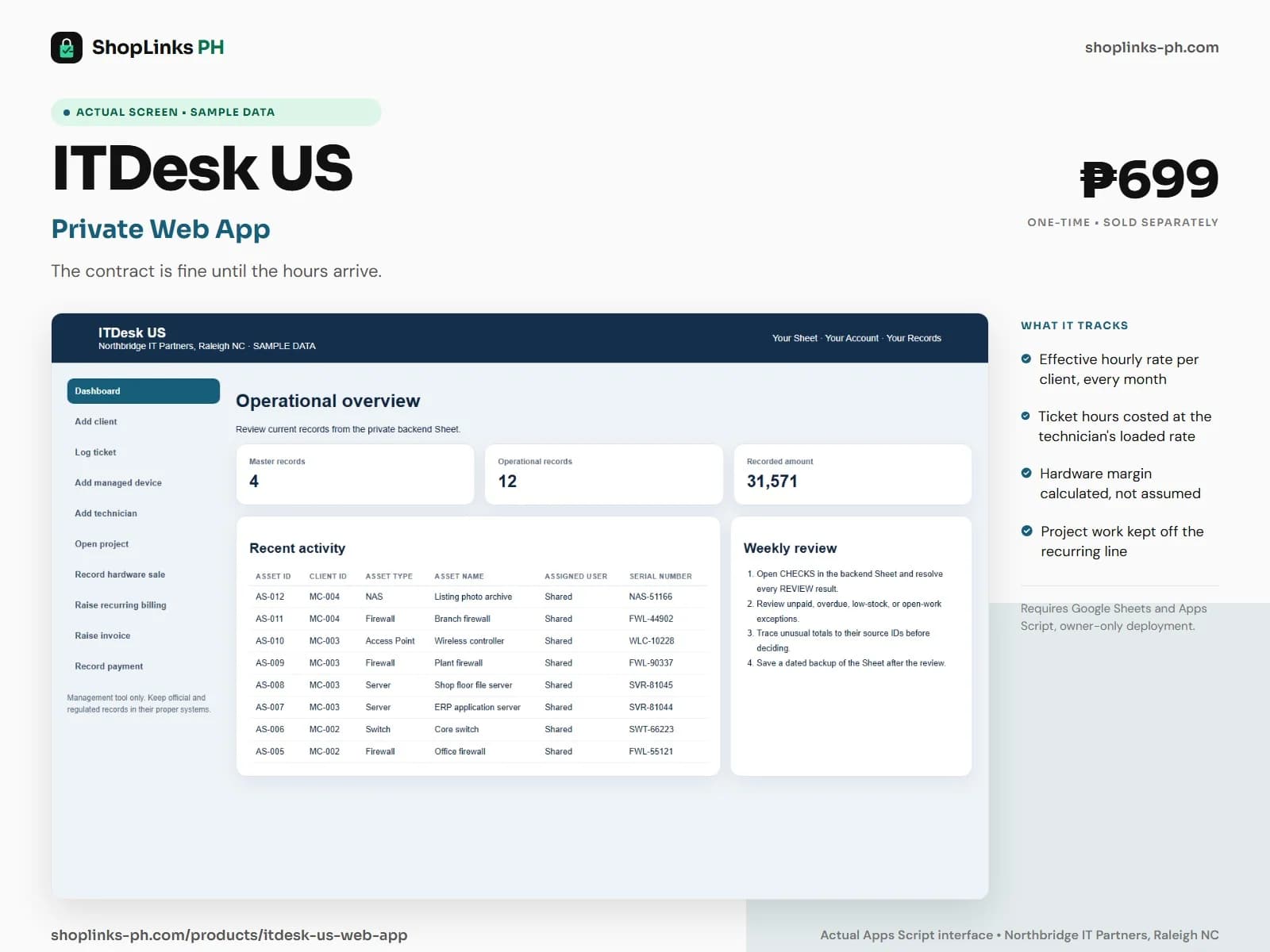
A per-seat contract is a bet that support hours stay reasonable. It was priced when the client had a standardized fleet and a working server, and nothing in the agreement adjusts when neither is true. The hours drift up, the fee does not move, and the provider finds out at renewal, if at all. ITDesk US divides one by the other every month.
The effective hourly rate
Recurring billed divided by ticket hours consumed gives the rate the contract is actually paying for support.
A client at three hundred dollars an hour and a client at ninety look identical on the invoice and could not be more different.
Costing a ticket honestly
Each technician carries a loaded hourly cost covering salary, taxes, benefits and tools over productive hours, not a raw wage.
Ticket cost is hours times that rate, which is the only version of the number worth comparing against a fee.
Hardware at its real margin
Every sale records unit cost beside unit price, and the gross margin percentage falls out of the two.
Most providers assume twenty-five percent on resale. On a ten thousand dollar server it is often closer to twelve.
Three margins, kept apart
Contract margin, project margin and hardware margin are calculated separately and then added for a client total.
That keeps a good project from disguising a contract that is losing, which is the most common way an MSP misreads a client.
Review exceptions every week
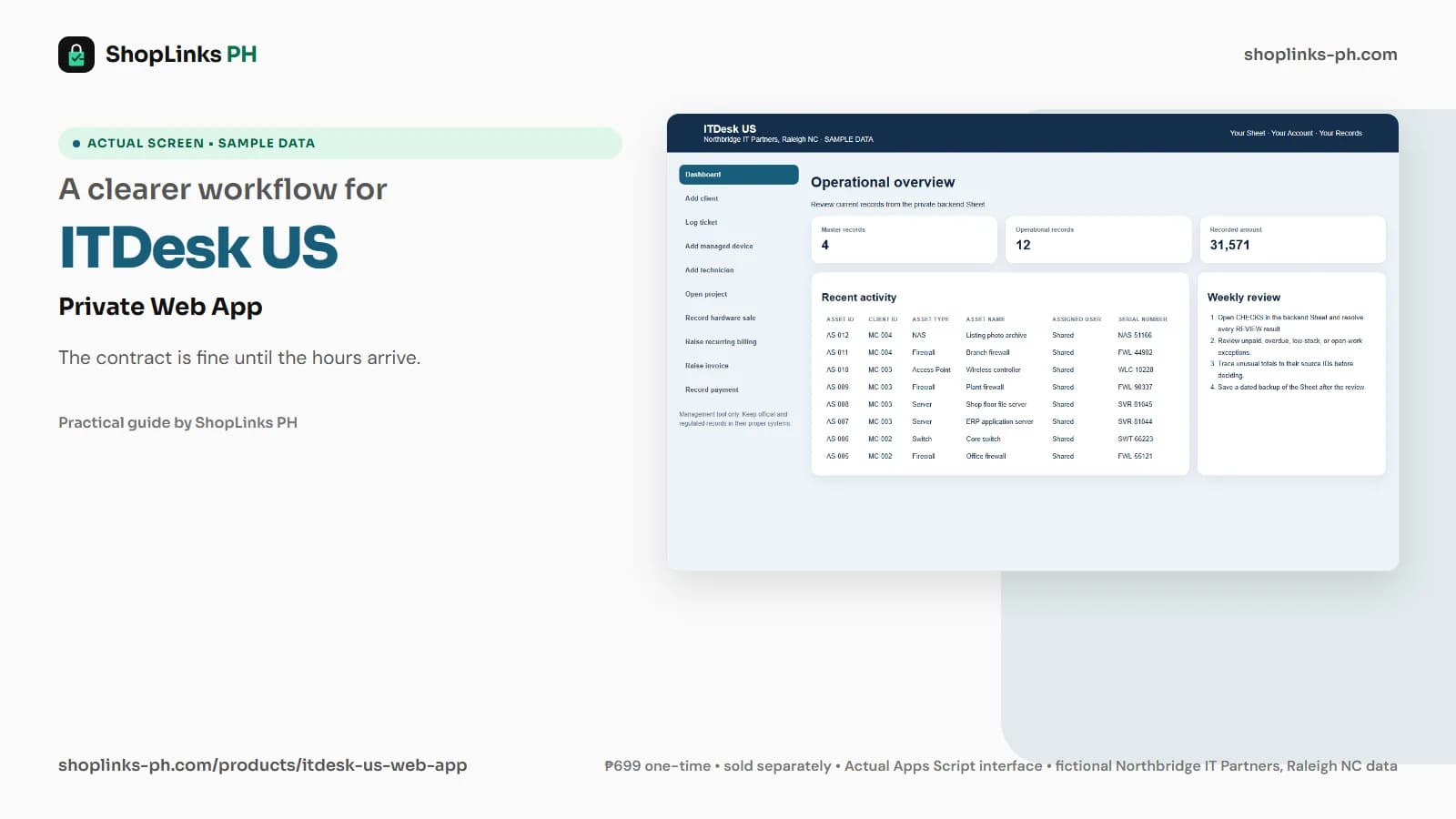
Resolve duplicate IDs, missing links, overdue balances, negative amounts, and open operational items in CHECKS before using the dashboard for decisions.
ITDesk US Private Google Sheets Web App is designed for use with a Google account, Google Sheets, and Apps Script, using owner-only deployment by default.
No remote monitoring, patching or RMM agent, no remote access or scripting, no ticket portal or email intake for end users, no payroll or technician timesheet approval, no accounting ledger or tax reporting, and no automatic card billing.