Key takeaways
- Every technician carries a cost rate and a billable rate.
- Parts markup is visible on the call that used them.
- Agreement visits count themselves.
- Margin is measured per technician, not per company.
An HVAC service business bills three different things on one ticket and usually measures none of them separately. Labor is priced at a rate, parts are marked up from a cost nobody rechecks, and a trip charge rounds it out. At the end of the month the deposit looks fine, so nobody asks whether the apprentice's maintenance visits are subsidising the senior technician's diagnostics or the other way round. HVACDesk US puts a cost beside every charge on the ticket itself.
Two rates per technician, not one
Every technician carries a billable rate and an hourly cost. The call records the hours once, and both the labor charge and the labor cost follow from it.
That single change turns a service ticket into a margin statement, because the gap between what was billed and what the hour cost is no longer a company-wide average.
Parts cost and parts charge stay separate
A part used on a call records its cost and its sell price as two numbers, so the markup is visible on the job rather than buried in an annual inventory adjustment.
The same movement decrements van stock, which means the reorder level reflects what technicians actually installed.
Agreements that count their own visits
A maintenance agreement carries the visits it promised and the price it was sold at. Every call tagged to the agreement counts against it.
Visits remaining and a plain Active, Fully used or Expired label then answer the two questions that matter at renewal: who still owes us a visit, and who has already had more than they paid for.
Margin per technician
Technician summary totals calls, hours, revenue and labor cost per tech and labels the margin Healthy, Thin or Loss.
Read across a season this is the clearest evidence an owner has about pricing: whether the diagnostic rate is too low, whether agreement visits are priced below the cost of sending anyone, and which technician's tickets carry the shop.
Review exceptions every week
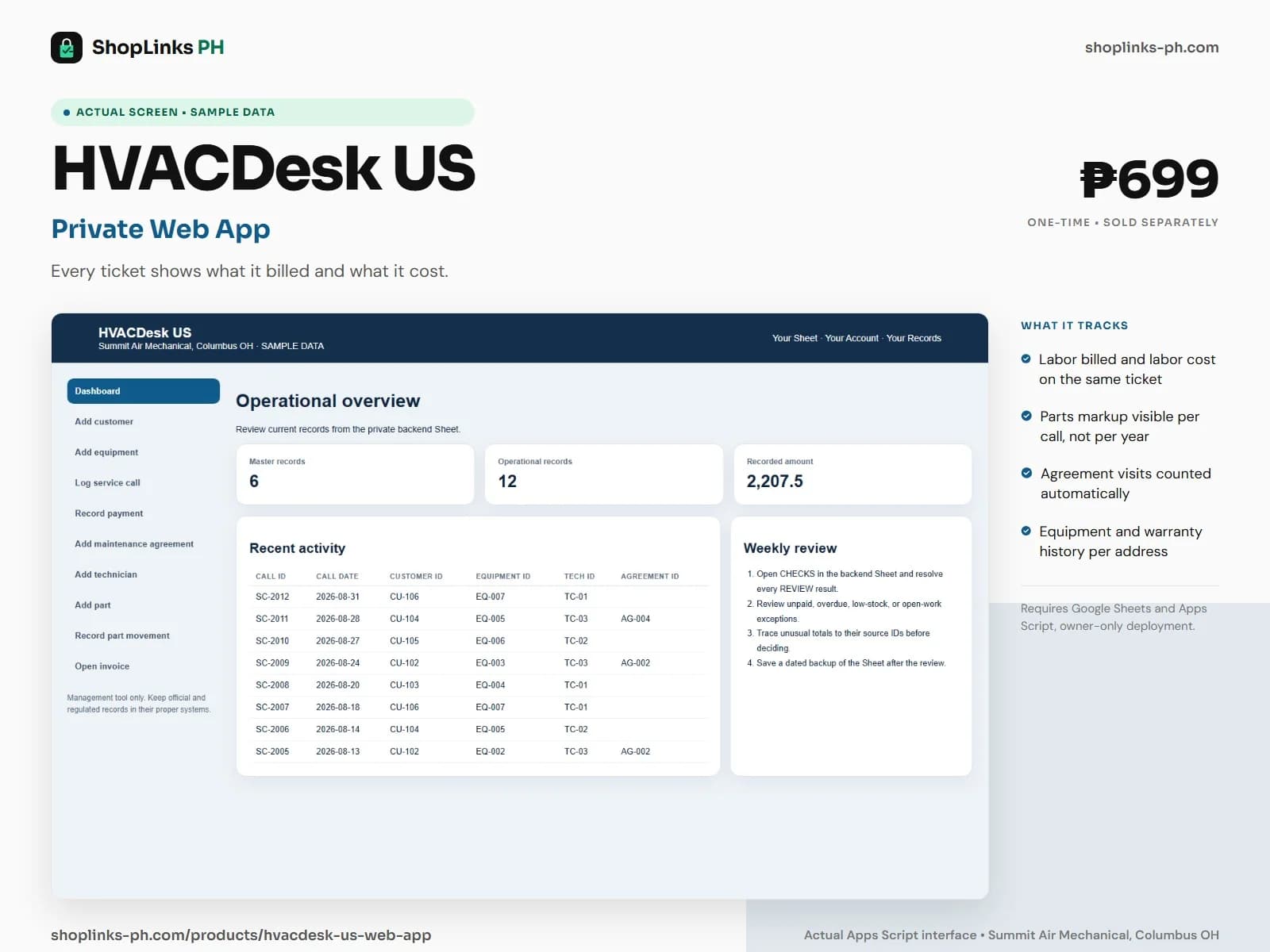
Resolve duplicate IDs, missing links, overdue balances, negative amounts, and open operational items in CHECKS before using the dashboard for decisions.
HVACDesk US Private Google Sheets Web App is designed for use with a Google account, Google Sheets, and Apps Script, using owner-only deployment by default.
No EPA Section 608 refrigerant reporting or leak-rate filings, no manufacturer warranty claim submission, no permit or inspection filing, no dispatch or GPS routing app, and no automatic customer notifications.