Key takeaways
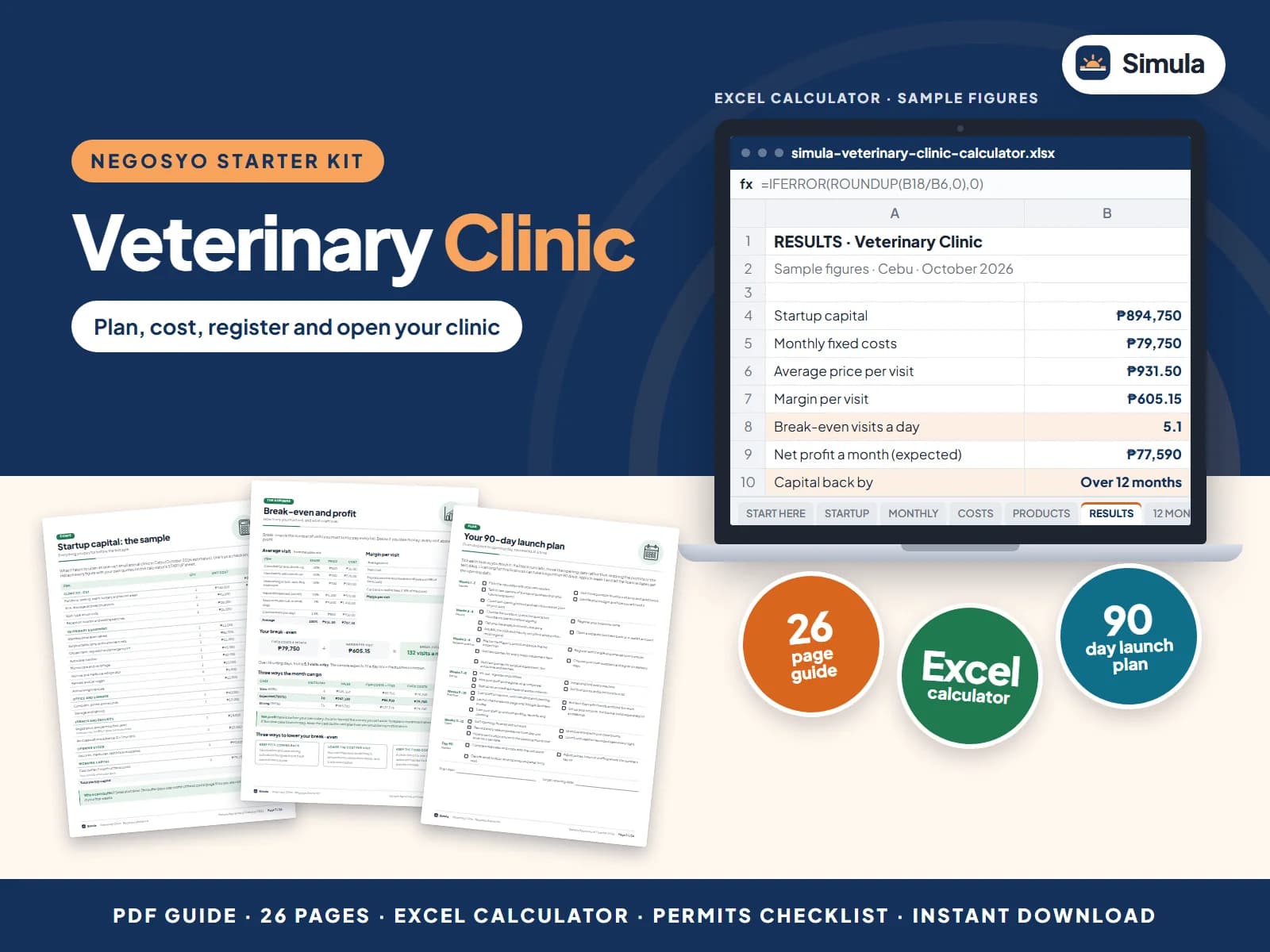
- Sample startup capital: ₱894,750 (October 2026, Cebu).
- Break-even: 5.1 visits a day.
- Register with DTI, the barangay, the city (Mayor's permit) and BIR; also professional tax receipt (PTR), licence to sell veterinary drugs (ask), hazardous waste generator registration and s-2 licence for controlled drugs (if used).
For PRC-licensed veterinarians: a veterinary clinic offers check-ups, vaccinations, deworming, tests, minor surgery and confinement for dogs and cats. Most start as a one-vet clinic in a rented space near subdivisions, with an assistant and a front-desk staff. The money is made on steady visits, pets that come back on schedule, and tight control of vaccine and medicine stock.
This guide walks through what it takes to start a veterinary clinic in the Philippines: the capital, the monthly costs, the permits and the first 90 days. The peso figures are sample estimates for an one-vet small animal clinic in Cebu as of October 2026; get your own quotes before you decide.
How much capital you need
The sample comes to about ₱894,750 including one month of fixed costs kept as a cash buffer. It splits into clinic fit-out (₱276,000), veterinary equipment (₱316,000), office and signage (₱52,000), permits and deposits (₱81,000), opening stock (₱90,000) and working capital (₱79,750). Other ways to start: mobile or house-call vet at ₱150,000–₱350,000 and clinic with grooming and pet supplies at ₱1.5 million–₱2.5 million.
Monthly costs and break-even
Fixed costs in the sample are ₱79,750 a month; the biggest are clinic rent (₱22,000), vet assistant (₱16,900) and front-desk staff (₱15,600). Each visit sold earns about ₱605 after its own costs, so the break-even is 5.1 visits a day, and the startup capital takes about 12 months to come back at full sales.
Permits and registration
Register the business name with DTI (or SEC or CDA), then get the barangay business clearance, the Mayor's permit through the city or municipal BPLO, and BIR registration; register with SSS, PhilHealth and Pag-IBIG once you hire. A veterinary clinic also needs: professional tax receipt (PTR), licence to sell veterinary drugs (ask), hazardous waste generator registration and s-2 licence for controlled drugs (if used). Requirements and fees differ by city, so ask each office for its checklist first. DTI Negosyo Centers help for free.
Where to set up
- Near subdivisions with many pet-owning homes
- On a main road with parking for owners with pets
- Near pet supply stores and groomers
- A ground-floor space with easy access for carriers
Mistakes to avoid
- Vaccines spoil in a brownout. A refrigerator thermometer checked twice a day, a cooler with ice packs, and a backup power plan.
- An animal dies after surgery. Pre-surgery checks, written owner consent, clear estimates, and careful monitoring after surgery.
- Unpaid bills for confinement. A written estimate, a deposit before confinement, and daily updates on the running bill.
- Disease spreads in the clinic. Separate sick animals, disinfect between patients, and keep the kennels clean.
Plan it with the starter kit
The Veterinary Clinic · Negosyo Starter Kit has every worksheet behind this guide in a 26-page PDF, plus an Excel calculator: type in your own quotes and it works out your capital, break-even, profit and payback month. It costs ₱499 and downloads right after payment.
