Key takeaways
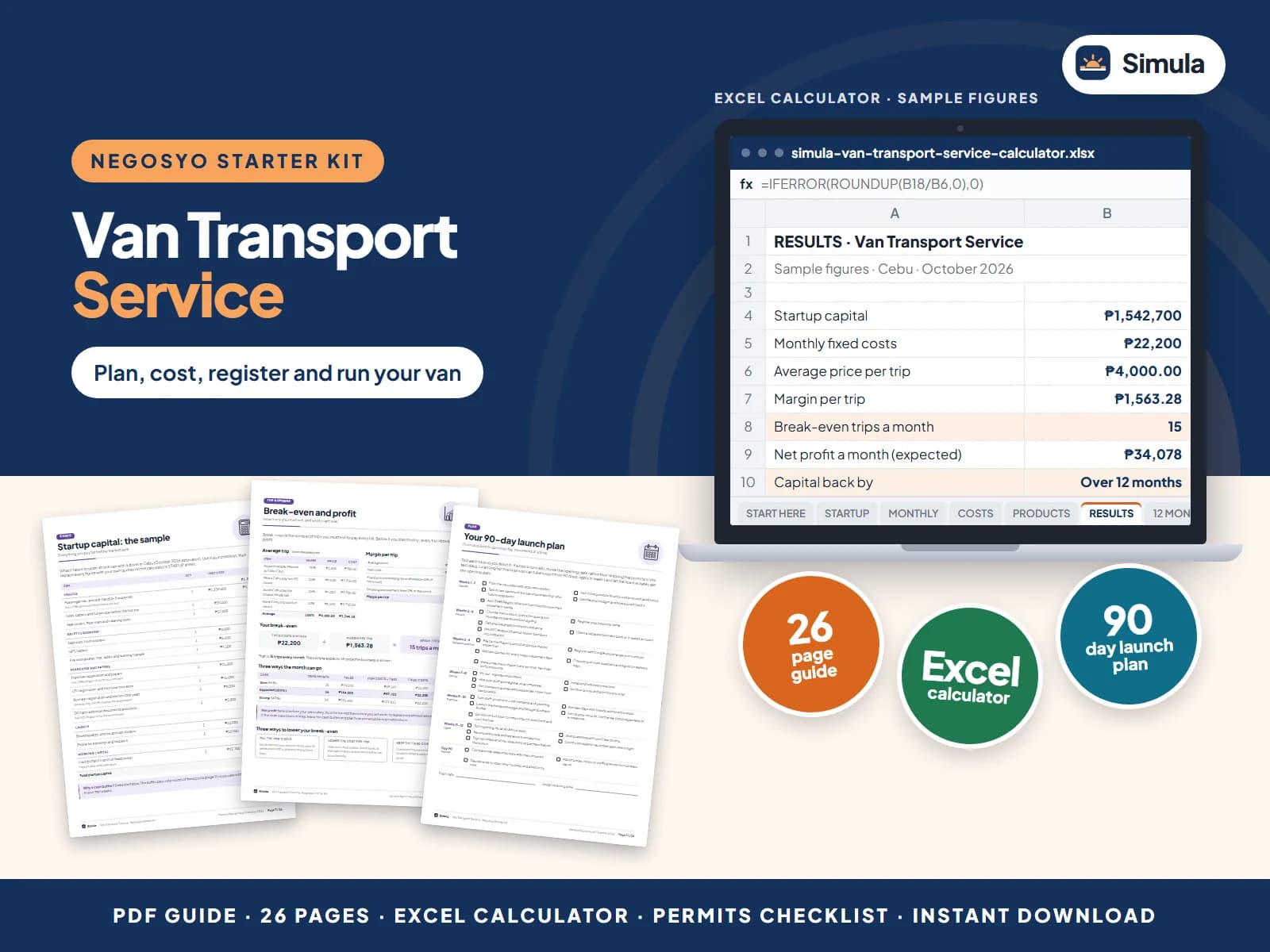
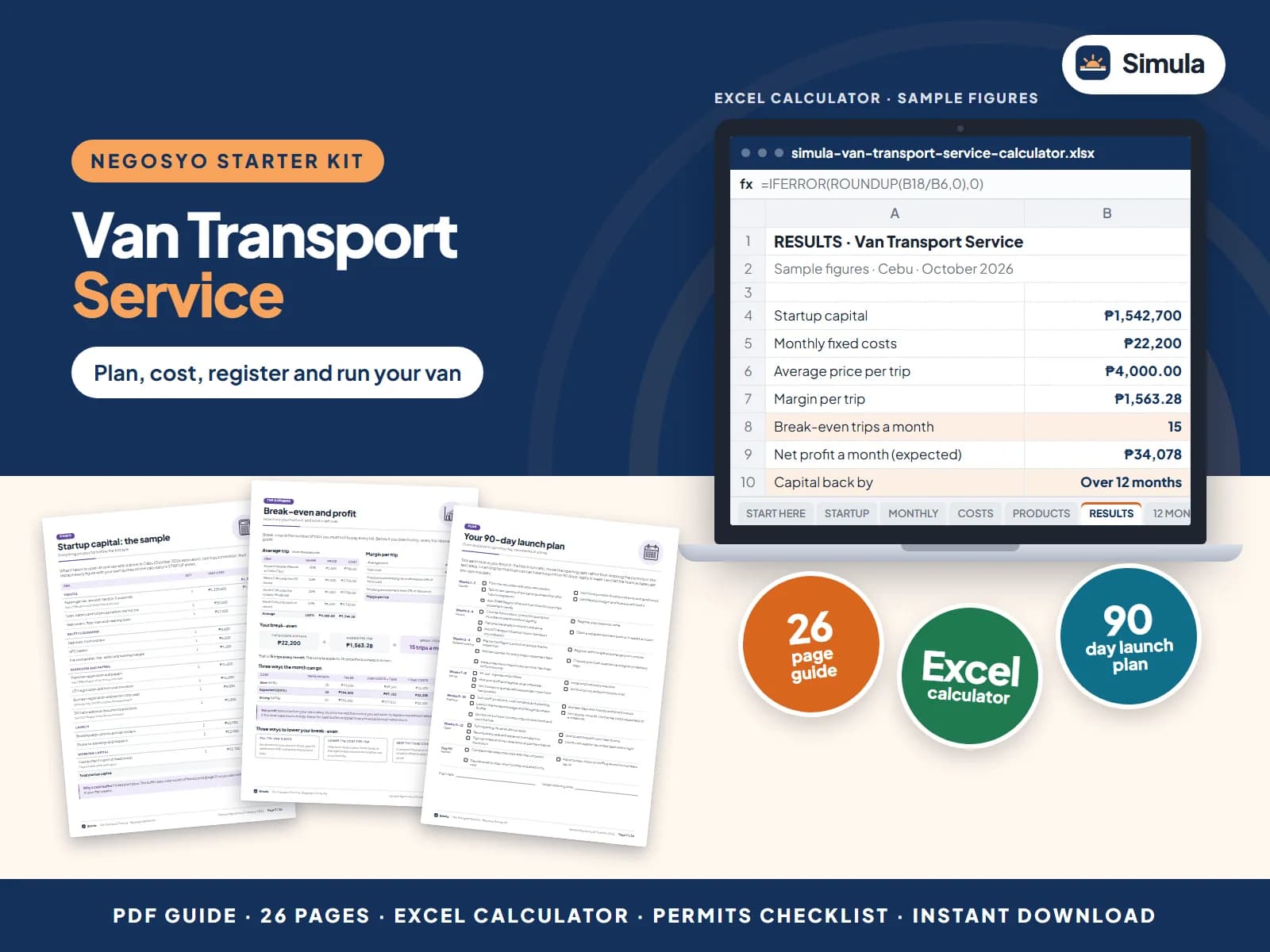
- Sample startup capital: ₱1,542,700 (October 2026, Cebu).
- Break-even: 15 trips a month.
- Register with DTI, the barangay, the city (Mayor's permit) and BIR; also LTFRB franchise for the van, DOT accreditation (tourist transport), LTO registration as a for-hire vehicle and professional driver's licence.
A van transport service carries passengers for a fee: airport transfers, tours, outings and trips across Cebu. Most start with one van and a hired driver, taking bookings online and by phone; carrying paying passengers needs an LTFRB franchise. The money is made on busy weeks, trips priced to cover fuel, driver and wear, and a van kept in good repair.
This guide walks through what it takes to start a van transport service in the Philippines: the capital, the monthly costs, the permits and the first 90 days. The peso figures are sample estimates for an one van with a driver in Cebu as of October 2026; get your own quotes before you decide.
How much capital you need
The sample comes to about ₱1,542,700 including one month of fixed costs kept as a cash buffer. It splits into vehicle (₱1,397,000), safety equipment (₱18,500), franchise and papers (₱83,000), launch (₱22,000) and working capital (₱22,200). Other ways to start: shuttle under a company contract at ₱1.5 million–₱2.2 million and small fleet of 3–5 vans at ₱5 million–₱10 million.
Monthly costs and break-even
Fixed costs in the sample are ₱22,200 a month; the biggest are insurance set aside (₱4,500), preventive maintenance (₱4,000) and tyres and major repairs set aside (₱4,000). Each trip sold earns about ₱1,563 after its own costs, so the break-even is 15 trips a month, and the startup capital takes about 45 months to come back at full sales.
Permits and registration
Register the business name with DTI (or SEC or CDA), then get the barangay business clearance, the Mayor's permit through the city or municipal BPLO, and BIR registration; register with SSS, PhilHealth and Pag-IBIG once you hire. A van transport service also needs: LTFRB franchise for the van, DOT accreditation (tourist transport), LTO registration as a for-hire vehicle and professional driver's licence. Requirements and fees differ by city, so ask each office for its checklist first. DTI Negosyo Centers help for free.
Where to set up
- A base near the airport or the city, to cut empty trips
- Safe, covered parking near your home
- Near resorts and hotels you can partner with
- Close to a trusted repair shop and a gas station
Mistakes to avoid
- An accident. Careful, rested drivers, a dashcam, speed limits, insurance with passenger cover, and a van in good repair.
- Operating without the right franchise. Get the franchise and papers before any paid trip, and keep them current and in the van.
- Fuel prices rise. Review your rates every month and quote long trips with a fuel clause.
- The van is off the road for repairs. Service it on schedule, keep the repair fund, and partner with another van for backup.
Plan it with the starter kit
The Van Transport Service · Negosyo Starter Kit has every worksheet behind this guide in a 26-page PDF, plus an Excel calculator: type in your own quotes and it works out your capital, break-even, profit and payback month. It costs ₱499 and downloads right after payment.