Key takeaways
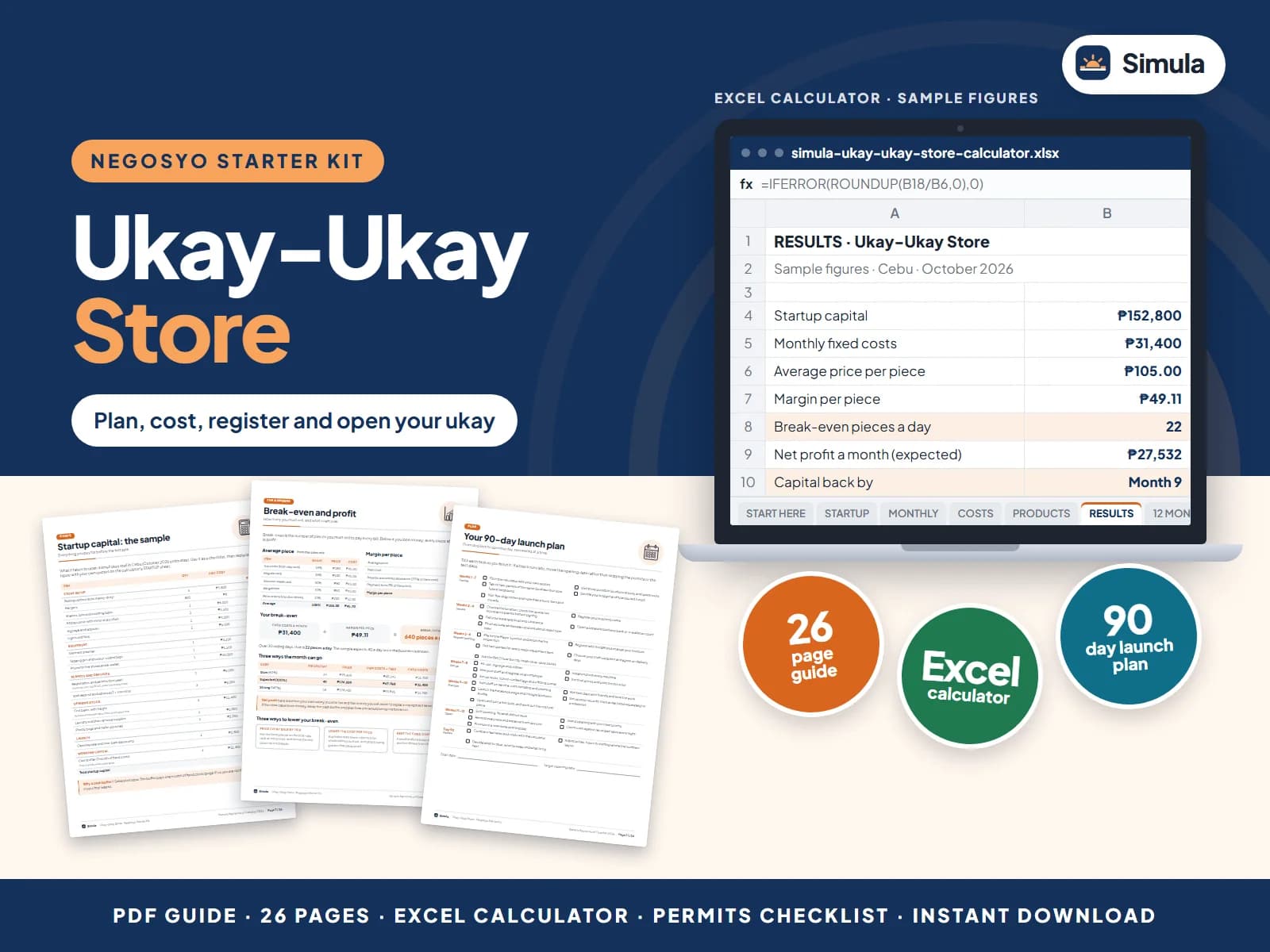
- Sample startup capital: ₱152,800 (October 2026, Cebu).
- Break-even: 22 pieces a day.
- Register with DTI, the barangay, the city (Mayor's permit) and BIR; also stall lease or tiangge space, sanitary permit (ask) and sales promotion permit (raffles).
An ukay-ukay store sells secondhand clothes, bags and shoes bought by the bale, piece by piece at low prices. Most start with a small stall on a busy street or in a tiangge, a few racks and a bale or two a week, often with live selling on the side. The money is made on choosing good bales, pricing each piece by tier, and moving pieces down the racks before they go stale.
This guide walks through what it takes to start an ukay-ukay store in the Philippines: the capital, the monthly costs, the permits and the first 90 days. The peso figures are sample estimates for a small ukay stall in Cebu as of October 2026; get your own quotes before you decide.
How much capital you need
The sample comes to about ₱152,800 including one month of fixed costs kept as a cash buffer. It splits into store setup (₱35,700), equipment (₱15,000), permits and deposits (₱30,000), opening stock (₱38,200), launch (₱2,500) and working capital (₱31,400). Other ways to start: home-based ukay live seller at ₱30,000–₱60,000 and ukay store with live shows at ₱300,000–₱500,000.
Monthly costs and break-even
Fixed costs in the sample are ₱31,400 a month; the biggest are helper's wage (₱15,600), stall rent (₱8,000) and SSS, PhilHealth and Pag-IBIG (₱2,200). Each piece sold earns about ₱49 after its own costs, so the break-even is 22 pieces a day, and the startup capital comes back by month 9 if sales start slow and build up.
Permits and registration
Register the business name with DTI (or SEC or CDA), then get the barangay business clearance, the Mayor's permit through the city or municipal BPLO, and BIR registration; register with SSS, PhilHealth and Pag-IBIG once you hire. An ukay-ukay store also needs: stall lease or tiangge space, sanitary permit (ask) and sales promotion permit (raffles). Requirements and fees differ by city, so ask each office for its checklist first. DTI Negosyo Centers help for free.
Where to set up
- On a busy street near a public market or terminal
- Inside a tiangge or night market with ukay buyers
- Near schools and colleges
- In a cluster of ukay stores, where buyers already go
Mistakes to avoid
- A bale full of rejects. Buy from wholesalers you trust, track rejects per bale, and stop buying grades that disappoint.
- Pieces that sit on the racks. Move pieces down a tier on a schedule, and clear the oldest in a bargain bin.
- Shoplifting and switched tags. Colour-coded tags, a watched fitting corner and a helper on the floor.
- Unpaid mine orders. Payment deadlines, and unpaid pieces released back to the rack on time.
Plan it with the starter kit
The Ukay-Ukay Store · Negosyo Starter Kit has every worksheet behind this guide in a 26-page PDF, plus an Excel calculator: type in your own quotes and it works out your capital, break-even, profit and payback month. It costs ₱349 and downloads right after payment.
