Key takeaways
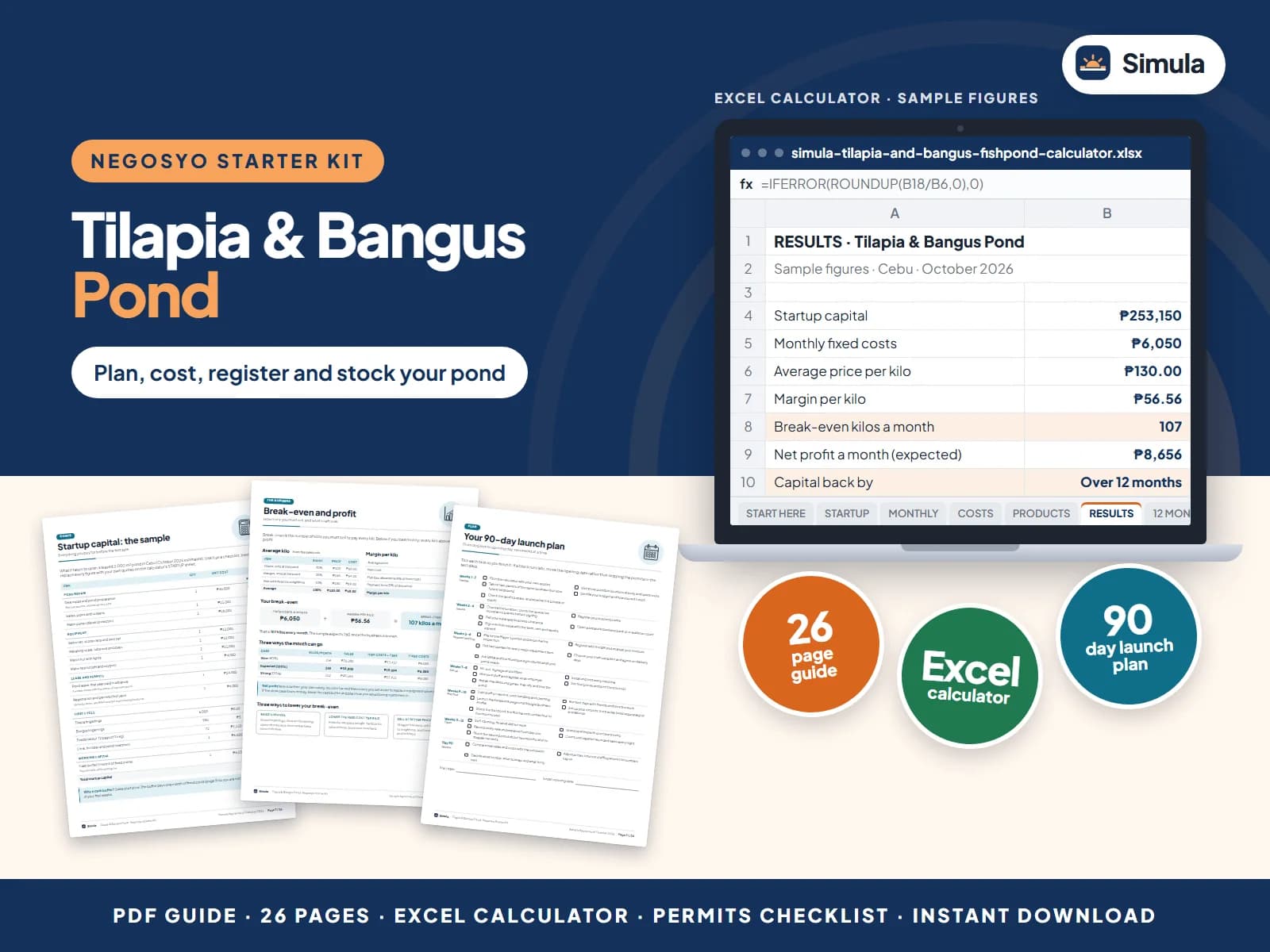
- Sample startup capital: ₱253,150 (October 2026, Cebu).
- Break-even: 107 kilos a month.
- Register with DTI, the barangay, the city (Mayor's permit) and BIR; also fishpond Lease Agreement (public land only), fish farm or operator registration and water use and environmental checks.
A tilapia and bangus fishpond grows fingerlings to market size in four to five months and sells the harvest by the kilo to traders, market vendors and neighbors. Most start by leasing an existing pond or converting family land, stocking tilapia with some bangus in the same water. The first harvest comes only after the first grow-out; the money is in survival, feed cost per kilo and a buyer ready on harvest day.
This guide walks through what it takes to start a tilapia and bangus fishpond in the Philippines: the capital, the monthly costs, the permits and the first 90 days. The peso figures are sample estimates for a leased 3,000 m² pond in Cebu as of October 2026; get your own quotes before you decide.
How much capital you need
The sample comes to about ₱253,150 including one month of fixed costs kept as a cash buffer. It splits into pond repair (₱83,000), equipment (₱41,000), lease and permits (₱28,000), first cycle (₱95,100) and working capital (₱6,050). Other ways to start: small pond dug on family land at ₱250,000–₱450,000 and brackish bangus pond, 1–5 hectares at ₱1 million and up.
Monthly costs and break-even
Fixed costs in the sample are ₱6,050 a month; the biggest are lease set aside for next year (₱2,000), pump fuel or electricity (₱2,000) and dike and gate repairs set aside (₱800). Each kilo sold earns about ₱57 after its own costs, so the break-even is 107 kilos a month, and the startup capital takes about 29 months to come back at full sales.
Permits and registration
Register the business name with DTI (or SEC or CDA), then get the barangay business clearance, the Mayor's permit through the city or municipal BPLO, and BIR registration; register with SSS, PhilHealth and Pag-IBIG once you hire. A tilapia and bangus fishpond also needs: fishpond Lease Agreement (public land only), fish farm or operator registration and water use and environmental checks. Requirements and fees differ by city, so ask each office for its checklist first. DTI Negosyo Centers help for free.
Where to set up
- Near a reliable freshwater source or tidal canal
- Clay soil that holds water
- Reachable by vehicle for buyers on harvest day
- Near markets and fish traders
Mistakes to avoid
- Fish kill from low oxygen. Check at dawn, feed less on cloudy days, change water, and keep the pump ready.
- Floods wash the fish out. High dikes, screens on the gates, and an early harvest if a typhoon is coming.
- Poaching at night. Someone living near the pond, lights on the dikes, and good relations with neighbors.
- Feed costs eat the margin. Sample fish weekly, feed by weight, and fertilize the pond for natural food.
Plan it with the starter kit
The Tilapia & Bangus Pond · Negosyo Starter Kit has every worksheet behind this guide in a 26-page PDF, plus an Excel calculator: type in your own quotes and it works out your capital, break-even, profit and payback month. It costs ₱349 and downloads right after payment.
