Key takeaways
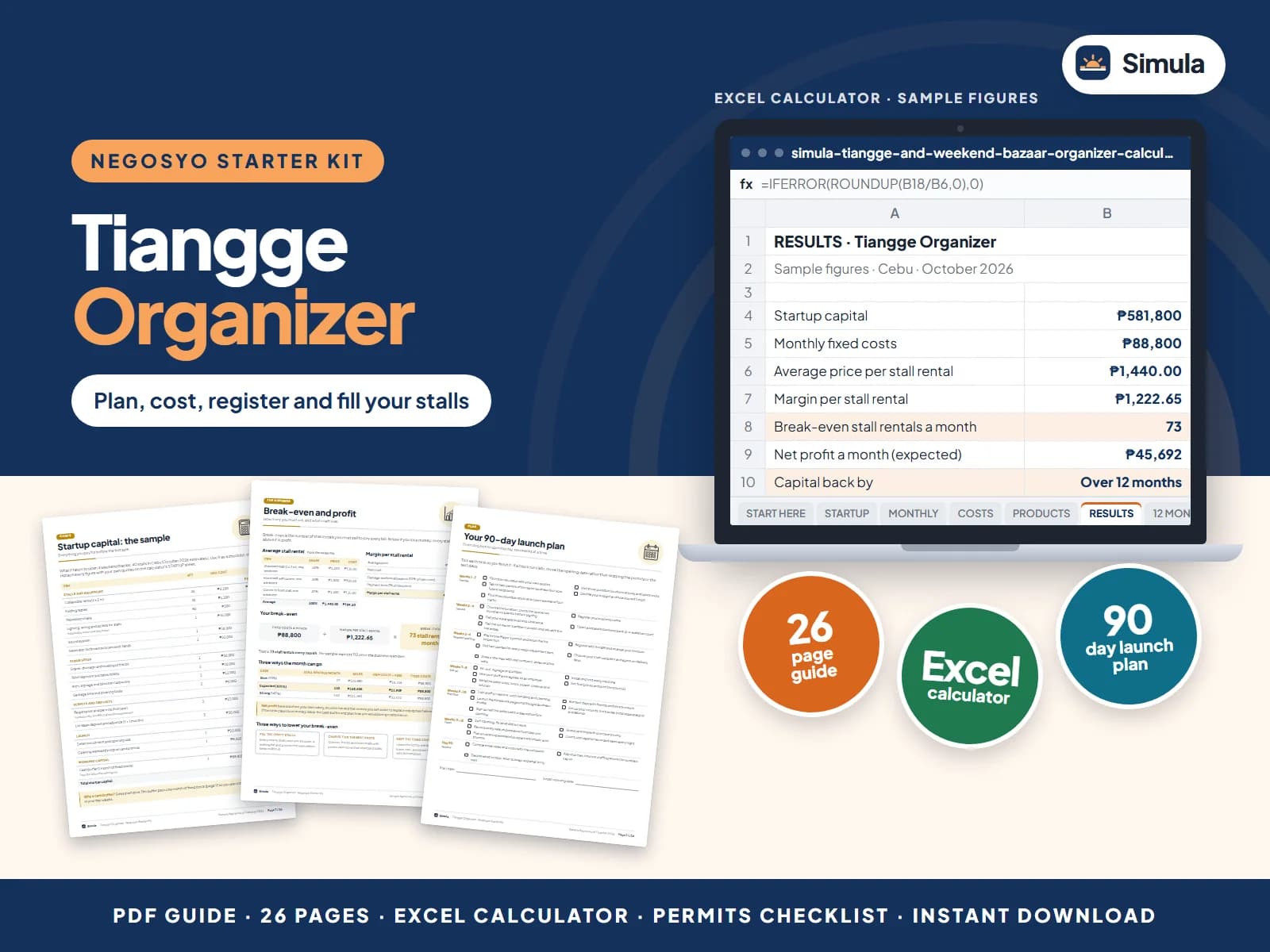
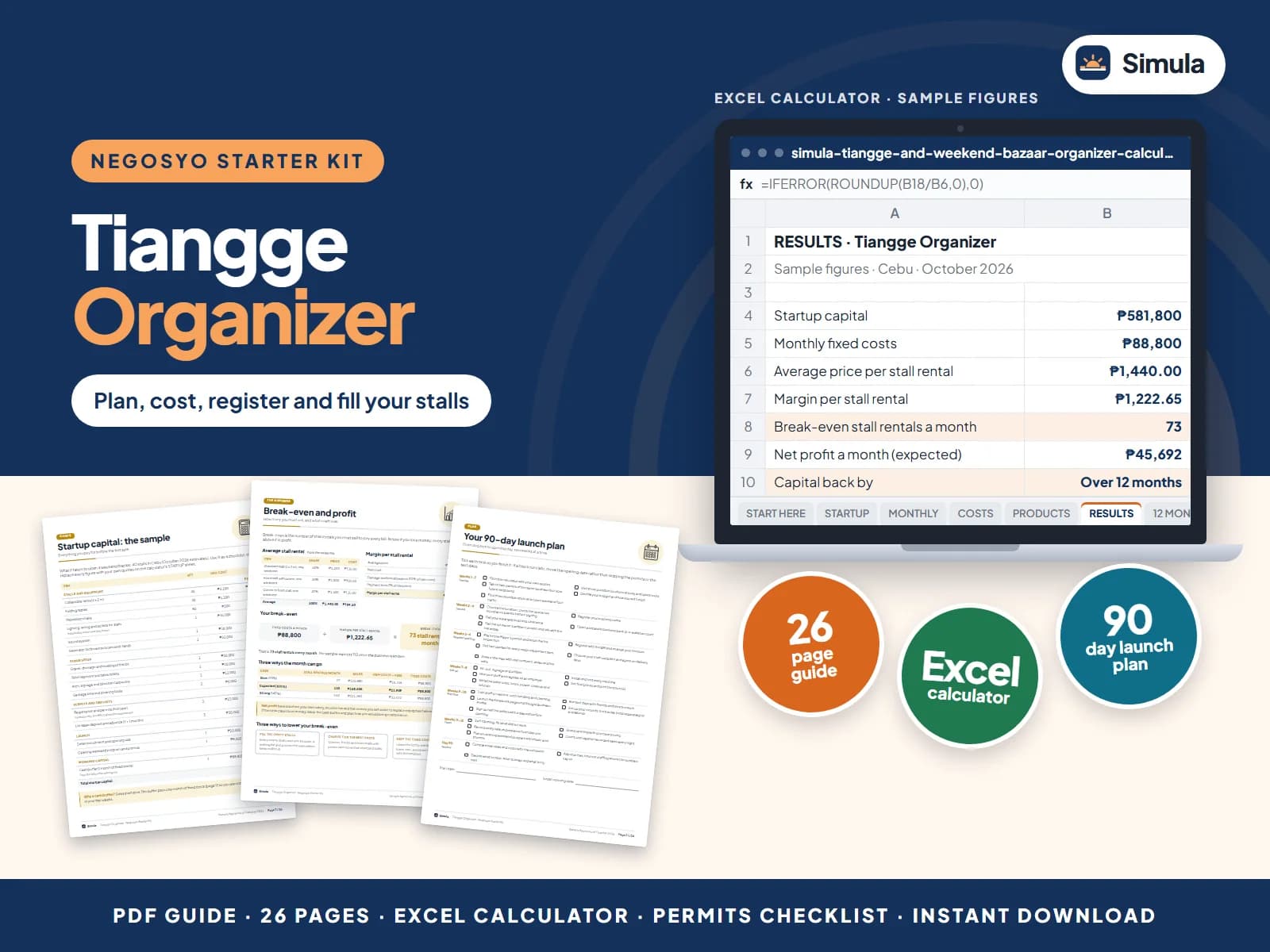
- Sample startup capital: ₱581,800 (October 2026, Cebu).
- Break-even: 73 stall rentals a month.
- Register with DTI, the barangay, the city (Mayor's permit) and BIR; also special permit for each bazaar or event, fire safety inspection, sanitary permits for food sellers and traffic or road-use permit.
A tiangge and weekend bazaar rents tent stalls to small sellers of clothes, food, plants and crafts on a lot or covered space, every weekend or for holiday seasons. Most organizers start by leasing one spot near a busy road or church and filling 30 to 40 stalls. The money is made on stalls filled every weekend, a crowd that keeps sellers coming back and dues collected on time.
This guide walks through what it takes to start a tiangge and weekend bazaar in the Philippines: the capital, the monthly costs, the permits and the first 90 days. The peso figures are sample estimates for a weekend bazaar, 40 stalls in Cebu as of October 2026; get your own quotes before you decide.
How much capital you need
The sample comes to about ₱581,800 including one month of fixed costs kept as a cash buffer. It splits into stalls and equipment (₱302,000), venue setup (₱68,000), permits and deposits (₱105,000), launch (₱18,000) and working capital (₱88,800). Other ways to start: holiday bazaar in a rented hall at ₱150,000–₱300,000 and daily tiangge with fixed stalls at ₱1.5 million and up.
Monthly costs and break-even
Fixed costs in the sample are ₱88,800 a month; the biggest are lot lease (₱30,000), night guard from an agency (₱18,200) and marshals and collectors (₱15,600). Each stall rental sold earns about ₱1,223 after its own costs, so the break-even is 73 stall rentals a month, and the startup capital takes about 13 months to come back at full sales.
Permits and registration
Register the business name with DTI (or SEC or CDA), then get the barangay business clearance, the Mayor's permit through the city or municipal BPLO, and BIR registration; register with SSS, PhilHealth and Pag-IBIG once you hire. A tiangge and weekend bazaar also needs: special permit for each bazaar or event, fire safety inspection, sanitary permits for food sellers and traffic or road-use permit. Requirements and fees differ by city, so ask each office for its checklist first. DTI Negosyo Centers help for free.
Where to set up
- A vacant lot along a busy road, with parking
- Near a church, school or terminal with weekend crowds
- A covered court or open space in a busy barangay
- Near residential areas with many families
Mistakes to avoid
- Rain empties the bazaar. Tents with side walls, good drainage, a rain policy for sellers and a cash buffer for the wet months.
- Fire from cooking or wiring. A licensed electrician for the wiring, LPG rules for food stalls and extinguishers on every row.
- Sellers leave after slow weekends. Bring crowds with events and posts, and give sellers who commit a better rate.
- Complaints from neighbors. Keep to the agreed hours, control noise and parking, and clean up the same night.
Plan it with the starter kit
The Tiangge Organizer · Negosyo Starter Kit has every worksheet behind this guide in a 26-page PDF, plus an Excel calculator: type in your own quotes and it works out your capital, break-even, profit and payback month. It costs ₱349 and downloads right after payment.