Key takeaways
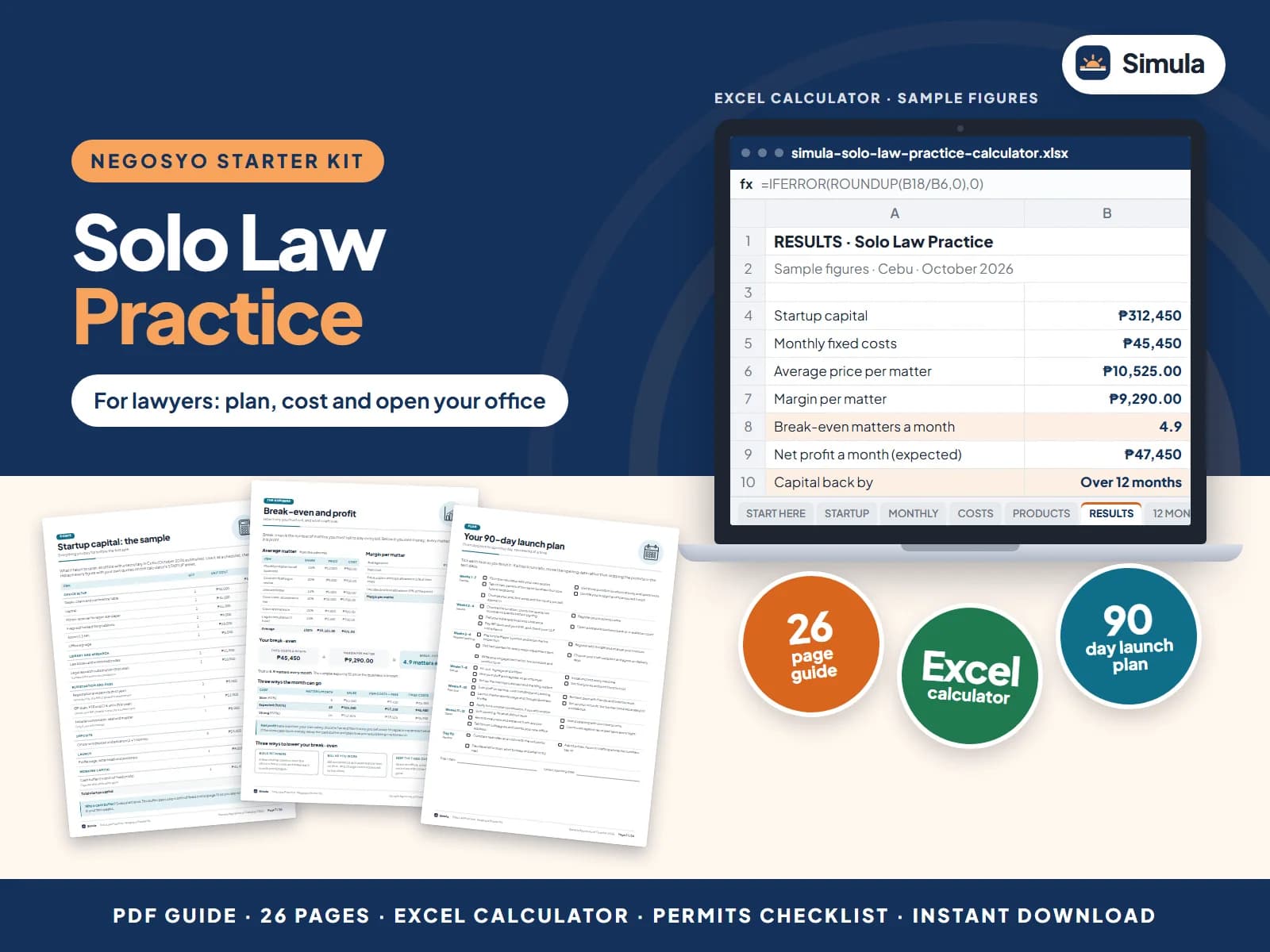
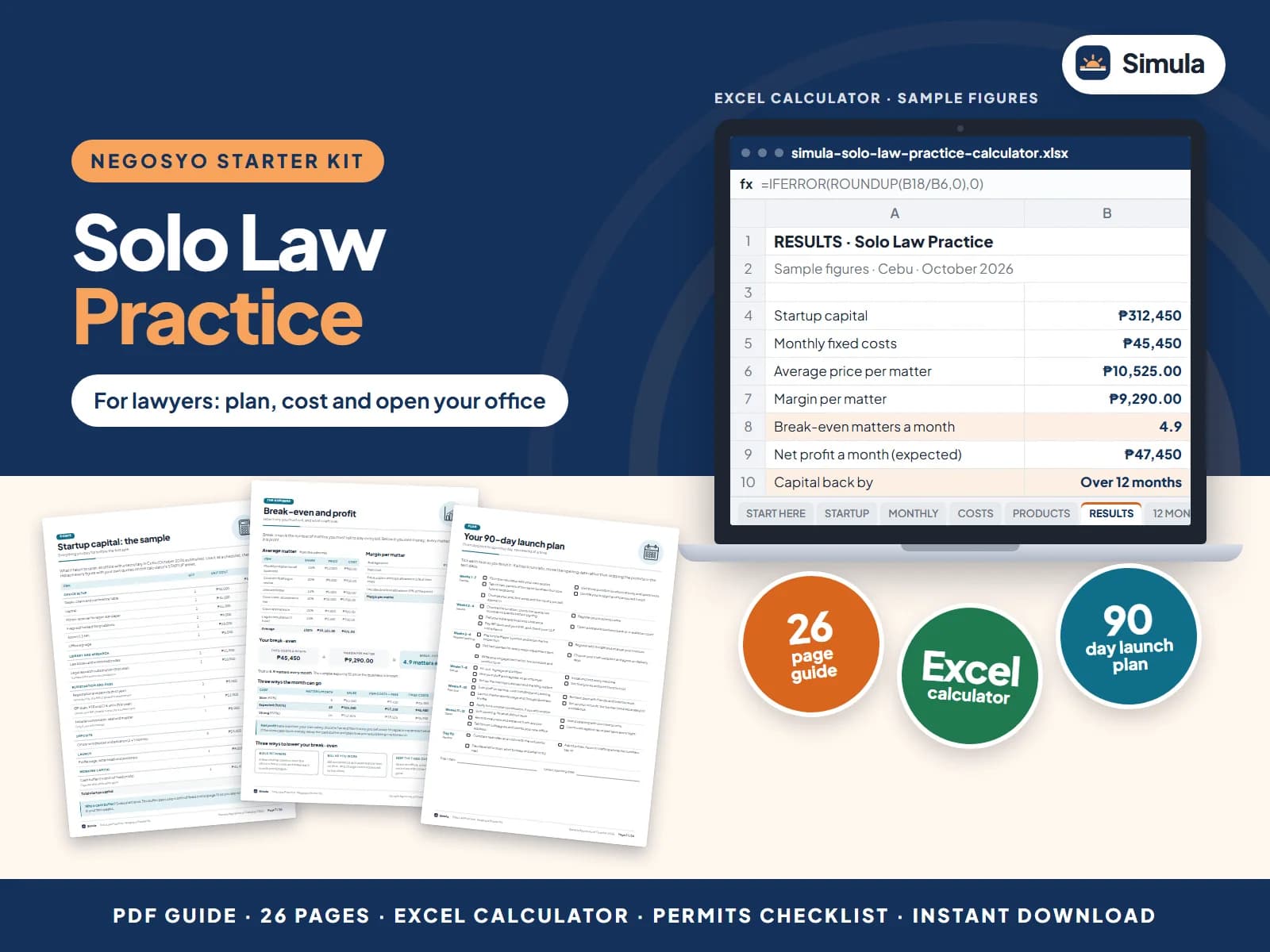
- Sample startup capital: ₱312,450 (October 2026, Cebu).
- Break-even: 4.9 matters a month.
- Register with DTI, the barangay, the city (Mayor's permit) and BIR; also IBP membership and annual dues, professional Tax Receipt (PTR), notarial commission and continuing legal education compliance.
For lawyers in good standing opening their own office. A solo law practice earns acceptance and appearance fees, monthly retainers and fees for documents and advice. Most start with a small office near the courts or a business district and one legal secretary; the money is made on steady retainer clients, clear written fee agreements and fees collected as the work is done.
This guide walks through what it takes to start a solo law practice in the Philippines: the capital, the monthly costs, the permits and the first 90 days. The peso figures are sample estimates for an office with a secretary in Cebu as of October 2026; get your own quotes before you decide.
How much capital you need
The sample comes to about ₱312,450 including one month of fixed costs kept as a cash buffer. It splits into office setup (₱142,000), library and research (₱43,000), registration and dues (₱29,000), deposits (₱45,000), launch (₱8,000) and working capital (₱45,450). Other ways to start: shared office with other lawyers at ₱80,000–₱150,000 and small firm with an associate at ₱500,000–₱900,000.
Monthly costs and break-even
Fixed costs in the sample are ₱45,450 a month; the biggest are legal secretary (₱16,900), office rent (₱15,000) and electricity and water (₱3,000). Each matter sold earns about ₱9,290 after its own costs, so the break-even is 4.9 matters a month, and the startup capital takes about 7 months to come back at full sales.
Permits and registration
Register the business name with DTI (or SEC or CDA), then get the barangay business clearance, the Mayor's permit through the city or municipal BPLO, and BIR registration; register with SSS, PhilHealth and Pag-IBIG once you hire. A solo law practice also needs: IBP membership and annual dues, professional Tax Receipt (PTR), notarial commission and continuing legal education compliance. Requirements and fees differ by city, so ask each office for its checklist first. DTI Negosyo Centers help for free.
Where to set up
- Near the Hall of Justice and city hall
- In a business district, for retainer clients
- A building with a quiet room for client conferences
- Near the Registry of Deeds and the assessor's office
Mistakes to avoid
- A missed hearing or deadline. One calendar for every date, checked every morning and two weeks ahead, with backup reminders.
- Clients who do not pay. Written fee agreements, acceptance fees before work starts and bills sent as the work is done.
- Conflict of interest. Check every new client and opposing party against your records before accepting a matter.
- Client money mixed with yours. Keep money for clients' costs separate, record every peso and give the client an accounting.
Plan it with the starter kit
The Solo Law Practice · Negosyo Starter Kit has every worksheet behind this guide in a 26-page PDF, plus an Excel calculator: type in your own quotes and it works out your capital, break-even, profit and payback month. It costs ₱349 and downloads right after payment.