Key takeaways
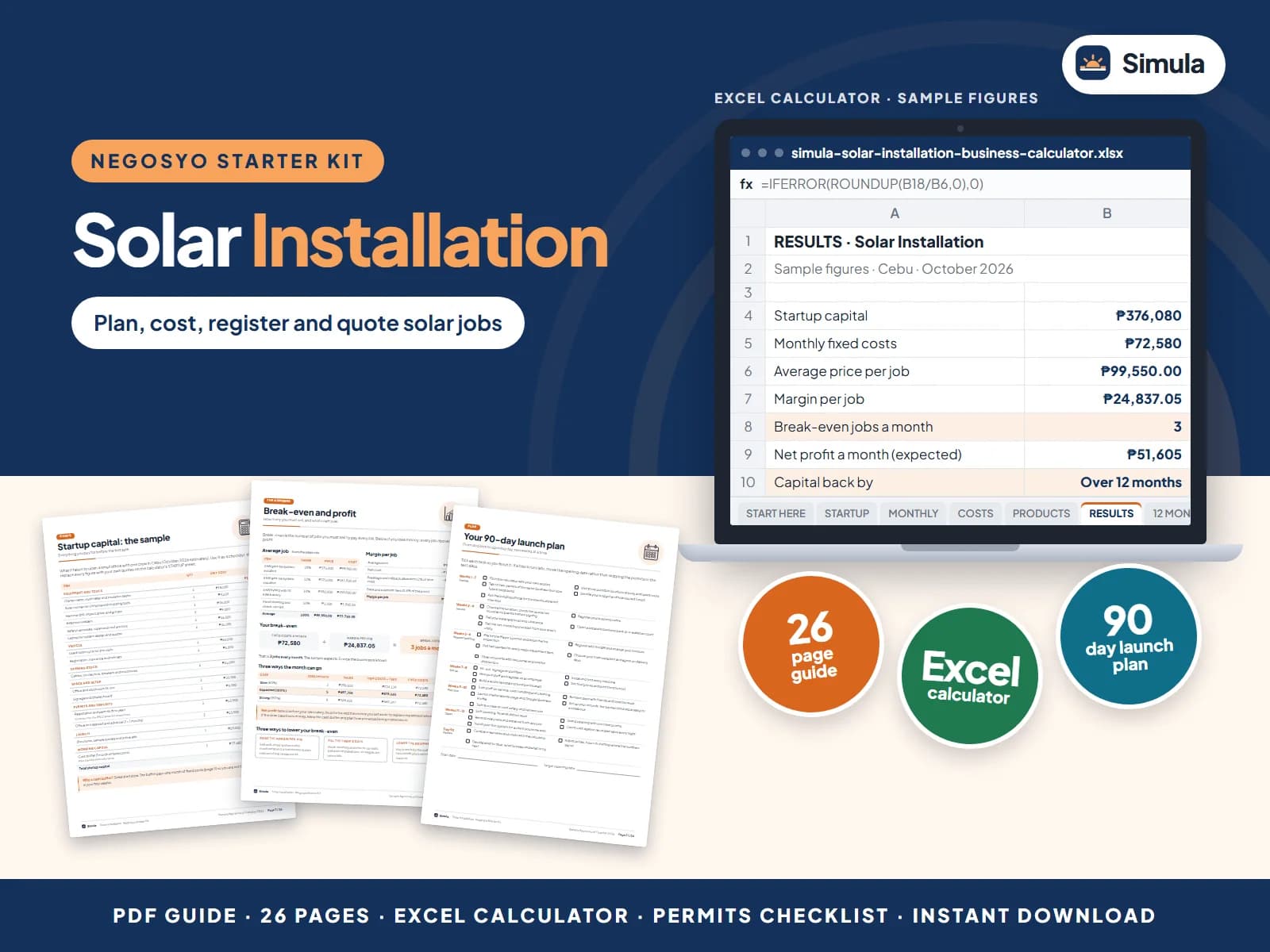
- Sample startup capital: ₱376,080 (October 2026, Cebu).
- Break-even: 3 jobs a month.
- Register with DTI, the barangay, the city (Mayor's permit) and BIR; also electrical permit for each installation, certificate of Final Electrical Inspection, net-metering application for each client and contractor's licence.
A solar installation business designs, supplies and installs rooftop solar systems for homes and small businesses, and files the permits and net-metering papers. This kit is for licensed electrical practitioners starting with a two-person crew and a small office, buying equipment per job with the client's downpayment. The money is in honest sizing, clean installation and milestone payments collected on time.
This guide walks through what it takes to start a solar installation business in the Philippines: the capital, the monthly costs, the permits and the first 90 days. The peso figures are sample estimates for a small office with one crew in Cebu as of October 2026; get your own quotes before you decide.
How much capital you need
The sample comes to about ₱376,080 including one month of fixed costs kept as a cash buffer. It splits into equipment and tools (₱106,500), vehicle (₱66,000), opening stock (₱25,000), space and setup (₱36,000), permits and deposits (₱60,000), launch (₱10,000) and working capital (₱72,580). Other ways to start: installer with a service truck at ₱1 million–₱1.8 million and commercial rooftop contractor at ₱5 million and up.
Monthly costs and break-even
Fixed costs in the sample are ₱72,580 a month; the biggest are installers (₱33,800), office and stockroom rent (₱15,000) and SSS, PhilHealth and Pag-IBIG (₱4,730). Each job sold earns about ₱24,837 after its own costs, so the break-even is 3 jobs a month, and the startup capital takes about 7 months to come back at full sales.
Permits and registration
Register the business name with DTI (or SEC or CDA), then get the barangay business clearance, the Mayor's permit through the city or municipal BPLO, and BIR registration; register with SSS, PhilHealth and Pag-IBIG once you hire. A solar installation business also needs: electrical permit for each installation, certificate of Final Electrical Inspection, net-metering application for each client and contractor's licence. Requirements and fees differ by city, so ask each office for its checklist first. DTI Negosyo Centers help for free.
Where to set up
- Subdivisions with large homes and high power bills
- Commercial areas with stores and clinics using daytime power
- Towns with frequent brownouts, for battery systems
- Near electrical and hardware suppliers
Mistakes to avoid
- Roof leaks after installation. Proper flashing and sealant on every hole, a water test before you leave, and a written workmanship warranty.
- Falls from roofs. Harnesses and anchors for everyone, no roof work in rain or strong wind, and a trained lead on site.
- Oversold savings. Size from the client's real bills and show a slow-case payback; promises that fail become complaints.
- Net metering takes months. File complete papers early, follow up weekly, and tell the client the real timeline before signing.
Plan it with the starter kit
The Solar Installation · Negosyo Starter Kit has every worksheet behind this guide in a 26-page PDF, plus an Excel calculator: type in your own quotes and it works out your capital, break-even, profit and payback month. It costs ₱349 and downloads right after payment.
