Key takeaways
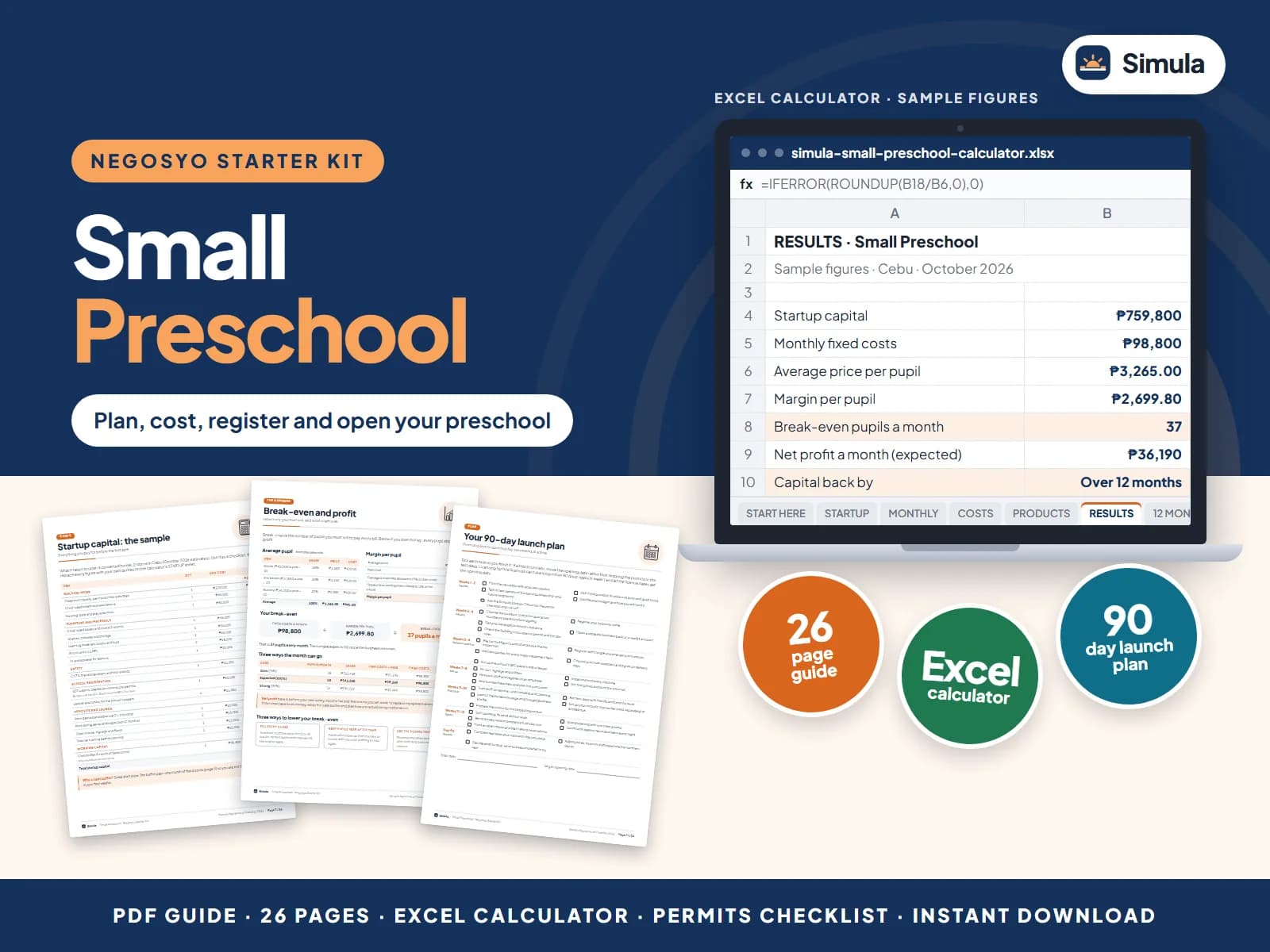
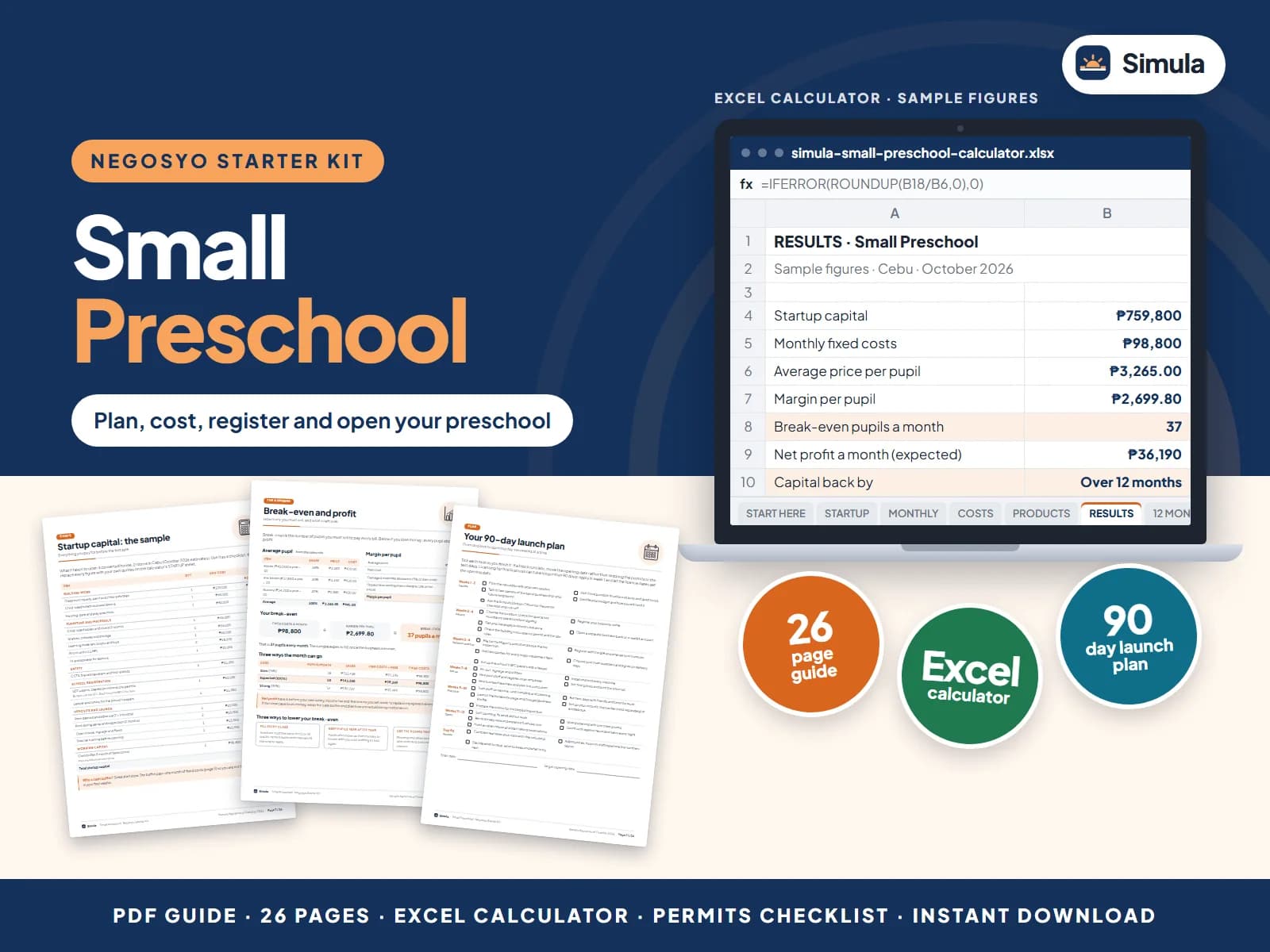
- Sample startup capital: ₱759,800 (October 2026, Cebu).
- Break-even: 37 pupils a month.
- Register with DTI, the barangay, the city (Mayor's permit) and BIR; also government permit to operate, SEC registration of the school, occupancy permit of the building and sanitary permit.
For owners applying for a DepEd permit to operate a private preschool. A small preschool runs nursery, pre-kinder and kindergarten classes for children aged 3 to 5, with licensed teachers in a safe, cheerful space. Most start in a converted house near subdivisions; the money is made on full classes, pupils who return each year and fees collected on schedule.
This guide walks through what it takes to start a small preschool in the Philippines: the capital, the monthly costs, the permits and the first 90 days. The peso figures are sample estimates for a converted house, 2 rooms in Cebu as of October 2026; get your own quotes before you decide.
How much capital you need
The sample comes to about ₱759,800 including one month of fixed costs kept as a cash buffer. It splits into building work (₱230,000), furniture and materials (₱196,000), safety (₱25,000), school registration (₱85,000), deposits and launch (₱125,000) and working capital (₱98,800). Other ways to start: one-room kinder school at ₱400,000–₱600,000 and purpose-built preschool at ₱3 million and up.
Monthly costs and break-even
Fixed costs in the sample are ₱98,800 a month; the biggest are licensed teachers (₱36,000), rent (₱20,000) and teacher aide (₱15,600). Each pupil sold earns about ₱2,700 after its own costs, so the break-even is 37 pupils a month, and the startup capital takes about 21 months to come back at full sales.
Permits and registration
Register the business name with DTI (or SEC or CDA), then get the barangay business clearance, the Mayor's permit through the city or municipal BPLO, and BIR registration; register with SSS, PhilHealth and Pag-IBIG once you hire. A small preschool also needs: government permit to operate, SEC registration of the school, occupancy permit of the building and sanitary permit. Requirements and fees differ by city, so ask each office for its checklist first. DTI Negosyo Centers help for free.
Where to set up
- Inside or beside a subdivision with many young families
- A quiet street with a safe drop-off point
- Near churches and community centers families visit
- A ground floor, so small children use no stairs
Mistakes to avoid
- The permit is not ready for the school year. Start a year ahead, get DepEd's checklist early, and take no full payments before the permit is issued.
- A child gets hurt or sick. Child-safe rooms, constant supervision, health checks, staff trained in first aid and an incident log.
- Releasing a child to the wrong adult. Only listed adults may pick up, with ID, and every pickup is signed.
- Too few pupils in the first year. Open houses before enrolment, referrals and a cash buffer for a thin first year.
Plan it with the starter kit
The Small Preschool · Negosyo Starter Kit has every worksheet behind this guide in a 26-page PDF, plus an Excel calculator: type in your own quotes and it works out your capital, break-even, profit and payback month. It costs ₱499 and downloads right after payment.