Key takeaways
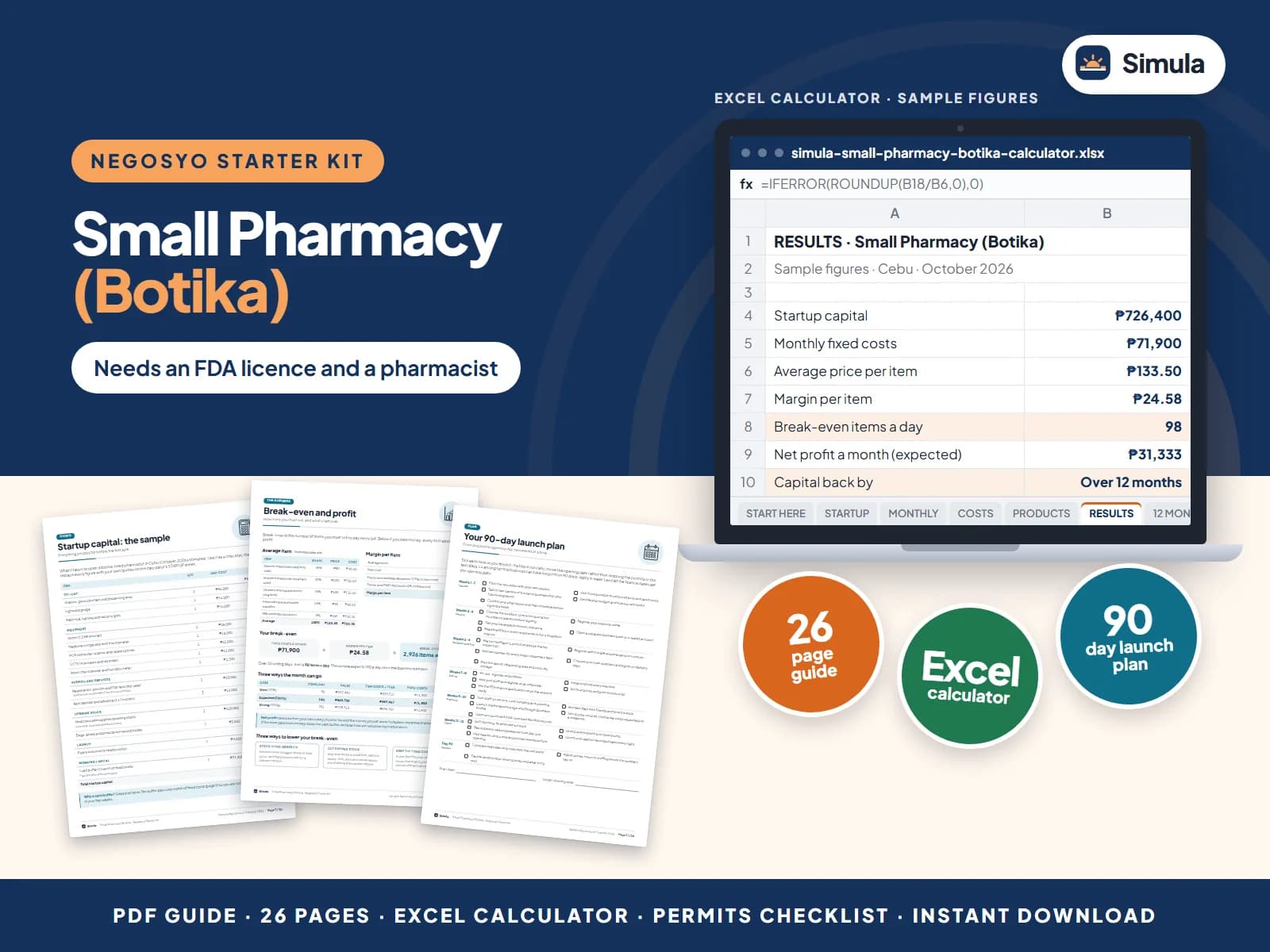
- Sample startup capital: ₱726,400 (October 2026, Cebu).
- Break-even: 98 items a day.
- Register with DTI, the barangay, the city (Mayor's permit) and BIR; also FDA licence to operate (drugstore), pharmacist's PRC licence, sanitary permit and dangerous drugs licence (ask).
A small pharmacy (botika) sells medicines, vitamins and health supplies to its neighbourhood. This kit is for the owner who will hold the FDA licence to operate, with a licensed pharmacist (yourself or a hired one) dispensing every prescription. Most start in a 20–30 m² space near a clinic, health center or market; the money is made on generics, regular buyers and almost no expired stock.
This guide walks through what it takes to start a small pharmacy in the Philippines: the capital, the monthly costs, the permits and the first 90 days. The peso figures are sample estimates for a botika, hired pharmacist in Cebu as of October 2026; get your own quotes before you decide.
How much capital you need
The sample comes to about ₱726,400 including one month of fixed costs kept as a cash buffer. It splits into fit-out (₱125,000), equipment (₱104,500), permits and deposits (₱68,000), opening stock (₱353,000), launch (₱4,000) and working capital (₱71,900). Other ways to start: pharmacist-owner botika at ₱450,000–₱650,000 and drugstore with two pharmacists at ₱1.5 million–₱2.5 million.
Monthly costs and break-even
Fixed costs in the sample are ₱71,900 a month; the biggest are pharmacist (₱22,000), store rent (₱16,000) and pharmacy assistant (₱15,600). Each item sold earns about ₱25 after its own costs, so the break-even is 98 items a day, and the startup capital takes about 23 months to come back at full sales.
Permits and registration
Register the business name with DTI (or SEC or CDA), then get the barangay business clearance, the Mayor's permit through the city or municipal BPLO, and BIR registration; register with SSS, PhilHealth and Pag-IBIG once you hire. A small pharmacy also needs: FDA licence to operate (drugstore), pharmacist's PRC licence, sanitary permit and dangerous drugs licence (ask). Requirements and fees differ by city, so ask each office for its checklist first. DTI Negosyo Centers help for free.
Where to set up
- Beside or across from a clinic or diagnostic center
- Near a barangay health center or a hospital
- At a busy market or transport terminal
- In a dense neighbourhood far from the big drugstores
Mistakes to avoid
- Expired medicines pile up. Buy slow items in small lots, check expiry dates weekly, and sell first-expiry-first.
- Dispensing without a pharmacist. Never dispense prescription medicines while the pharmacist is away; it puts your FDA licence at risk.
- Fake or smuggled medicines. Buy only from FDA-licensed distributors, and keep every invoice with its batch numbers.
- Heat spoils medicines. Keep the aircon running, log temperatures daily, and keep stock away from windows.
Plan it with the starter kit
The Small Pharmacy (Botika) · Negosyo Starter Kit has every worksheet behind this guide in a 26-page PDF, plus an Excel calculator: type in your own quotes and it works out your capital, break-even, profit and payback month. It costs ₱499 and downloads right after payment.
