Key takeaways
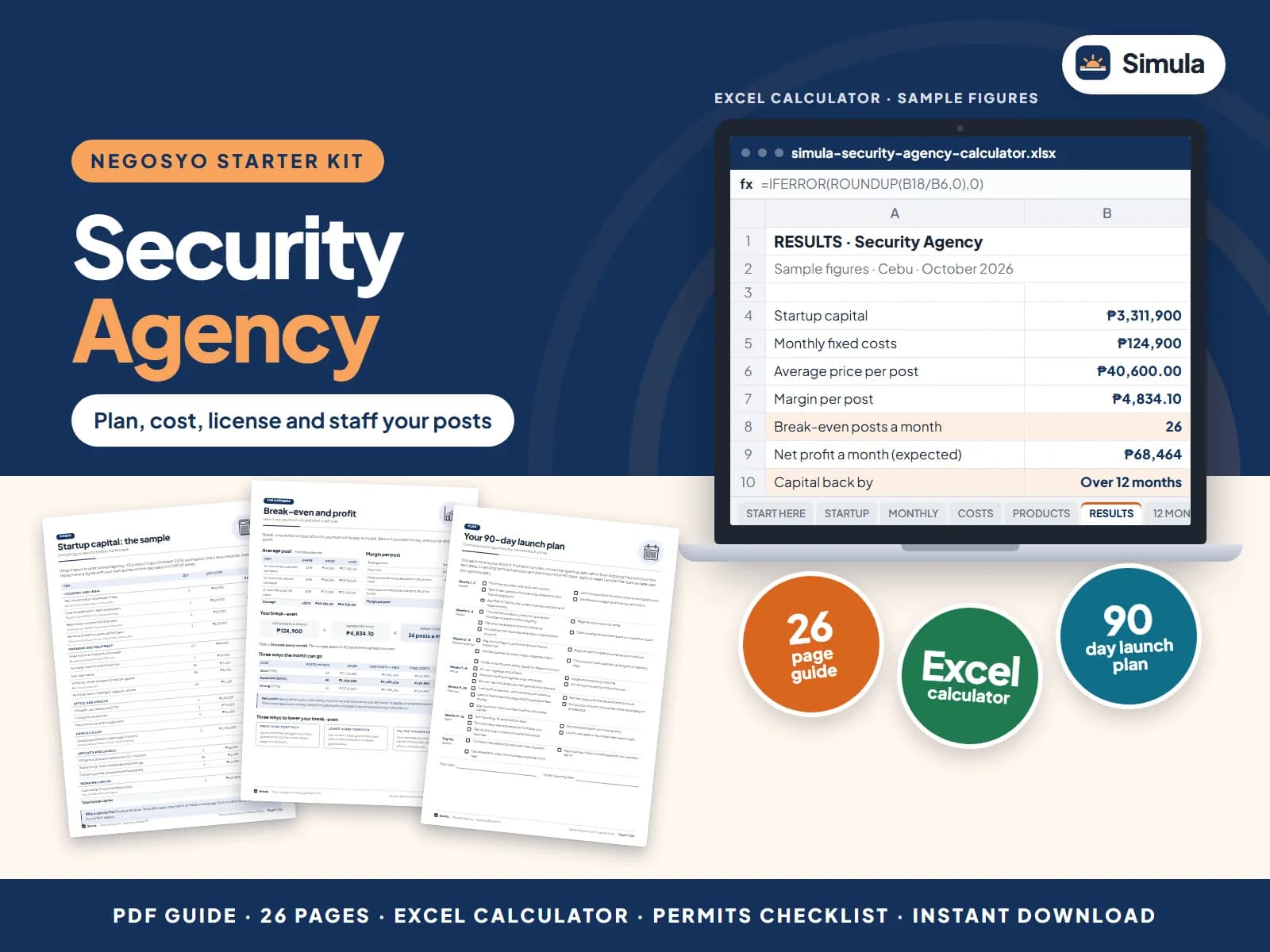
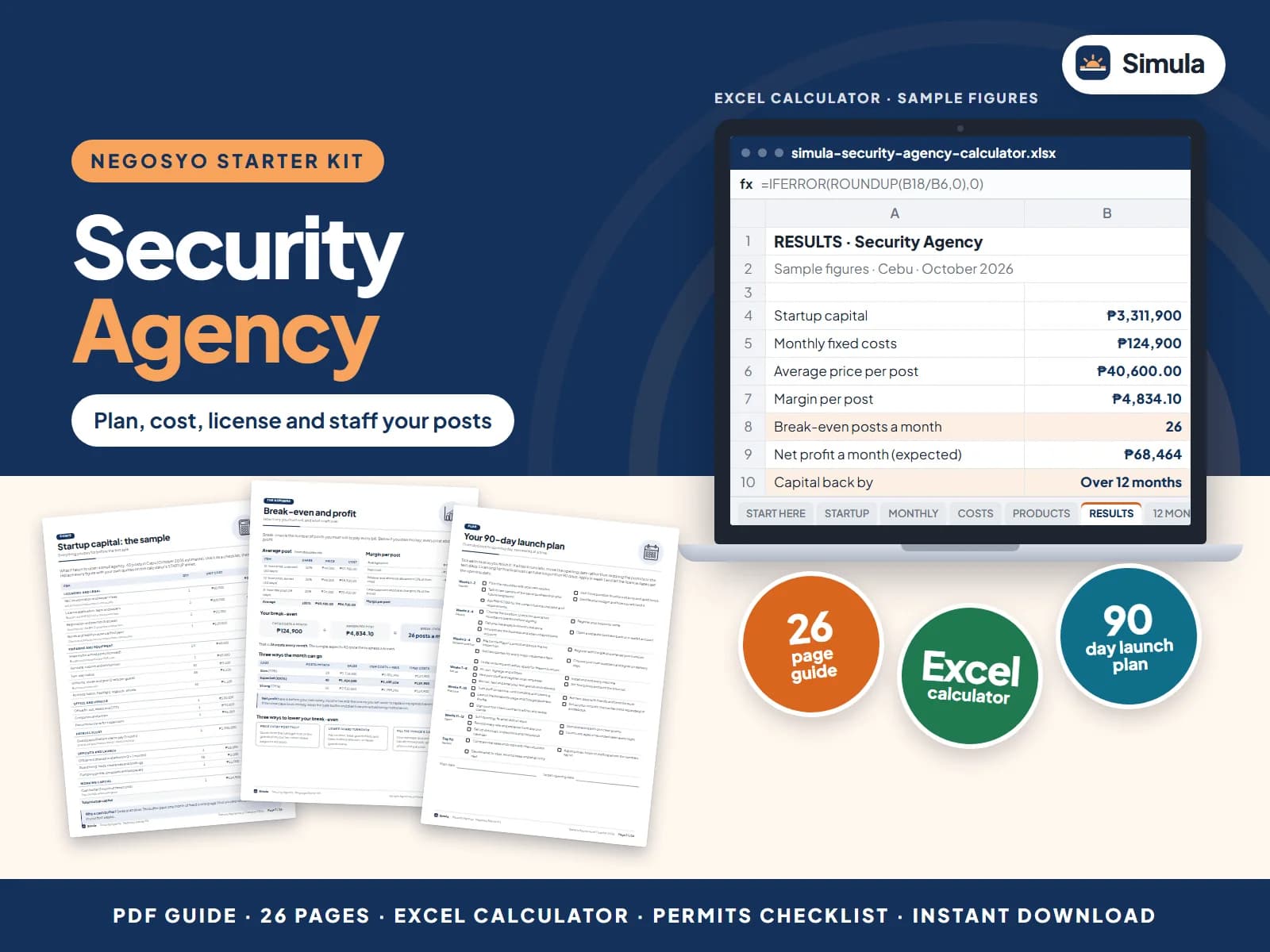
- Sample startup capital: ₱3,311,900 (October 2026, Cebu).
- Break-even: 26 posts a month.
- Register with DTI, the barangay, the city (Mayor's permit) and BIR; also licence to operate a security agency, licence for every security guard, firearm licences and registration and labor rules for security guards.
For operators getting a PNP licence to operate a private security agency. The agency hires, trains and deploys licensed guards to client posts and bills each client a monthly contract rate. It needs large capital for licensing, firearms and two payrolls before clients pay; the money is made on a thin margin per post, so it takes many posts, low guard turnover and clients who pay on time.
This guide walks through what it takes to start a security agency in the Philippines: the capital, the monthly costs, the permits and the first 90 days. The peso figures are sample estimates for a small agency, 40 posts in Cebu as of October 2026; get your own quotes before you decide.
How much capital you need
The sample comes to about ₱3,311,900 including one month of fixed costs kept as a cash buffer. It splits into licensing and legal (₱305,000), firearms and equipment (₱1,132,000), office and vehicle (₱285,000), payroll float (₱1,300,000), deposits and launch (₱165,000) and working capital (₱124,900). Other ways to start: agency growing to 100 posts at ₱7 million–₱10 million and agency with branch offices at ₱15 million and up.
Monthly costs and break-even
Fixed costs in the sample are ₱124,900 a month; the biggest are inspector and payroll clerk (₱33,800), operations manager (₱25,000) and office rent (₱18,000). Each post sold earns about ₱4,834 after its own costs, so the break-even is 26 posts a month, and the startup capital takes about 48 months to come back at full sales.
Permits and registration
Register the business name with DTI (or SEC or CDA), then get the barangay business clearance, the Mayor's permit through the city or municipal BPLO, and BIR registration; register with SSS, PhilHealth and Pag-IBIG once you hire. A security agency also needs: licence to operate a security agency, licence for every security guard, firearm licences and registration and labor rules for security guards. Requirements and fees differ by city, so ask each office for its checklist first. DTI Negosyo Centers help for free.
Where to set up
- Central to the posts you serve, to keep inspection trips short
- On a main road with parking for the patrol motorcycle
- A secure building where a locked firearms room can be set up
- Near where guard applicants live and commute
Mistakes to avoid
- Clients pay late while guards must be paid. Keep a payroll float, bill on the same day every month, and put payment terms and late charges in contracts.
- Underpaying guards. Pay full wages, overtime and benefits; underpayment leads to labor cases and back pay, and puts the licence at risk.
- Incidents at a post. Trained guards, written post orders, regular inspections and insurance that covers the agency's liability.
- Firearm misuse or loss. Licensed firearms only, a firearms log, issue only to on-duty guards and report any loss at once.
Plan it with the starter kit
The Security Agency · Negosyo Starter Kit has every worksheet behind this guide in a 26-page PDF, plus an Excel calculator: type in your own quotes and it works out your capital, break-even, profit and payback month. It costs ₱499 and downloads right after payment.